

Who is Ada Stępień?
- Who she is
- Ada Stępień, co-founder of SLAPPA, a company changing the household chemicals market with innovative eco-friendly cleaning tablets dissolved in tap water. She has a chemistry background.
- What she does
- SLAPPA offers cleaning tablets that replace liquids in single-use plastic bottles, reducing plastic and transport emissions. The company sells directly from its own e-commerce on a subscription model, at a few partner points in Warsaw, and has recently also been developing B2B cooperation. It became a positive impact startup.
- What we talk about
- The origin of SLAPPA during the pandemic, the composition and technology of the tablets, environmental benefits, challenges in convincing customers, financing impact businesses in Poland, product development and the B2B model, expansion plans, lessons from the first years, advice for people starting an impact company, and the role of consumers, Gen Z and the state in changing habits.
Best quotes
„Add your drop to a better world.”
„It can be done without that plastic.”
„It is not true that everyone wants to fix the world and is only waiting for tools to do it.”
„Moderation will probably have to save us here.”
Recommended materials and sources
Guest’s pick
 openlibrary.org




Related conversations


Transcript
Host: Rafał Moszkowców. Guest: Ada Stępień.
Introduction
Rafał: Welcome everyone warmly to the eco series of Globalne Horyzonty, in which we take on Polish startups, scaleups and so-called impact businesses. SLAPPA fits this area perfectly, fighting the problem of plastic waste and carbon footprint through products that you only need to dissolve in tap water. Today I have the pleasure of hosting Ada Stępień, co-founder of SLAPPA, a company that is changing the household chemicals market through innovative eco-friendly cleaning tablets. Ada, welcome to Globalne Horyzonty.
Ada: Hi, I am very glad, thank you very much for the invitation.
Rafał: I have a slight déjà vu, do you?
Ada: Slightly yes, but it is okay.
How did SLAPPA start and what problem does it solve?
Rafał: Great, I am really glad you are here. I have been watching your company for some time and I had a dream that maybe someday we would have a chance to talk and I would have a chance to get to know you and SLAPPA better. That brings me to the first question. Where did SLAPPA come from, what is the origin? I think it is incredibly interesting.
Ada: Sure, I will try to bring that story a bit closer. It all started back in the pandemic, when, locked at home because of quarantine, we had more time for all sorts of thinking and noticing things we perhaps did not notice day to day. That was the case here. I started to notice how much plastic, especially single-use, we use at home. I had in mind then also disposable masks or gloves, during the pandemic. But all such products, for example for cleaning, which we use at home for a month, two, and later that plastic, practically in perfect condition, goes to the trash, which aroused my interest in what happens to that plastic next. I started to dig into the topic more in the context of recycling, the possibilities of processing that waste, how it really looks. The results rather stunned me, because it turned out that we produce a great deal of that plastic globally, and we are able to process maybe 9-10 percent, and not every type of plastic either, because as you know there are also quite a few different types of plastics. That made me think whether anything could be done about it, meaning whether it is possible for such products, I was already thinking about cleaning products then, to be offered in some other form that would either eliminate that single-use plastic or at least reduce it enough that it would matter at a larger production scale. I started to look for information on eco-friendly cleaning products. A bit of how big corporations talked about having plans to introduce refill versions, possibilities of topping up. In Poland unfortunately there were not many of those products. There were some interesting stories, but you could not simply buy such products. I also knew from a third side that if we want to make a big impact and have a broad influence, not only on 100 or 200 people, such a product must be very convenient in UX terms. It cannot be too complicated, cannot have a long instruction for use, but must essentially be a real alternative to the products we use every day. That led me to deeper research into how cleaning products work, what they consist of, how they are produced. It turned out that in the vast majority household cleaning products consist of about 90 percent water. All the rest is the active substance that is to be responsible for removing dirt, dissolving grease, removing limescale and so on. Then it dawned on me that maybe we should simply offer only the base, only that essence that really cleans, and we can pour in tap water, which we still have in our taps. That was the first idea, the first thought, which carried a series of consequences that finally led me to where I am, meaning that I decided to found a company. But of course it was not as simple, as fairytale, as one might expect. By a method of some trial and error, together with my partner we came to the conclusion that these cannot be DIY kits, do it yourself somewhere at home, a bit of baking soda, a bit of citric acid and so on, but must be products that are very convenient, where there is essentially no possibility of a mistake or doing something wrong. We concluded that water-soluble tablets, a bit effervescent like magnesium or vitamin C, would be the optimal option, because you simply drop it into a bottle, pour tap water over it and de facto the product is ready.
Why do tablets instead of liquids ease logistics and retail?
Ada: That is how it started. That was the thought and idea we had for that product. Above all we wanted to limit single-use plastic and that was our main goal then. In the meantime it turned out that we can also reduce for example emissions from transport, because we do not transport that heavy, sometimes hard to transport water. We also make logistics and storage of those products easier, because the tablets are small, light. It is much easier to pack a large amount of that product and store it in a warehouse than to transport liquid versions.
Rafał: That is definitely more economical, even for all those producers, even the big ones, because transporting 20 pallets of liquid is one thing and 3 cartons of tablets another. And then I think of displaying it on a shelf. How many more such products can be displayed?
Ada: From the shop's perspective and display on a shelf, we take up much less space than classic liquids. The tablets are tiny, the packaging can also be compressed to take up even less space. You surely know very well that shelves in shops are expensive and every centimeter is worth its weight in gold.
Rafał: Yes, all the more it still surprises me that chemicals sometimes take up a quarter of a shop, and could probably take up a tenth.
What does the name SLAPPA mean and why is it not Polish?
Rafał: Let us return for a moment to SLAPPA. What does SLAPPA mean? I admit honestly that when I first saw you, as I mentioned in our first conversation, I read about you on OKO.press, whom I warmly greet, I like and value very much. There was an article where you were mentioned, and I thought it was a Swedish company.
Ada: Indeed the name is not Polish and that is no accident. Inventing the whole communication strategy, the whole branding and all those elements that make up a brand, we wanted on one hand for the name not to be obviously ecological and not to say directly that it is an ecological product, because we knew that not only the very eco-conscious consumer, the enthusiast, would be our only client, and on the other hand we had in the back of our heads that we would want to go out to other markets, so the name cannot be very Polish, because even difficulty of pronunciation can be a problem. We came up with SLAPPA. SLAPPA is a Swedish word, which translated into English means drop, and drop means both a droplet and to let fall. Around that we built our claim "at your drop", meaning add your drop to a better world. Hence in the signet and logo there are four drops, because it mattered a great deal to us to convey that essence, meaning that every one of our even small actions, that drop that wears away a rock, has great significance. We do not have to change our approach and our life much to be able to do something good for the environment and for the planet. The whole communication was built around that.
Rafał: Very nice. I did not check beforehand what SLAPPA means, but it is very creative and forward thinking, that for such a product the Polish market is only a stop, it seems to me. Not that something is wrong with our market, only that it is just maturing.
Ada: That is true. You can see that the ecological awareness and the need for such products is only developing. This trend is gaining strength and you can see it in recent years, that there are more and more of such products, whether in the context of cleaning products, but also food products, like plant-based substitutes or plant-based drinks that are not milk but we know it is about milk. Above all consumer awareness is growing that something can be done a bit better for the environment without losing the quality of the product, because there is often a fear that if a cleaning product is ecological, then because it does not have so much aggressive chemistry it surely does not work, will not be as effective or will soon spoil. There are quite a few such barriers, so through customer education we try to debunk those myths: you do not have to flood the whole flat with chlorine at once for it to be clean. If you clean fairly regularly and it is not a space that was not used and cleaned for years, you can really do it in a safer way. We also had in the back of our heads those toxic fumes that often appear with those products, which is why it mattered to us to limit plastic, limit emissions, but also give an alternative of something safer for everyday use.
What are SLAPPA tablets made of and how were they developed?
Rafał: That automatically leads us to a segment where I would like to learn more about the tablet technology at SLAPPA. What is in those tablets, how did you arrive at the composition you have, what is the methodology? I think it is mega interesting.
Ada: Sure. At the beginning we came up with compositions ourselves, completely at home, before we started any production. We first wondered which products we would actually like to release. We looked for safer alternatives to those cleaning agents, meaning what could replace chlorine, what could replace elements that are quite aggressive. We tried at home, made first formulations, mixed, a small laboratory, to see what really works. We already had preliminary compositions worked out in our heads and on paper. We took that to the manufacturer, to technologists, who translated our ideas into a final product that really works, is approved for the Polish, European market, compliant with all legislation, because there are a number of elements that must be met for a product to be released on the market at all and for it to be safe. It mattered a great deal to us that the compositions be as short as possible, still without losing quality. We have baking soda, sodium chloride, citric acid. In the different tablets they are in different proportions, because those ingredients act on different things. One will degrease more, so for example greasier dirt. Citric acid copes better with soap residue, with limescale, so it is more proposed for bathroom elements. Plus essential oils, natural ingredients responsible for scent. Those scents are quite delicate, because it mattered to us that you would not have to air the room after cleaning. The scent is noticeable, but not very strong. Like everything, it has its supporters, but also opponents, because there is a group of people used to the idea that when I clean, it smells strongly and that is probably a sign it is clean. And there are people who appreciate it, because they have children at home, pets. We also have a few customers who have kids with asthma and these are the only products they can use, because they do not cause irritation. We came up with it on paper, and later came the professional part, meaning cooperation with technologists who produced the final formulations. And in a machine it is made into the tablet form.
Rafał: Wow, interesting. I think we should add that you have a chemistry background, so it was probably a bit easier for you.
Ada: I do not know if it was easier, maybe a bit, but it is a technology that works somewhat differently, it is completely different knowledge you have to have. A lot of that information can be found on the internet and you can quickly educate yourself to know at least the basics. It is not that if someone does not have such preparation, they will not know what to do. There are absolutely loads of firms that support in this whole process, so maybe it was easier for me in that I knew where to start looking, but that was the help.
How much single-use plastic could SLAPPA cut in Poland?
Rafał: Let us talk a moment about environmental benefits. Do you as a company count how much less plastic you produce compared with traditional solutions? Or how much smaller the carbon footprint is using your products?
Ada: We estimated it, because a precise calculation is not really possible. We estimated it in the context of the Polish market. At the moment we know there are roughly 12.5 million households. Assuming one bottle weighs 50 grams, we calculated that we can reduce about 2000 tons of single-use plastic in Poland monthly, if we switched to such a form. On a world scale that is of course an incomparable amount. On one hand it may seem little, it is 3 bottles per flat or house, but when we add the quantity times the number of households and how much of those products we really use, a large value comes out, which in my assessment is unnecessary. It can be done without that plastic, and as we said at the beginning, recycling plastic itself is hard, so if we can offer materials that can be processed many times, whether glass or metal, I am all for reaching for such solutions and, where possible, giving up plastic. Finding a technology that allows safe and full processing of plastic or breaking it down enough that it is not so invasive for the environment.
Rafał: There are already bacteria that break down plastic, but it is hard.
Ada: There are also fungi that are supposed to feed on plastic. But there are always concerns about how far, in the long term, that will be good for those fungi and for the environment in general. We created this plastic for ourselves and now have a bit of a problem with it: what to do with it next.
What is extended producer responsibility for plastic?
Rafał: I think everywhere the problem is that there is simply too much of something, because plastic is just too cheap, because fossil fuels, crude oil, are in a sense too cheap. Then those firms that put plastic into circulation in Europe, in some countries, except Poland for now, do not take responsibility for those packages, and in fact we buy that plastic, responsibility is shifted onto us and we still have to pay so that 7 or 9 percent of that plastic is recycled, and the rest will end up in an incinerator or in your bin anyway, and every year we will pay more for waste removal. In my opinion it is not a strange theory to say that we as consumers should, never mind everything else, if we looked through the lens of our wallet, single-use plastic very often does not pay off for us. It very often saves lives in certain areas and that also has to be seen. In many places it is needed, but in many places it is not. Lately, I do not know if it reached you, there is that extended producer responsibility for packaging, including plastic. There is a lobby that on LinkedIn, Facebook, Instagram publishes content meant to encourage signing a letter of intent, a petition, not to introduce that extended responsibility. Because it is a hit on our, attention, freedom, on our wallets, inverted logic. And that is how it is sold. Quite a bit of nonsense is being sold, so I think it is important that such initiatives or products as yours arise.
Why is it hard to convince customers to switch to eco cleaning?
Rafał: That brings us to the area of challenges. Surely you know, but can you share: what are the challenges in convincing people, changing habits from liquids of all kinds, Domestos and other things, to such innovative solutions? It is incredible that the solution changes only in that you have to pour the water in yourself, and we say it is ultra innovative, but it is a change in thinking, a paradigm.
Ada: Exactly, it is more a change of the form in which the product is delivered and a change of approach in the head. Let us agree that behind most of those commercial products there is also enormous money in terms of marketing, so that you want to choose that product, so that you subconsciously feel it is pretty and surely effective, because it says it kills 99.9 percent of viruses, bacteria, so it is surely effective, so we believe it. There are quite a few challenges and they are on different levels. On one hand a challenge in the context of ecological awareness, environmental awareness, because it is not that if someone does not use ecological products, they do not care about the environment. It is one of the components of the possibilities we can apply in life. So education that single-use plastic is a problem at all. When we appeared at various fairs, talked with potential customers, we often had to go back one step in conversations to discuss at all that plastic is indeed a problem and that even this reduction of plastics in the area of cleaning products can have some significance. On one hand the need, that using very aggressive cleaning products that are then released into the sewers affects microorganisms, that we limit unsupervised plastic, so the part concerning education and awareness. On the other hand, especially in the case of the Polish consumer, the price context: if a product is cheap or at least on promotion, as Poles we are very responsive. So you have to play with price too, and as you probably guess, without large sales volume, a brand cannot always afford various promotions and sell cheaper than popular brands. It is a bit like killing your own business at the moment when you want to grow, go wider and build scale. From a third side, which also connects with big financial outlays, there is being a desirable brand. I know that in the context of cleaning products it is rather unusual, but take for example American brands. Maybe you know Scrub Daddy, a startup that produces cleaning sponges, those smiling sponges. Maybe you saw them somewhere.
Rafał: It has a good name, but I do not know it.
Ada: It appeared a few years ago. You think: what revolution can you make in cleaning sponges? It is such an obvious and simple product, where is the room for innovation, and the company in a few years grew to a value of at least several hundred million dollars. A huge company that is available in all sorts of countries. So that element of popularity, desire, something trendy, fashionable, also has great significance. Those are the three biggest challenges. And from the Polish market, of course the possibility of being present in stores, in larger retail chains. That builds a sense of trust and a kind of social proof. If you can show your brand at Rossmann, or Lidl, or Auchan, it means it is a rather good and trusted brand, because surely nobody would put something untrusted there.
Rafał: You borrow some authority from those big retail chains. On the other hand how does that relate to margin, because what practices those chains have, I think most people do not know, or know, hard to say, but they do not give up their margins, rather that margin comes from producers and it has to be played wisely, because I have heard various stories. You mentioned the American example of Scrub Daddy.
Ada: Yes.
Rafał: It shows how the American market works. I have the experience that there is so much money there that innovative firms are able to simply create a market for themselves.
Ada: That is true. Volume is not necessarily needed at all.
Why is it hard to finance an impact business in Poland?
Rafał: Here we are able to start and I think the seed is not so hard, but you will tell me. I have the impression that the very beginning is not so bad, hard, but later, to create a market for yourself: if there is no such market or it is small, there is no money to create it, because enormous money is needed. In my conversations on Globalne Horyzonty I often cited PayPal. A different industry, but PayPal had no market, because it was to be for paying each other by infrared on palmtops. Then it turned out that suddenly there are smartphones and the internet and emails. And they had to pay every user extra, for years, so they would want to use PayPal, so that such a big market was created that later we would want to pay PayPal.
Ada: Yes, I recently finished listening to an audiobook on this, about PayPal among others. There it said that when they started, as an incentive they promised they would add money to every account the users set up, which with a thousand users is okay, but when you have hundreds of thousands or millions of them, it suddenly turned out to be a challenge, because the business stops adding up when you have to pay everyone extra so they want to be a user of your solution. But as you say, it is a matter of finding a niche and building your audience in that niche, educating that audience so a purchasing need appears. It is a big challenge, and in the context of raising funds, because you referred to a funding round: certainly in the States it is completely different and there are many more funds. The European market is probably also more open. The Polish market is hard in this respect. If something is not a SaaS, if it is a physical product, then at the beginning it is much harder. If it is a physical product and not a technology or a license that you create once and later resell, that is the first matter. And the second: for many VCs, many investors, because we talked and met with many, having a patent or intellectual property in the context of the production process itself is absolutely necessary. It is probably possible to raise financing for an FMCG product that is not very technologically complicated, you just have to find good recipients who will also buy the idea along with the product. Because the product is one thing, but what you want to sell beyond the product is also important. That is, you can build enormous scale on a product that the vast majority of people use, only conveying it in a slightly different way, that behind it there is a mission beyond the product itself.
Rafał: In the States, from my modest experience, it is not only the size of the capital market and its depth, which spits out that money in a sense, but also the size of the middle class, however we want to define it, I do not want to go into that digression. The number of people who can afford that product, because awareness of the product is built differently among people who can afford it. Poland is a somewhat small and hard market, because you already said nicely that if here you say "2 for 1" or "12 Harnaś beers, the second 12 free", it works best. I do not want to slander, if someone drinks Harnaś, cheers. But we have a consumer market where it has to be cheap, a lot. I have the feeling, even in services, that in Poland quality services are not quite appreciated, that it is better to have a lot, not necessarily to have it good. Maybe that is changing, certainly to some extent, but how much, how fast, I do not know. That market is a bit small and probably hard, so convincing customers is hard for you. Do you have proven ways to convince people to SLAPPA? How do you do it every day?
Ada: Certainly testing the product, it is fairly obvious. Customers, when they decide, with some promotion, offer, trade fair, some cooperation, where the product is handed out, then trying it and checking on yourself, in your flat, that it also removes, smells, works, that I can clean something, wash something as well as with other products. That is an important element, so testing has great significance. I think it also depends on whom we talk with, because if there are people who look for more sustainable and more ecological products, who already know why that product is better, what advantages it has, it is much easier, because there is no element that something does not smell so strongly or looks different. We have a more minimalist, Scandinavian design, like the name. Some like it, some prefer something more colorful. I understand, we have different habits. So on one hand testing the product, on the other showing that we exist, and people who look for and are interested in such products probably reach for our product much faster, because they know how it works, roughly what to expect, they look for a safer alternative for themselves and their home.
Rafał: I think that base is growing, but competition is also growing, because there are quite a few of those products on the market.
How does SLAPPA develop new products and its B2B business?
Rafał: Let us go further into developing this business. What does the process of developing and testing new products look like? You have a range as SLAPPA, relatively modest, not for me to judge, but it seems so to me as a consumer. What plans or process do you have to add new products? Is it on the agenda?
Ada: Sure. We have in the queue for sure two new products that we will soon be able to start testing. First internally, to see whether they meet our assumptions and expectations. Later we will probably want to release consumer tests, meaning send the product to our customers so they can also assess it themselves before we release it for sale. In the meantime, as we discussed, we made maybe not a pivot, but we focused more on the B2B part and started to cooperate with firms, prepare for them, on their order and according to their wishes, concentrated cleaning products. In the last year and a half we focused mainly on that, so R&D of new products for the household user was put on a shelf in favor of B2B. There we are already after tests, we have finally worked-out products that meet expectations, work environmentally, because there is a series of tests and controls you have to pass for a product to be approved for use. We are starting sales and then we will want to return to B2C, meaning broadening the portfolio for the household user, because as you rightly noticed, the offer is not wide, and I am aware that in e-commerce it is convenient to build a basket when there are more of those products, especially as we have a subscription model, so customers can order the tablets at a set frequency. When the portfolio is wider, it will be easier to choose that I order cleaning tablets this often and other products at another time. The testing also takes a while, especially in the B2B part it surprised us how long those tests took. We expected it would be much faster, but reality turned out like that, so we had to adjust it so that the client is finally satisfied. That is the biggest success, so we can go a step further. The plans are to return to work on B2C and probably finally go out to foreign markets, because we have been thinking about it and planning for a long time, but as you probably know, it is not a costless action either, it requires appropriate preparation in terms of communication, marketing and of course the budget backing, to enter the market well, present ourselves in a good way, communicate and be available to customers.
Can white label production help SLAPPA build a market?
Rafał: We could probably talk about that for a few hours.
Ada: I know it is your topic.
Rafał: I have to stop myself, but I will return to what you said: it is very nice that you are thinking of B2B, because if we are talking about your company as an impact company, B2C makes a certain impact, but B2B can give you a gigantic impact, not only on the environment but on purchasing habits. And here I will go back to the parable of PayPal, of creating a market, of the capital market: in Poland, in my opinion, on smaller markets that have smaller capitalization and availability of capital, it is a way of creating a market. Giving up part of your margin in favor of making products as white label, meaning as a subcontractor for a bigger producer, for a chain for example, that has X sales outlets or X reach, in the sense of much, much more than us or you. And they have the power to create new purchasing habits. Thanks to that, paradoxically, they can make room for you.
Ada: Definitely. They have a much bigger customer base, much greater communication power, speak to a much bigger group and above all many more people listen to them, if we are thinking of retail chains or larger points. That is again social proof. If a product appears in a larger chain or firm, it shows it is good enough, tested and verified. And for us, as you rightly noticed, it is building scale and broadening the market. Then one can work in parallel on the B2B market and at the same time develop the consumer B2C market, offer other products there. But those are two completely different stories. Things that do not intersect much.
Rafał: They do not intersect, but I think they can support each other in the long run. I see it through the eyes of a layperson or a marketing specialist, but I also have experience as a subcontractor and making room for myself in services allowed me to build scale and capital to do something further myself.
Ada: It is also a hard market, the services market is hard, because it is very based on subjective assessments by the client and their expectations. It is not that you do something once and everyone likes it the same, one will like it and someone else will expect something completely different, so it is hard to fit in and elbow around a bit to find your space.
Rafał: Do not get me started, as they say. Super subjective. In theory our work is assessed through numbers, but we are people and our clients are people, so loads of other things come out, perception, understanding, it is hard. Sometimes it is hard for us even to explain, because they are not simple services. But let us leave that. Let us return to the expansion plans. I wanted to say that expansion does not have to be as expensive and complicated as it seems, provided it is well planned. I say that from front-line experience.
Ada: You are probably right, because you told something, so I guess your experience is very large and maybe someday we will be able to benefit from it in the context of bringing SLAPPA to another market. It is probably a matter of where you want to start and how broadly, because you can of course strike at all sorts of chains, big influencers right away and go big, and that costs a lot, or you can start with small steps and test the market, so when we get that far, to planning that strategy, we will see in practice how we want to do it.
Rafał: Definitely. I think with small budgets this is done softly. First of all you can very easily, relatively fast and cheaply carve out a place in internet search engines. Marketers speak differently on this, I joke that those who say organic search is of little importance are the marketers who have a million zloty a month for marketing, and those who have a bit less speak with more enthusiasm. Because it is still a space that offers incredible exposure, provided it is well done. We will get into it on another occasion, and if you need such a conversation, I will gladly talk with you and show how it can be done both cheaply and well, but not fast. The triangle of impossibility is preserved.
What did Ada Stępień learn in SLAPPA's first years?
Rafał: I would like to close this segment with the question: could you say something about the biggest lessons from the first years of running SLAPPA? What surprised you most, or least?
Ada: I smile, because now I approach it with less emotion than at the beginning. The first big lesson came at the moment we launched sales. We built the brand, building at the same time our picture of how the market would react to those products. We had marketing actions planned, a picture of how it would finally go. The first disappointment came when we started sales and it turned out that it is not the case that everyone wants to have this product, that everyone was missing a tool to save the world and everyone was waiting to start dropping those tablets into bottles, cleaning, reducing plastic and using only reusable glass bottles. That was a first lesson in humility, that having a great product, an idea behind it, an ambitious approach, does not guarantee success at all, and even if people say a nice product, great idea, good job, it does not yet mean you will conquer the market. As you probably noticed on LinkedIn and in professional spaces, mostly people talk about successes, unicorns, about how someone in two years made a million in sales and a home office on some exotic island. Of course it happens, but those are individual cases, and mostly it is hard work and the result of the work of many people, well-planned strategies. That first lesson, a painful and bitter pill, is that it is not true that everyone wants to fix the world and is only waiting for tools to do it. That was the case with us too. But we drew conclusions from it and started to act somewhat differently and approach it a bit more calmly, but there were also, for balance, successes: we became a positive impact startup, which shows that someone notices our actions and that there is hope in it, and a big chance that we will manage to realize those ideas.
Rafał: A well-drawn lesson. I once had a belief, when I started doing what I do in part to this day, supporting firms in their search marketing, that if someone is already talking to me, it should be the most important thing for them. Because it is so important for the firm, everything is key, so how can they not reply to my email, how can they be behind on an invoice, how can they not carry out my guidelines, after all I am solving a gigantic problem for them. I had that feeling until I learned that I am only one of the elements, and most often the least important. After a month nobody remembers me, and I tried so hard.
Why is ghosting in business a problem?
Ada: That is true. We also have such experiences and unfortunately not isolated ones: we talked with a potential partner and someone simply stopped responding. Suddenly stops responding, while posts on LinkedIn are being published regularly, so everything is happening. It surprises me, not only in the context of this business. I understand that people can change their minds, decide that something will not work now, I have no space for it, no strength. That is all understandable, because the world is dynamic. But writing an email, a text, a call: listen, let us try in a year, it is not a good moment, a nice idea, but it will not happen, really takes a minute and I do not understand that. I cannot imagine a situation where you are in talks with someone, planning joint actions, and suddenly it turns out someone stops responding.
Rafał: You simply have principles, Ada. You have values and do not begrudge that minute to tell someone: you know what, it is not a good moment, or I would not like to talk with you. There is a cultural difference between what happens in Poland and for example in the United Kingdom. There it very rarely happened to me, talking with someone about potential business cooperation, that someone, not deciding, did not thank me for the time, for the meeting. The same in the United States, it happens sporadically. There is some percentage of people who are like: okay, bye, I am not talking with you, I will not tell you I am not talking. Half joking, half serious, but in Poland it happens to me very often, ghosting on such a scale is very noticeable.
Ada: It is hard for me to understand, because as you say it shows something about professionalism, about maturity. It costs nothing. I understand that sometimes it may be uncomfortable to withdraw from something and have to write it to someone. But still, you just have to do it.
Rafał: Some people do not know how to break up nicely. Maybe that is how it is. Or maybe there is simply a lack of respect, I do not know. Let us not go into that. It is a hard topic and I above all encourage, because it extends to recruitment, to everything: let us respect each other, people. That is all, nothing more. And respect also consists in my telling someone: I am very sorry, but your eye color does not suit me, nothing will come of it, that is also okay. I think that is how it should be done.
How do you start an impact business? Advice from Ada Stępień
Rafał: Let us go into one or two more spaces. You have worked for a long time with SLAPPA, with your team, you have further plans, so I assume you could give some advice to people who would like to found such an impact company. I like the term, I know sometimes it is exaggerated, but I like it, because I treat it as positive impact. Where, in your opinion, should one start and which mistakes avoid? That naivety that everyone is waiting for our product comes from a healthy approach: I am doing something important, so you are surely waiting for it, you have to be cured of that, because often it is not so.
Ada: Gosh, I do not feel at all in a position to advise anyone. I imagine that advice can be given by people who achieved amazing success and have a lot of it on their record. But I will try. In the business context the product, service or whatever you want to do should solve some problem. But a real problem, not that first we invent a problem and then propose a solution to it, but something that really exists. As you know, there are very many such problems, whether in the context of the environment or social. Whether what I do or want to offer people really solves something, makes things easier, shortens time, explains. There are many options. It is good because in the context of acquiring other partners, financing, cooperation with organizations, it may be a bit easier to convince someone of our idea, that it makes sense and is not just a marketing product sold to sell, but carries value behind it. I think that is right in today's world, where we have a great many products, all sorts, often completely unnecessary, it is worth trying to create something that will be a help or a solution to a problem. I think that is in my assessment one of the more important tasks.
Rafał: I definitely agree, through the lens of a problem and a potential solution. Paradoxically sometimes the problem may be that we have too much. Hence the recipes for a business like self storage.
Ada: Of course, that is another thing: space organization services, how to clean and tidy your space in an effective way, not once, but permanently. But that is a partial solution in my opinion, because the real problem is not that I cannot arrange things well, but that I have too many things, because all the time someone urges me to buy something more, own something more. Business abhors a vacuum, but I think that creating something that really solves a problem is great. Whether it is an app that makes learning easier or breaks some barriers. There is an app Be My Eyes, maybe you know it. It supports blind and visually impaired people by collecting volunteers around the world and a visually impaired or blind person turns on the camera and shows the volunteer on the other side what is there, and that person helps, tells what color it is, what it looks like, what it is. A great initiative. It does not solve all problems, but in many cases can make someone's life easier.
Rafał: I heard about it. I think my girlfriend is on that side telling the world. I thought as you were talking about it that one could now harness some AI vision model that would handle it. But that is a separate matter. Then there would be no interaction, and here it is probably also about interaction.
Ada: It is probably also about interaction, about talking with the other side, even for a moment.
Why do we keep buying new things? Consumption and quality
Rafał: I will return to what you said about buying and that we are constantly urged to buy new things. It is the domain of the system we live in: production wound itself up so much that if it slows down, suddenly everyone is in a panic. If economic growth is not X and production drops below Y, economists get spasms and roll on the floor. But I think one can approach it more healthily and think about buying less, but more expensively, meaning buying one thing.
Ada: Often by quality.
Rafał: Yes, buying one thing instead of ten. I sound like some boomer. When supply was smaller, you bought those products less often, they were often better. Not always, I am not going back to PRL times, but to times when there were somewhat fewer of those things. Sometimes you can remember, someone once said, I do not know who, classically maybe Mark Twain, that the best things in life aren't things.
Ada: I may sound like a boomer too, I take it on the chin. I agree that it is sometimes better to buy less, but of better quality. There is also that element, driven mainly by social media and marketing: new. New, better than sometimes even good. And that need to constantly own something new. Many people have probably noticed, I did in myself: when I have something new, there are positive emotions, nice, I have something new. But after a month it is still new, but no longer as new as on the first day. And that narrative sold to us that new is better, nicer, shows nicely for example Vinted, which on one hand is a super initiative to give a second and further life, close the cycle, pass things on. But it winds up another spiral of sales, because people are addicted to buying, they buy from the second circulation, but still buy more than they really need. It shows that we easily let ourselves get hooked on the spiral of novelty, constantly acquiring something, and when it is cheap, ideal, because instead of one I can buy 20. In the context of the environment and everything else, these are not easy times to live in, but we have to find our way somehow. Nice that the product solves some problem for real.
Rafał: Products like yours solve the problem in small steps. This market is being created, people's awareness is growing, and when the economic factor comes with it, and I honestly count on the economic factor. I am an advocate of such products and solutions, but I am also a realist. Even when I talk with friends or colleagues, saying that you can wash with leaves rather than some German powder, because Made in Germany is better than Made in Poland, obviously, that you can wash just as well with some flakes that not only cost less but leave no trace, that you can wash with paper, meets with disbelief. What I was getting at: when the economic factor comes, because objectively it should be cheaper, and at a certain scale those things will become cheaper, like SLAPPA, then education will follow, because with scale comes revenue, with revenue marketing budgets. I feel there is that space, provided legislation changes in this direction. If we create not favoring, but fair, objectively fair rules for all producers, but ones that set a direction: if something harms us, harms our children, pollutes the atmosphere, it should be subject to certain restrictions, then we create a competitive space and ideal market conditions and then that capitalism will really work. If we do not let the lobby of big firms manipulate our legislation, it will come true. Sooner or later it will be so.
Will Gen Z and the state change shopping habits?
Ada: A beautiful vision and I hope it happens. I also think about the influence of Gen Z entering the adult market, people who already make purchasing decisions independently. I strongly believe they are somewhat more ecologically aware, whether in the context of human impact on the environment, climate change, or use of fossil fuels. Maybe that change will be more bottom-up. Sometimes I do not believe it, because I look and see these people buying on platforms like Shein or Temu and think: come on, either we talk about the climate or we buy there. But still I believe that the younger generations, that sounds really bad now, because I feel like I am terribly old, but there is hope in them. I deeply believe that with my own purchasing decisions I too somewhat force a change. A few years ago it was unthinkable that you could have a choice of 4 plant-based drinks and it is totally normal. Or that in Poland it is increasingly normal that tap water with a meal is free, you drink it and nobody charges you for it, a few years ago that was not so obvious, and from the environment's perspective it is a great thing: you have water that is not packed in plastic, not to mention that you do not have to pay for it. I count on such small changes, small steps, forcing producers to change habits and offer products that are either better packaged or more responsibly produced, not necessarily using cheap labor, with respect for all stakeholders and the environment, which is still a stakeholder. I hope it will be so.
Rafał: Sooner or later it must be so. Or everything will go to hell, to put it very colloquially. There is no other way in the long term. I wanted to add at the end that I have an expectation of our state, but also our nice conglomerate of European states, that it will take this up and use its power. It is not about ordering someone, saying that tomorrow you will not drive a diesel and throwing diesels to the bottom of the Baltic. The state has tools. For example: we eat too much meat, objectively. I understand that someone wants to eat meat, let them, but we eat too much. So let us make those two days in schools meat-free. That has an impact. Or public institutions no longer buy sparkling water, but everywhere there are water dispensers with filters. I mean ZUS, KRUS and all those big palaces where people sit and work. The state has a chance to exert enormous pressure, because it is a gigantic employer, and besides it creates regulations and should create them with the future in mind, not the present, because the present has already been.
Ada: Definitely. As we said at the beginning, it is not a perspective of four, five years, the time horizon should be much wider, the next fifty, a hundred and two hundred years. That we will not be here then does not mean the world will end and we are not to think about it, and respect for future generations is extremely important. I always say that moderation will probably have to save us here. Moderation in everything, in purchases, in production, in eating meat. Nobody, as you rightly noticed, tells anyone to go vegan now, absolutely not. That distorted message harms all those initiatives very much, because one could introduce change in small steps. A plant-based meal at school once a week. Nothing will happen if children eat more vegetables. It will be for everyone's benefit. And tap water, maybe a subsidy for a monthly ticket, public transport instead of always driving. There really are many options, many tools, you just have to want to and look more broadly. They are changes that will change little in our lives and habits, but in an environmental and social view they can really make an enormous difference. It would be wonderful if those in power took it into account.
Rafał: Exactly, and let us remember that we elect them, because we are recording this on the ninth of May. I do not know whether this episode will be published before the presidential elections in Poland, but there are candidates who speak clearly about economic and ecological priorities.
What is SLAPPA's five-year vision and how to support it?
Rafał: At the very end, Ada: a vision of SLAPPA for the next 5 years. Do you have one?
Ada: A broad portfolio of products in the B2C context, meaning the idea is that you order yourself a subscription package, as often as you need, of all the products necessary for keeping the home clean: powder, cleaning, dishwashing liquid and a few more. In paper packaging, reusable bottles, glass or metal, which saves you the time of standing in queues. You get it at home or at a parcel locker, whichever is convenient. That is from the consumer's perspective. And the second matter is of course SLAPPA's presence in other countries. I mean above all the Scandinavian countries, that is our first direction, and later Western Europe. Portugal, Spain are also directions we would like to strike at.
Rafał: Great. And how can our listeners support your mission today?
Ada: In a very simple way: choose and buy our products. That is financial support. Besides that, they can certainly talk about initiatives of this kind, a change of approach to life in an ecological way, about alternative products like the ones we produce, encourage people to take small steps every day, give up plastic, sometimes choose a plant-based product, plant-based milk. The more aware people there are, the easier it will be to reach more widely with such products, because it will not be something unusual, it will settle in people's awareness that such products are also effective, also good and nothing bad happens after them, and we can contribute something good for the environment.
Rafał: Definitely, I encourage that too. Where can one find SLAPPA's products and learn more about your work?
Ada: You can buy them on our website slappa.co. We have our own e-commerce, with the possibility of buying subscriptions there too. We are in a few partner points in Warsaw, where you can buy in a store. As for finding out more, social media, Facebook, Instagram. We are working hard to appear in other brick-and-mortar points, maybe in larger retail chains, but as we noticed earlier, it is not so simple, so we are trying to be present there too.
End of the conversation and Ada Stępień's recommendations
Rafał: Great, thanks. At the very end: I always have something I came up with as a recommendation, because I talk with cool, smart people who surely have something interesting to recommend. It can be a book, a course, a film, a series, anything that inspires you and that you would like to share.
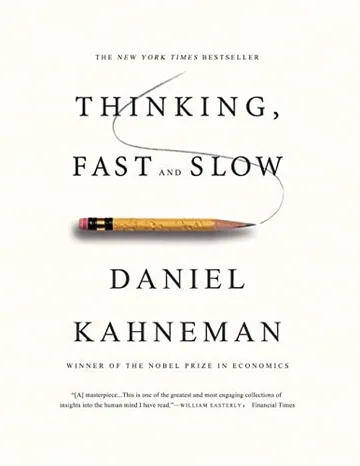
Ada: As for a book, I would recommend to everyone "Pułapki myślenia" by Daniel Kahneman to read. The second book is "21 Lessons for the 21st Century", also a wonderful title, I warmly encourage reading it. And as for listening, I definitely recommend the podcast "Dział Zagraniczny". All sorts of topics are covered, I do not know if you know it, but it is very interesting, a super option to broaden your horizons and learn more about topics that are not necessarily popular in the social media space in Poland.
Rafał: That is incredible, because I have Kahneman and give it away. Harari's "21 Lessons for the 21st Century" was in my company library in two languages as soon as it came out, because I like Harari and his style very much. I do not necessarily agree with everything, but that is not the point. And "Dział Zagraniczny" for years I have considered one of the best podcasts in the Polish podcast sphere. Apparently there is such a word. It comes out every Thursday morning. I also encourage listening. At the very end: you can be found on LinkedIn, as I saw. If anyone had questions.
Ada: Absolutely, I also work a bit in the social media space, so on Instagram and on TikTok too, if anyone feels like listening about the environment, about the climate, I invite you.
Rafał: We will link. Thank you very much. It was a pleasure.
Ada: Thank you once again for the invitation. It was very nice talking with you both today and yesterday. I am glad I could tell about SLAPPA, about my mission, but this conversation was really inspiring and developing, so thanks for the good questions. I hope we will manage to talk again someday, if not about SLAPPA, then about other around-SLAPPA topics.
Rafał: I hope so too. All the best. Bye.
Ada: Thank you very much. Bye.
Listen and watch
The same conversation in your favourite app.
The full edited transcript as a Markdown file, with the guest’s details and quotes.
Back to top