

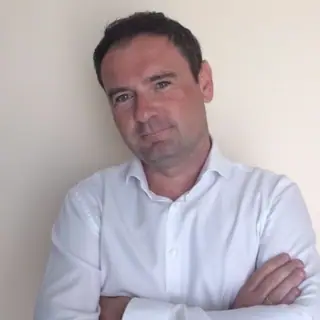
Who is Miłosz Nowakowski?
- Who he is
- Miłosz Nowakowski, an expert in business intelligence and brand monitoring in e-commerce. Since 2021 he has developed data analysis systems at Brandly 360, and earlier for 17 years worked in the technical security industry.
- What he does
- Brandly 360 delivers to clients not raw data but reports, views and methods of using it, including automatic dynamic pricing. The tool works on a subscription and consulting model, with long-term cooperation with the client.
- What we talk about
- How to plan monitoring of a brand and competitors, what to monitor (prices, availability, reviews, promotions, delivery), the role of marketplaces and price comparison sites, preparing a company to use data, dynamic pricing and margins, differences between industries and markets, implementation costs, project examples and the future of monitoring with AI.
- Where to find him
- brandly360.com and LinkedIn (Miłosz Nowakowski).
Best quotes
„It is always worth trusting data more.”
„The goal always has to be there at the start.”
„Business graveyards are also full of people who thought it would be that way.”
„Let us not get attached to wrong data.”
Recommended materials and sources


Related conversations




Transcript
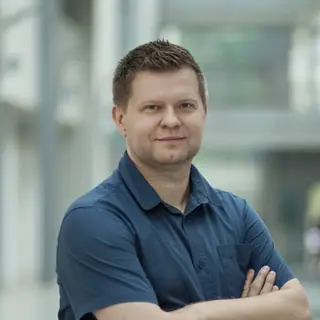
Host: Rafał Moszkowców. Guest: Miłosz Nowakowski.
Introduction
Rafał: Hi everyone. Welcome warmly to another episode of Globalne Horyzonty. Today my guest is Miłosz Nowakowski, an expert in business intelligence and brand monitoring in e-commerce. Since 2021 Miłosz has developed data analysis systems at Brandly 360, and earlier for 17 years worked in the technical security industry. In today's episode we will talk about how to effectively monitor a brand online, from tracking image to analyzing prices and using data in strategic decisions. This episode is a practical guide for companies planning foreign expansion and those who want to track their competitors and their prices. Welcome, Miłosz, to Globalne Horyzonty.
Miłosz: Hi. Hello everyone.
Rafał: Great, nice that you are here. I am glad you found us, that you did not get lost. It is a bit hard to find your way in our building at times.
Miłosz: There is always the phone.
Rafał: Which I used when I was getting here. Great, really, that you are here. I have an idea for today, that we approach it practically: that we tell how Brandly 360 works, how it supports an organization, but also a bit more broadly, from the market perspective, how we could show our listeners why monitoring, for example, prices and analyzing data is important, especially in e-commerce, but not only. Does that sound good?
Miłosz: Of course.
Rafał: Let us imagine that as the owner of a company entering foreign markets I wonder how to effectively monitor my brand online. I would like to treat this episode as a practical guide on how to track brand image, monitor prices and use data to make strategic decisions, and that is what we will base it on.
Why is brand monitoring key in e-commerce?
Rafał: The first question that comes to me right away: why is brand monitoring key for business, and for e-commerce probably even more than for others?
Miłosz: Monitoring of a brand, and not only of a brand, is key for business in general, everyone knows that. What distinguishes e-commerce? I think most of all its dynamics. The dynamics of what happens in e-commerce: changes in customer preferences on one hand, in market preferences, in what happens around, but also the dynamics of how our competition can change everything quickly. It is completely incomparable to a brick-and-mortar shop. In e-commerce things happen here and now, from hour to hour, from day to day, very often even from minute to minute, and this monitoring is very important for that ongoing dynamic.
How do you plan brand monitoring in e-commerce step by step?
Rafał: How should a brand monitoring plan look step by step? Let us imagine I have a shop, I operate on some market, I am going out to the next ones. How should it look, in your view?
Miłosz: There is a scheme that repeats and that is worth applying. First of all we must find a goal: what we really want to achieve, where we want to go. With going out to foreign markets it very often happens among inexperienced clients. They have great potential, built a very nice business in Poland and suddenly want to go out to foreign markets and decide: we have the money, we have the potential, we have the products, we are going. We go to all of Europe, to all countries. How do we do it? Let us check in which countries there is demand, and we sell. That usually does not work. We can sink enormous money and it does not work. We choose a goal, check in which countries there is really potential, how the competition works, how customers work, that is the second stage. But setting the goal is the first thing. The second is defining the KPIs we want to achieve: what we really want to achieve by entering this market or that. Whether it is to be the visibility of my brand on a given market, the position of leader in prices, or the position of leader in assortment, amount of assortment, anything. Once we set that, we choose the sources in which we want to compete, how we reach them and how we monitor them. The next stage is choosing tools, because monitoring in brick-and-mortar business was completely different. You could send people who ran around the competition and phoned.
Rafał: And for how much?
Miłosz: Exactly. In e-commerce certain tools have to be chosen and those tools are very different, starting with what we do, meaning competitor and market analysis, in parallel choosing tools that analyze internet traffic, consumer behavior and various other elements. Once we choose the right tools, we have to create a team or at least onboard a team, because it can be very small, it can be large, depending on what we do and how, so that it knows why we do it, how to use the tools, what the workflow is, so that using those tools makes sense. We implement. And the next very important stage is continuous optimization of our plan. It cannot be that we stand still. That is another thing that distinguishes this business: nothing stands still here, you have to adapt.
Rafał: In e-commerce there are also dynamic prices. From what I heard, there are talks in the European Union to curb that a bit. My next question: how do you approach implementing monitoring for clients from different industries? Do I understand correctly that the client is guided by you, set on some KPIs, but must actively act in their own field?
Miłosz: Absolutely. You started with two related things: dynamic prices are a narrow part of what happens in e-commerce, because the whole context of industry visibility, of what promotions there are, what campaigns clients run, what the availability of products of various brands, my competitors, is, are things as important as dynamic prices themselves, as price matching itself. As for guiding clients: we have clients from very different industries and each has its specifics. In a few industries we already have very big experience and can guide the client a bit through the whole process. But in most, also in those we know quite well, with every conversation with a client we use their knowledge. They have the greatest field for having that knowledge, sometimes they just cannot use it. But they sell us things that are very important in their industry, and we can turn into how to collect that data and how to use it later so it brings a result. That is how we approach every industry.
What is Brandly 360: a tool or a consultancy?
Rafał: So even before the implementation plan I can come to you and ask for a market analysis.
Miłosz: We do it to a smaller or greater extent. We try not to do one-off things, because those are costs. Consultations are one of the elements of what we do and quite an important one. But what I was getting at: we are not a tool where the client says: I have 1000 products here, I want to monitor prices, price me, I send you the list, I get data and you should not care why and what I do. If a client acts like that, I probe and push for us to talk, for us to find out what it is for, what we want to achieve, because that is also important from my point of view. We try to sign contracts with clients with whom we will be for years. We do not want someone to buy something and later say: damn, I actually do not know what I get from it and what I wanted to do, I resign.
Rafał: So you are not SaaS, more a consulting company that uses tools.
Miłosz: In between, because the tool exists, is flexible enough that we will adapt it to which data the client wants to extract, in what way they want to see it and what they want to do with it. We adapt it so it makes sense for the client. So that it is not a dry tool that delivers an enormous amount of data, and later the client says: nice, but I have no idea how to use it.
Rafał: Like in SEO. A client comes to an SEO: good day, I would like a keyword research. Here you go, here are 17 million keywords. Thank you very much and regards. Goodbye. I understand that. We have a very similar approach: we try to get deep into the client, if we deliver the service comprehensively, to understand them and draw out what they have.
What to monitor in e-commerce: prices, reviews, promotions, delivery?
Rafał: I have a segment: e-commerce data, what, how and why. Prices, reviews, opinions, mentions: what to monitor, what is the most important, in your view?
Miłosz: Depending on what we do and at which stage we are. And who we are: because we are talking about two things. There are brands that want to go abroad and there are sellers that want to go abroad, and two different things are important for them. Considering foreign expansion, we very often make a mistake. It is the case of our client, who modified their way of thinking: a multi-brand distributor that has many brands and many products of the most varied kinds. They decided: we are going abroad. Of course the most important markets, the United Kingdom, Germany, where there is potential. When they came to us, they were already after the first attempts. In short it turned out that they decided: for now we leave Germany and the UK, we go toward the Czech Republic, and it went very nicely, we go toward Slovakia, the Balkans and there it went very nicely. That is one thing. The second: suddenly it turned out that out of the whole portfolio of products let us try to sell this much. After real market research it turned out that maybe those products sell well with us, but for some of them it is a pity to spend our money, on marketing, on sales abroad, because we have too much competition there, too little demand, because it pays more to draw bigger money from just part of our assortment. Those things often have to be checked first.
Miłosz: And what is important later as regards prices: two years ago practically 100 percent of our clients came and said: I want monitoring of prices and possibly product availability, which always run in parallel, because from the listing it is very easy to check whether something can be bought. For about a year it has been changing, since one of our best-known sales platforms started productization, changing the way and adapting to what is happening on the market with marketplaces, which are, let us not hide it, one of the most important sales channels in e-commerce now. They decided: it matters to us that our products are on top, that customers see them and want to buy them, so we want the top offer, the buybox, and it is not always the cheapest price. Prices are not the only main determinant. It turns out that what matters more is what reviews we have, how many, how many positive, how many negative, what promotions we run, what promotions our competition has, whether the producers of the products we sell run some specific banner campaigns, and we adapt to that. Those are often key things that now sometimes play a greater role than monitoring prices alone.
Rafał: And delivery? Can we monitor that too? Because I, for example, on the subject of the unnamed Allegro, regards, I have some friends there, always choose only those who have Smart and I get delivery most often for free, I do not consider others at all. Is something like that monitored?
Miłosz: Absolutely. As regards marketplaces, we monitor many more things, specific to the marketplace: distinctions, deliveries, a lowest price guarantee. All the elements that are additional assets of an offer on a marketplace we can collect and that is very often important. And it is very often taken into account when we talk about dynamic pricing, about how we set rules for our prices: it is one of the conditions of which pricing path that rule goes along. Whether a given product at the competitor is highlighted, promoted, has the buybox or anything else: depending on that our processes go that way.
How do you monitor marketplaces and price comparison sites abroad?
Rafał: We mentioned Allegro as a marketplace. Can we monitor Allegro or eMAG with your tool too?
Miłosz: Of course. When we talk about international sales, about going out to foreign markets, the process we usually propose and which works best for clients is not to suddenly monitor the whole market in Germany, the Balkans or the Baltic countries. In every region, even every country, there is a dominant marketplace, a dominant price comparison site that is important. Sometimes they are different depending on the industry, but in each country we can, and very often the client can too, define which source contains the most data about what they would like to know from that country. Usually those are marketplaces or comparison sites. There is no sense in investing in monitoring 50 competitor shops on some market, because it is costly. It is easier to focus on one of the sources: eMAG, Pigu or even Idealo in Germany as comparison sites where those offers appear. Only on the basis of what we find there do we define who our key competitor is, what we have to compare against and where to focus our actions.
Rafał: I think that is mega useful and a very strategic approach.
How do you prepare a company to use monitoring data?
Rafał: Now I thought about how to prepare a company to use the collected data effectively, because from experience I know clients often receive data, even with a description, and later there is tumbleweed. Everyone looks at each other as to what happens now. We try on our side, doing SEO, to actively and strongly support the analysis of that data, but I wonder, on your side there must be even more data. It is even more key, because it often has a shorter shelf life, in quotation marks. How do you prepare such a company to use the collected data, and do you support that?
Miłosz: I already said a bit about that: we do not deliver raw data. We deliver reports, views or methods of using, for example dynamic pricing, the data we collect. Reports and views are fitted to what the client wants to draw from it. We can make charts, percentages, comparisons, statistics, whatever turns out useful to know what I should do today. The most popular element for product managers, category managers or someone who deals with pricing is daily summaries: who is cheap today. That is, a selection of data showing for example: show me all the offers for the products I observe that my competitors have today more than 20 percent cheaper than I do. We see who has promotions and we react on an ongoing basis. Speaking most generally, you have to prepare the team for that use and prepare the tool, two different directions. We meet three kinds of clients. Either the conscious client, who already has some processes arranged and knows why they want to monitor. That is the nicest client, who can give us the most feedback. The second: clients who so far did not do it, relied on a boss who knew everything, but suddenly hired a person because they heard something has to be monitored, who knows the subject and started the process. There is a team of two, three people who know what they want to do and how. And finally we land at a meeting with a CEO who says: I have eaten my teeth on this industry, I know what it is about, and where do you get such money for it. Then one element is convincing the boss of the team and finding synergy between them. Sometimes it is the other way round, and recently more often: we have more enlightened bosses who want to introduce something but have an unprepared team. We help steer that a bit, but we also strongly make it easier to use that data, meaning those resulting things that show up. In large companies employee rotation is popular: today someone uses that data, in a month someone completely different has to come in, see it and not spend three months getting into it, so it has to be simple. Fitting the data so it is simple for changing employees.
Rafał: You partly answered the next question right away: what in the company strategy must change for it to work. So generally you give consulting too.
Miłosz: Yes, from our egoistic point of view, so to speak.
Rafał: Of healthy egoism. We want to maintain excellent relations with the client and collect money over years. In Poland one does not talk about money, my love.
Miłosz: Of course. Wanting to do it, we periodically run, and our clients know it, webinars: we noticed it works, that we briefly review what is in our panel, because it is the simplest, universal for all clients. What the functionalities are, how to go through them, so new employees who have joined have such a cyclical introduction. The second element of the webinar is informing about what we did new, what changed, so clients have current awareness and contact with us. We force nobody, but most clients take part. We do it quarterly, sometimes more often, sometimes less, we are not that consistent with dates, but we try systematically, to maintain relationships and give them some inspiration about what they could change. We also monitor how often clients use our panel. When something starts to limp and it is less and less often, we ourselves reach out to the client: listen, maybe you do not have time to look in here, maybe you want that data in another form. Because soon the CEO will say: damn, why do I pay every month if nobody uses it. Then that situation is unattractive, better that we come out and propose to the employees ourselves: do you want it somehow differently?
Rafał: Exactly like with us: when a client does not react to reports, does not reply good or bad, it means something is already going wrong there, for example the marketing director hides reports from the CEO. We have all been there. Greetings to marketing directors.
How does monitoring create a competitive advantage in e-commerce?
Rafał: I would like to talk about competitive advantages: monitoring as an advantage. How to turn monitoring data into a real market advantage? Let us imagine I have data prepared in a certain way, charts, information, I monitor, how can I turn it into a real advantage?
Miłosz: There are two levels. The first, about which before the meeting we said two words, is prediction and what happens looking at historical data. Collecting data, we also collect its history and the client always has the possibility of viewing and using historical data for planning. The second thing, which I wanted to say and which is banal and simple: competing minute by minute, hour by hour, meaning the data we have tells us what we should do right now so my products do not start to lie in the warehouse, but sell, and so as not to sell them at the margin at which I could sell at a bigger one. Current data help with that. That is the real, current advantage.
Miłosz: The second, less noticed, is for example screenshots of products from whole categories at competitors, which let us adapt our offer, our portfolio. Checking for example how many products I have in a given category versus how many other producers have. Are my products noticeable there? What is their price range relative to competitors'? Should I not add in a given category some products in another price range? That is, based on the picture of what the competition does, building your offer, and not stuffing it on the principle: after all I have a super product, a cheap one, it will surely sell. Not surely. An example from the clothing industry, which often underrates accessories. Clothing is a hard industry for monitoring, especially main categories, because producers make unique things, hard to compare one to one, and there is the matter of taste. But accessories can be very important. A concrete case: we have brick-and-mortar shops, boutiques, where 5 wallets lie in a display case, a lady comes, buys a coat and picks a bag, a wallet, gloves she sees and likes for that coat. In e-commerce that does not work. If we have two pairs of those gloves and the competition has on average 30 kinds, ours will be treated as exotic, nobody will notice them and nobody will buy them to go with that coat, but will look for ones that fit perfectly. We have to make sure our offer is complementary, so we do not sell one thing, but if there is something with which to support sales and grow the basket, here lies the field to observe how it looks at the competition, which things are popular. Another thing about marketplaces is screenshots of the top 100 sales of products in a category, the top 100 sellers, and checking what they do and what they sell that works. The first part is competition here and now, the second building your offer. In all this monitoring is really very helpful now.
How does dynamic pricing help maintain margins?
Rafał: Definitely. I imagined that I enter foreign markets, analyze a marketplace manually or manually the top 20 of my competitors and have 20 people for it, and go bankrupt. We cannot do that, especially in FMCG or fashion industries, where it probably changes every 15 seconds, so on my side some price automation would have to happen: a trigger that always 10 percent cheaper for example, or always the same price. Very often I witnessed empty categories or products out of stock, sometimes for one day, a second, a third, before someone realizes. When there is high turnover and no automation. And now what an opportunity: when the competition is out of stock and you monitor that, you push your product to the top. Suppose I have performance linked to it, I immediately boost the ad.
Miłosz: From our point of view that is very often something where dynamic pricing is used. Most of our clients say that dynamic pricing, more than for competing down on prices, meaning price wars, serves them for the fact that observing even availability lets them maintain margins. I have an offer comparable to the competition, and at some point the competition raises prices. Why should I stay with a low one? I can still be the cheapest, but higher. That is one thing. The second: the competition goes out of stock, the price stays the same, why should I have it at that? I can immediately raise prices and automatic pricing does that. That is the point: gaining on margin.
Rafał: When it is well designed and with popular products, it is a fantastic approach that changes the effectiveness of marketing actions. I am a specialist in SEO and foreign expansion, so I imagine that having such data I can pull up ROAS, marketing ROI. I assume I can plug that data into an AI model, for example you said about gloves, about accessories, that I can intelligently suggest products, accessories relative to various parameters.
Miłosz: Of course. Suggesting is one thing, and the other is what I said, analyzing what I should add to my offer to fill a gap I have not got, through which I lose sales of other things, because the competition complementarily offers a nice set.
Rafał: It will soon turn out we are promoting Brandly 360, but it really sounds like something I consider necessary for serious e-commerce.
What does monitoring look like in electronics and fashion?
Rafał: I wonder in which industries this monitoring gives the greatest benefits, and where effects are less spectacular, to measure my expectations as a shop owner.
Miłosz: It is hard for us to assess how far a client's spectacular success was due to monitoring alone, because it usually connects with the whole strategy and other things. There are industries that do not function without it. The well-known industry of electronics, which I know well, where margins are very often small and the fight for margin is such that without close observation of what the competition does it is hard to function, especially if we have about 1000 products. What you said, that dynamic pricing with popular products can make margin: with a long tail we do not pay attention to and that lies in the warehouse, it helps even more, because automation will look after all our products, not only the key ones we can physically care for. There are also industries where successes can be spectacular but can also be unproven. I would like to touch fashion, where the dynamics are completely different. There things connected with monitoring here and now are very important. A last year's example: 15 September, which is usually the magic date of the autumn collection arriving in various shops, and suddenly it turns out that on 15 September it is so warm that everyone does not care about the autumn collection. Colloquially speaking, it lies in wait for the moment, where we have chosen a few kamikaze products, a sweater that is to fight the competition for us, offered cheaply, and it waits for its moment. As soon as the competition makes a move, we must be prepared. Monitoring helps with that. Here there can be spectacular successes, but also something that makes it much harder. So rather than in which industries it helps and in which not, I would put it as: in which it is easier to use it day to day, and in which you have to think it through really well so it brings measurable, big successes.
Should you trust data or business intuition?
Rafał: You brought me right to the question I wrote down: when is it worth trusting data, and when business intuition?
Miłosz: Uff. I already started about those bosses who know everything and have eaten their teeth. It is always worth trusting data more. The question is only whether the data is good, because that is also important. Part of the companies that deliver data first do not do those resulting things that suggest what to do, and second the quality of data: it may turn out that we have incomplete data, or the quality of monitoring is such that we search by EAN codes and one shop uses them, another does not, in one they are wrongly assigned. On the basis of that wrong data we are to make decisions. Here, rather than trusting intuition, you have to intuitively look for a tool that will deliver good data. The second thing: we often have partial data. We know what is happening with prices, but do not know what is happening with promotions, with the availability of products on the market. Basing on only one datum, we make decisions. In my view data always has an advantage over intuition. Intuitively it may work out, may not, there is always that chance, either or. When we base on concrete data and have that workflow worked out, what we want to do with it, I think data is unbeatable.
Rafał: Definitely. But awareness of your brand, industry, competitors, market, prices, suppliers and some business intuition combined with good data is probably the key.
Miłosz: It helps a lot in going abroad, because often we do not know what to hold onto. Let us enter all countries with all products, that does not work. Sometimes the awareness that there is a boss who has traveled to a million conferences around the world, knows in which country it is worth trying, because he is in talks, is something that suggests where to try, where to start.
How do foreign markets differ for e-commerce monitoring?
Rafał: In your tool we probably also cannot measure sentiment, for example toward made in Poland products. There are countries where it is hard to sell products from Poland, and there are those that gladly accept them. Do you take it into account?
Miłosz: As for products, it varies. Our products are very liked, reportedly, in the Balkans, which I mentioned, it works very well for us and sells nicely, and the Baltic countries too, where you can go out with very different Polish products and they are well viewed. The already legendary Germany, which is varied and capricious as regards products, but also the way of selling, and you have to prepare well there. As an example that not all products everywhere: a large distributor, a manufacturer of electronics, specifically laptops. The same manufacturer that is very strong in Poland, as for Europe and managing the brand's sales in Europe, it turns out the most equipment sells in Germany, because it is a large market, and the UK too. Germany is probably the first commercial market in Europe. Lots of popular equipment, laptops for teachers, a starter kit for a student, that changes proportions. But it turned out that in gaming equipment we, as Poland, crush it, colloquially speaking, and beat probably all countries in Europe by a mile, at least from the data from that manufacturer.
Rafał: You cannot say that, because the competition is probably waiting for such information.
Miłosz: That is how it works: some products reluctantly, and some products definitely.
Rafał: I wanted to ask about the specifics of monitoring on different markets. I like the approach of selectively monitoring different competitors, different products, not going in with everything at once, because without an automatic tool you cannot do it, without a horde of people, which few have money for today. What else in the context of the specifics of monitoring on different markets?
Miłosz: Besides what we do, you have to add tools that help in analyzing sentiment, the popularity of different products and product groups in different countries, for example monitoring social media or mentions of the brand, of products in a given country, because it gives a certain starting picture on whose basis we can decide: let us try and check exactly what the market looks like here and with which products we can enter. Initial recognition connects with what people like there, what is popular, how big the competition is. In monitoring we must not forget the language and currency differences. Monitoring opinions about a product, meaning all comments: it matters that we read it in Norway, Germany or Poland, languages differ a lot and it is worth translating, reading. AI can already do that quite well. The point is to see which things customers pay attention to here and which in Poland. And currencies are another thing, not only currencies, because very often people make big mistakes and wrong decisions, not analyzing and not monitoring that. For example I sell products on platforms in Poland, in Germany, somewhere else. Every marketplace has its costs. On top of that transport costs. And in the end we check what margin we have here and here. An example of a client who sells products of which they buy, say, 5 thousand pieces and will never have the same ones again: sports shoes for footballers, a series comes out, some pink ones, and such will never appear again. We check costs, margin, how much I earn selling it in Germany, how much in Poland. And suddenly it turns out that half a euro better on one market, and in both it gets popular, so let us raise the price a bit in Poland. Why should I sell it in one day in Poland and earn this much, when I can sell it in two days in Germany and earn more. Those are things worth observing internationally: analyzing costs and differences in where I earn how much and how fast it sells. Why sell out? It usually makes no sense, because soon customers will come and have nothing to buy from me.
Rafał: Exactly. It is not always about sales volume, but margin.
What other tools exist and how much does implementation cost?
Rafał: What other tools besides yours are worth considering for e-commerce?
Miłosz: Those I mentioned that analyze social media. For example Brand24, mentions. It is one of the tools we are fairly often confused with, clients often call and ask whether we also do what Brand24 does.
Rafał: Will Michał Sadowski go out to play football while I call for access.
Miłosz: Tools of this type are quite important to find your way around what people look for, what they like, do not like, how they assess certain things, which mentions are positive, negative, in general in the internet, not only in e-commerce.
Rafał: Trends and many other things happen for example on TikTok.
Miłosz: That is another thing we will probably still talk about, what will happen in the near future.
Rafał: I have a crystal ball somewhere, I will pull it out in a moment. The classic question: how much does a good implementation of a monitoring system cost?
Miłosz: It can cost little, it can cost a lot. Little, a lot are words that mean nothing. My conversation an hour ago with a client who asks me how much it costs: with us it starts, say, at the pain threshold, a few hundred zloty, from 800 zloty upward. There are tools that cost 200 zloty, fewer and fewer use them, they check something, but we do not quite know what. Depending on what we want to do, I usually urge clients to start with something. We do not want to monitor 35 shops and spend a pile of money which it is unclear how it is to return. Let us start with something, recognize what is useful to us, what brings money.
Rafał: Let us set it in an example. I am a shop with 1500 products in the sports industry, sports footwear, accessories. I want to be with my products in Hungary. What do I have to count on?
Miłosz: Take one of the most popular marketplaces there plus some comparison site. The real cost is on the order of 2000 zloty a month, of such a start that will let us find our bearings and control reasonably on an ongoing basis.
Rafał: And what startup fees?
Miłosz: Not with us. We assume we want to cooperate with the client for a long time, so the subscription is the only thing we charge. We take a certain risk on ourselves, of the first outlays. Of course in time it has to pay off for us. I would not get attached to those amounts, because among clients we have a range of what they pay, and it turns out that as they stay with us, we do a lot of upsells and it grows, but at the moment clients see that it pays to pay for something. For beginner clients I say: how many products do you have, how many do you sell monthly? The conversation about low fee thresholds is with clients who started selling on Allegro, have quite a lot of products, cannot control them, want it to make things easier and want it to earn for them. Please calculate how many products you sell monthly now, what average margin you have on a product, you can easily calculate from the costs I will present what percentage of that margin you have to pay me per product. If it already pays off for you now, we assume it is to earn for itself, and soon, if it really starts to pay off, it will be a smaller and smaller percentage of that margin. And if it turns out you want to expand, you will know how and what you want to do and how much more money to put in so it still pays and brings ever bigger profits. That is how we approach how to make an offer to a client.
How do you integrate dynamic pricing with an online store?
Rafał: In that context: I have success, I have a million zloty of monthly revenue, I must go further, I have a glass ceiling on a given market, but I have a shop on a SaaS, let it be Shopify. Can I use your data to have dynamic pricing? Is that possible?
Miłosz: Dynamic pricing is usually the only case that in such tools requires direct integration, data flow. Everything else involves delivering reports in an appropriate form. We also have clients who have their own analytical tools that they developed greatly over the years, and are interested only in raw data passed through the API. Most clients want to use what we deliver and that requires no integration. With dynamic pricing we identify with which tool the client steers prices in the shop, whether it is a shop built on something specific, or BaseLinker, which is very popular. Like it or not, never mind, but it is there. Integrations at API level can be done with almost any tool that exposes communication with external tools. It is not the integration I met some years ago, when I implemented an ERP system, where the integration requires one tool to change some processes completely in another. Here it is a data exchange, fairly simple, in quotation marks. We have to know the base, minimum price, below which, in a very simplified version, we do not go down, because it is the holy price at which we start to lose, plus some costs. The client's purchase costs are also different: I buy from different wholesalers and some batch of goods is bought at this price, but soon it runs out and the one we bought more expensively begins, so the software has to get data on what the starting price is. It also has to get data on the current price from the shop, meaning we have to monitor current prices. Dynamic pricing always allows us to exclude some group of products from automation, because for example we have a nice promotion and for a few days we want to steer those prices manually or hold those prices at a level. When we switch it back on, the software has to read what the current price there is. That is one direction. And in the other direction come the proposals for those prices that are to appear, or direct change of those prices in the shop resulting from the rules we set. That is the whole integration usually. On top of that very often clients also supply us as conditions with data about which products sell well for them and which less, in the form of quantities or tags that make one product a slow mover and it has to be sold with a different pricing rule, because we want to clear it out, and another is a popular product on which we make margin and goes by another rule. Depending on how that changes dynamically, if that information reaches the system, it puts the product into this or that pricing path.
What results did monitoring and dynamic pricing projects deliver?
Rafał: I imagine a well-integrated tool with nicely thought-out paths and good performance can really bang. Do you have an example of a project of which you can say it improved some concrete, measurable numbers?
Miłosz: We have a dynamic pricing project for a large electronics distributor, where dynamic pricing was two-phase. Its implementation was preceded by monitoring and what I said about selecting products in a category, about changing the proportions of the offer in categories. The second thing: monitoring of prices, and not only prices, allowed us to make product roles. There are products that are traffic builders, they attract traffic, and sometimes we have to sacrifice a bit of margin so the customer wants to look in, and the further role of rules in dynamic pricing is to draw attention to the other things we have. We started with one category. It was done for a quarter in cooperation with their PMs, who analyzed it strongly. After a quarter we set rules that in the next quarter gave a real increase: in a certain product group, where there were two-three products we checked strongly, an increase of about 20 percent as regards sales, with an unchanged margin even. On the other hand there were tests on how to raise margin, and it succeeded there, admittedly by a smaller percentage, but altogether we got to almost 30 percent of what they could achieve more. The competition does not sleep, so it is not that once we set something, it will stay that way. At the moment tests and implementations in further categories are ongoing.
Rafał: Those are very big numbers, especially with a volume of products.
Miłosz: It is more about volume, because margins are not big. Another, completely different example, of a quite nice success: a man came to me who said: listen, I had a lot of money, so I bought containers of various things from China, very different things, I have no idea how much to sell them for, how to price them. A company that does something completely different had a budget surplus and they decided: we will play at e-commerce. He found a contractor, bought containers, a mishmash from electronics, what popularly comes from China, besides clothes, which are the domain of other platforms. He said: actually I will be left with this, because I do not know how to price it. We put in the whole lot, monitor and check what to do with it. He hit some things on which he earned quite a lot, and some on which he earned less, but they did not remain in those containers, and decided: now I know what to buy, what to pump into the offer, and it goes on with quite nice sales success.
Rafał: So he started with monitoring.
Miłosz: He entered e-commerce and at that moment started with monitoring and decided he is staying in e-commerce because it works.
Rafał: He started with analysis: what works, what can I sell at margin, what not. That again shows what I repeat like a mantra: without strategy, without competitor analysis, without market analysis, you can put all your ideas in your boots, or it will be fortune-telling from tea leaves. Yesterday I had a chance to record with Damian Sałkowski the same thread in the context of AI implementations: a strategy is needed, concrete problems we want to solve, and then it works.
Miłosz: Of course, the goal always has to be there at the start: what I want to achieve.
What will e-commerce monitoring look like in 2–3 years?
Rafał: Miłosz, I wanted to move to the last segment, because you convinced me it makes a lot of sense. I will tell you that I did not quite understand how you function and how Brandly 360 works, because we had a chance to talk once and I think you went much further. I pull out the crystal ball: how, in your view, will brand and product monitoring look in 2-3 years?
Miłosz: I knew we would get to this, but it is fortune-telling from a ball.
Rafał: I will hold you to it.
Miłosz: You have already started twice about AI. We have to start using AI, there is no way back, it appears everywhere. We are already doing tests in a very simple way and it must work soon, in a year, two, or even earlier. First, using AI for matching products, for searching, for intelligence in searching the market. The second thing is using AI for drawing conclusions for clients, so that a client can, as in a chat, ask: listen, what do I do now with this and this product, because I do not know what the competition has, and the chat answers. Of course very much in quotation marks. We are already testing such an internal chat. It is not as simple as it seems on data that is enormous in amount and changes fast, but the chat cannot go outside, it is data we deliver to clients, so it has to move within it. And the second thing that in my view will change: the structure of sales is changing, new players appear, what we talked about regarding the number of customers on Chinese platforms and how it changes very dynamically, plus TikTok, plus elements of this kind of social, to which strong attention has to be paid, because that sales is also significant. I think it will go that way.
Rafał: As we talk today, TikTok is available in the United States, but obviously now in the States everything can change from hour to hour. And there is TikTok Shop. We do not have it here, probably nowhere in Europe, but someone may correct me if I am wrong. The whole fulfillment is de facto by TikTok.
Miłosz: It is more about the tendency, that alternatives may appear, but it will go that way: people sell with pictures and videos.
Rafał: They do not sell otherwise.
Which three things to monitor and which three mistakes to avoid?
Rafał: Three things every company should implement, if I have an e-commerce, in the area of monitoring. Three basic ones, summing up.
Miłosz: As regards sellers, shops, from our field the basics remain prices and product availability, because it is important, what you said, out of stock and other very strong things. And the third thing, a cheap option, I say right away: promotions. All kinds of promotions and checking what competitors do. As regards brands, more brand visibility, sentiment, opinion, comment monitoring, monitoring of competitors' campaigns.
Rafał: So also sentiment toward my brand, building positive sentiment.
Miłosz: Yes, and the visibility of my brand on a given market: what can I do for my brand to be more significant and visible.
Rafał: Here you can just come to me. I am not pushing advertising, this is not an ad video. Joking, do not come, I have no time anyway. And three mistakes to avoid? If you were to sum up, because let us say I am actually new to the topic: three things I must avoid so as not to be deceived by myself, by my own intellect or the intellect of others.
Miłosz: One thing, very timely: do not trust that everything is stable, that once I thought up a strategy, it will always work. You have to optimize, monitor and change.
Rafał: Do not make a strategy once every 5 years.
Miłosz: No, that will not work in e-commerce, it is a very important thing. Second: I once repeated that price works wonders, but business graveyards are also full of people who thought it would be that way. Let us not get attached only to wanting to be the cheapest, because either we will earn nothing or sell nothing and bury ourselves. And the third mistake, as regards monitoring: let us not get attached to wrong data. Let us check whether, first, the tools we use do it well, and second, whether the people are prepared, whether we are prepared to use that data. Because that is what we talked about, that we get a pile of data and do not know what to do with it. It is a common mistake.
End of the conversation
Rafał: Great, thank you very much. I think you opened this area for our listeners and for many of our clients. If listeners wanted to contact you, where is it easiest and best to find you?
Miłosz: It is easiest to find me at brandly360.com.
Rafał: And on LinkedIn, I assume.
Miłosz: And on LinkedIn of course, absolutely.
Rafał: I am active. Do you maybe have talks, lectures or webinars you will organize in the near future?
Miłosz: I admit honestly that I do not even remember the schedule exactly, but one of the webinars came out recently, we also appear at various conferences and trade fairs, so it is worth following our page or LinkedIn, because there we report on an ongoing basis where we are and where we will be. Besides talking with clients and analyzing, in parallel I try to show my face a bit too, for example doing things like today, a conversation with you, or various conferences, so we are here and can be noticed.
Rafał: Great, thank you very much. All the best.
Miłosz: Thanks, bye!
Listen and watch
The same conversation in your favourite app.
The full edited transcript as a Markdown file, with the guest’s details and quotes.
Back to top