

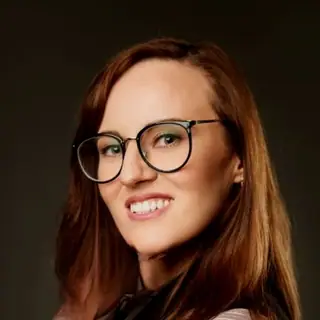
Who is Wojciech Czajkowski?
- Who he is
- Wojtek Patryk Czajkowski, a graduate of military studies (management and national security) who chose the startup path instead of an officer's career. He also lived and worked in Berlin through the Techstars accelerator.
- What he does
- He co-created the startup Emerald Air (an air quality sensor), worked with Intel and Cisco, and today works at a company building custom AI solutions for SaaS companies and corporations, mostly on the US market.
- What we talk about
- The path from the army to startups, lessons from a first hardware startup, differences between Poland and the US, customer development, why Polish entrepreneurs often choose quick profit over building a business, and whether AI will take jobs.
- Where to find him
- LinkedIn (Wojtek Patryk Czajkowski).
Best quotes
„When you make pancakes, you have to throw out the first one.”
„Listen to customers and sell from day one.”
„It is very hard to fall off a high horse.”
„In my view, AI itself will not take anyone's job, it will speed it up and make it more efficient.”
Recommended materials and sources
Guest’s pick
 openlibrary.org


Related conversations


Transcript
Host: Rafał Moszkowców. Guest: Wojtek Patryk Czajkowski.
Introduction
Rafał: Today with me is Wojtek Patryk Czajkowski, a man who studied crisis management at a military university before it was trendy. From what I saw, you also negotiated with Intel and Cisco, you were in Techstars, and today you are making a revolution for us in AI, which is why I am really glad you are here. Welcome, Wojtek, and I hope you have a hell of a lot of time, because I have loads of topics.
Wojtek: Hi, good morning, welcome everyone. Yes, before it was trendy. I think military studies at all the military schools are even more trendy now. Over time the job market has totally changed and the army still seems like an attractive path.
How did Wojtek Czajkowski go from the army to startups?
Rafał: Now we want it or not, it kind of turned out that military studies and that part of our economy is growing the most. I say you did it before it was trendy, and I am curious whether it helps you in life, because you have not become a general yet.
Wojtek: I have not become a general, unfortunately. I have friends in high military positions, company commanders, at the rank of major, being my age, I am 35 now. These are quite nice positions. It depends on which unit you are in, how lucky you are, because you need a lot of luck. A backpack helps: many people do not come to military studies with a backpack, and either someone has luck or they do not. You can land in a better unit or a worse one. But I think the path of an entrepreneur or startup person, an employee of tech companies, is just as interesting, and I think even better paid.
Rafał: A startup person today is kind of like a sapper.
Wojtek: A bit, yes.
Rafał: Why did you choose those studies? Did you want to be in the army?
Wojtek: I always wanted to be in the army. I had friends in my neighborhood with whom we drew rifles in our school notebooks. Honestly, I think I was too dumb for the army. At that time to get into officer school there were 500 people for one place and generally A-players got in, trained to get into the school or into a specific specialization. We have mechanized forces, chemical forces, you can be a medic, an artillery guy. Artillery requires a strongly technical background, meaning an extended final exam in physics, math or chemistry.
Rafał: Does the army require a high school diploma?
Wojtek: Yes, military studies require a high school diploma, at least in this country. There are other ways to become an officer, but then you do not have that respect in the unit. I studied at the Land Forces Academy in Wrocław, formerly the Land Forces Officer School, and the school's motto is: through thorns to the stars, because the stars symbolize the first officer rank. So the thorns: running at four in the morning, hard exams, and then you get the dream star of second lieutenant and land in a unit as the wheel turns: you could get a good one, or, being from Lower Silesia, you could go to Białystok, somewhere near the border.
Rafał: A hot place right now. What happened in your life that instead of becoming a general or a major you started creating startups? Your CV is incredibly rich, it took me three days to read your LinkedIn, and all of it interesting projects. I even dug into some Guardian archives, so I hope you are ready. What happened that you went into technology?
Wojtek: An interesting situation: in the end I graduated from the civilian faculty, management and national security. I could have finished an additional course and gone into soldiering as an officer, there were such options. But I was always hooked on startups, new technologies. It was 2012, 2013, 2014, it was just beginning. There were not many startups in Poland then. I always admired Michał Sadowski, I greet him warmly, we are friends to this day. I looked and thought: this is something I would like to do. Those technologies, startups, apps, traveling to conferences, speaking, because I have the personality of someone who likes to talk a lot, I am quite loud, which of course is sometimes a minus, I am quite direct. And besides, I wanted to build something of my own. I always dreamed about it, because earlier I had worked in a few companies and literally saw on my own skin how not to manage people. To this day I probably have traumas from that period.
What did Wojtek Czajkowski learn from the Emerald Air startup?
Wojtek: Then a friend I grew up with came to me. He was finishing the Wrocław University of Science and Technology, had access to engineers, had an engineering skillset. I was more business, marketing, sales. My nephew had health problems and we said: what if we made an electronic nose, an air quality sensor that would give good tips to moms, also dads.
Rafał: That was the Emerald Air project, 2014?
Wojtek: Yes, I think so, we started a bit earlier. It seemed great. I borrowed loads of smart books, read a lot about business models. I went to the first conferences in Poland, the first edition of Wolves Summit, InfoShare, which was just starting. In the startup world money was flying everywhere for everything then, in Poland it was just beginning, so we looked for financing. Young heads, we did not know anything yet, but we found it.
Wojtek: For those times a million zloty seemed to us like we had grabbed God by the leg. We are going with the topic, we have an investor, newspapers write about us, Puls Biznesu, they invited me to TVN, to TVP.
Rafał: I wanted to ask about those lights at TVN, apparently they are very blinding.
Wojtek: I remember it very pleasantly. I warmly greet Marcin Prokop and Dorota Wellman. It was a great experience, but stressful, in my twenties. Teachers at school used to say that nothing would come of this Wojtek, because he kept getting Ds in math, that he would end up as a cashier, of course no offense to any cashier, but that was the talk. And I had a drive: I will show you. As bad luck would have it, the product was hardware and software. We did not yet realize how expensive it could be to produce, but we did produce those devices. It was a big school. There were a few software houses, thanks to which I have various friends in that industry. Those were great times, but it was not cheap. And that million zloty burned fairly fast, not to mention promotion in the media and sales.
Rafał: Five would probably have been useful.
Wojtek: In the end it turned out that the investor had fairly good portfolio companies, promising ones, but from one day to the next the money disappeared from the account. It was paid out in tranches, at milestones. And sales: you come with an empty sheet of paper and say that this quarter we will have such sales. That is fugazi.
Rafał: Today most do it that way.
Wojtek: We launched a campaign on Indiegogo, a substitute for Kickstarter. The entry threshold was lower, because you did not have to have a company registered in the States. The community was quite big and projects really got substantial funding: someone believes in your project, pays you upfront, and when you finish, you send them the product. We did not cheat anyone, we had a working early beta, but the spreadsheets did not quite add up. Thanks to the tours and conferences we had very nice collaborations with Intel and Cisco, not only the local ones but the global ones. Back then they were really big cats. I remember that when we went to InfoShare, Intel gave us their fancy stand right in the middle, which cost a ton of money. What is more, it ran ads from its own accounts, advertising a product that is not theirs and from which they have no revenue: hey, this device is a game changer. Proud things to arrange. I thank those people, because they were really nice people from Poland and abroad who wanted to help young guys with a product vision. I traveled to Ireland, to Dublin, to Intel's European HQ.
Wojtek: To our bad luck, smog was not talked about much then. People did not buy air purifiers or air quality sensors and did not think about how air affects daily functioning, and companies even less. We later repositioned it as a B2B platform, where air quality affects how employees work in open spaces, how often they take sick leave, how much the company loses on it. There was even an idea to produce air purifiers.
Rafał: I remember that before the Polish Smog Alert existed, it was not talked about as a bigger problem, just that in Silesia the air is thick.
Wojtek: We had the app ready, everything worked, we spent quite a lot on the app and, of course, most on hardware. We were hooked on it, but there is a saying that when you make pancakes, you have to throw out the first one. Every time I make pancakes, the first one never comes out. And it was like that here. The investor was badly chosen. We did not look for smart money, only any money. We have a vision, we want to act. To say it straight, we earned pennies there. It is not like now, when you are a founder of a startup that raised 20 million dollars and you pay yourself a normal salary, because everyone understands that if you starve, nothing good comes of it. Back then the thinking was: we will give those students some money, they are energetic, here they will look, there they will learn and maybe it will work out.
Wojtek: I took a lot from it, because being super young then, I would not normally have had the chance to talk with people from Intel, Cisco or Deutsche Telekom. I do not know whether that fail is not worth more than if we had succeeded. A year earlier you look at Brand24, a great company to this day, I am a fan of the whole crew, and you say: I would love to have a company like that. And then newspapers like Puls Biznesu or Business Insider make a map of startups across Poland and there are 12 of them for all of Poland, there is Lower Silesia, there is Brand24 and there is Emerald, and you think: wow, that is already success.
What would Wojtek Czajkowski do differently at Emerald Air?
Rafał: What would you do differently if you could go back to that period?
Wojtek: For sure I would not do hardware. I would think only in terms of software, something easy to scale, relatively, maybe not cheap, but cheaper to build. And I would rethink the business model, because that was P2C sales: parents of children who worry about their health. We looked through the prism of electronic baby monitors. Every family that can afford it will spend 300, 400, 500 zloty on a camera, because it makes life easier. We thought: if parents are able to spend that on a camera, they will on a child's health too.
Rafał: Did you do any research?
Wojtek: We did customer development, I had read a lot of Steve Blank. I have those books here, like bibles. While others played games or football in student times, I read Steve Blank and put on YouTube. But as it goes in sales: until you sell, everyone tells you they will buy. When we came out with the product, we had people who said: yes, I will buy, we sent them the link, and that 400 zloty is not so easy to spend on the spot. I would definitely do many things differently: I would not go into hardware, maybe I would look harder for smart money. But it is easy to say today. Today I could say I would have bought Ethereum and bitcoins, I would have taken five loans and bought three apartments on top.
Rafał: Who knew. I remember that in 2011 or 2012 an acquaintance showed me bitcoins: look, this is how you mine them. I said: what are you doing, I do SEO, serious things. I did not let myself be convinced. Today that acquaintance runs a startup valued at about a quarter of a billion dollars.
How does building a startup differ in Poland and the US?
Rafał: What are the differences in building a startup in Poland and in the States? And it is not only about money, or maybe only about money?
Wojtek: Often in the companies I was in, these were Polish companies with satellites in the States. Being in the Techstars accelerator, which is American, we had access to American resources, to the flow of knowledge, people flew in from the States. I was lucky to be located in the Berlin office. But I mostly move on the American market, so I have my theories. I think that in the States there is first of all a different mindset. In Poland, even in Europe, there is this hard rock that is difficult to break, because in the States nobody looks down on you. Nobody judges whether you are poor, rich, from Poland, Sweden, Azerbaijan or India. The States are a mix of people and nobody opines from above whether someone is better or worse. Because of that people from the States hold back less. They can make even a mediocre product into a very good product. Maybe it is not better, but they have a drive that my product is the best, and thanks to that they sell it. Of course it has to deliver value to the end user. That mindset that my product is the best, we do it best, we do not look at competition, we just do our thing, gives very good results.
Wojtek: Europe is quite specific: if you try working on the DACH market, then the Swedish one, then the Polish, the differences are colossal. I do not like generalizations, but being in the shoes of a guy who does growth, I have a view on how it is to work with Germans, Swedes, in the UK. Germans speak great English, but when it comes down to it, they often want to talk with a company that speaks German. First meeting in German, later we can switch to English. Living in Berlin as part of Techstars, I once got a slap: slow down a bit, because you are from Poland. It was sad.
Rafał: Seriously?
Wojtek: Quite sad. But I think in the States it is easier to do business, first because of that mindset, and second because of the network. It is a huge country, whatever you do, you potentially have a target group: from rednecks on farms to New York and glass buildings. It is a huge country, unified in mindset, because the impact of television is huge. In Poland, take SaaS companies: those that buy and have money to invest, maybe 25, max. I mean those that are really in Poland. ElevenLabs, a great company, a Polish company, but many people will say it is not a Polish company, because the guys finished university in the UK and opened it in the UK. Recently there was an article on LinkedIn about a startup founded by a woman, the CEO is from Poland, the CTO is from Poland, part of the team is from Poland, and they write it is a French startup, because they have an office in France. My view: it is a Polish startup. That it has foreign financing does not mean it is from France. I left a comment on LinkedIn: with a CEO from Poland and a CTO from Poland, what kind of French startup is that? I would like people in Poland to be proud.
Rafał: Maybe Poland is not a good brand, maybe that is the point, that this country still does not have a good brand.
Wojtek: It has a bit of a stigma that we do not know how to sell. We have super sharp minds, we can do great things, but then someone with capital comes, buys us and says: okay, this is British. Take Wedel: I did not know that Wedel was bought by a foreign company.
Rafał: It was founded by a Polish Jew, by the way. Many icons of Polish FMCG belong to other companies, but it is a natural process of globalization.
How should founders do customer development?
Rafał: Someone comes to you and says: hey, I am building a SaaS, I have great software that solves problem X. What one piece of advice would you give them? Just do not say: get a job.
Wojtek: Listen to customers and sell from day one. Ask everyone how it is going. Bounce it off the wall. Do customer development. Often we think we have a great solution for a super burning problem, and later it turns out it is neither a burning problem nor more than a mediocre solution to a problem. That is where many startups fall flat, because they think something. It has been written about in customer development books for ages, and people who succeeded in Poland have said for ages: before you raise money, go, test, collect letters of intent, meet for coffee, act as if you had the product, say it straight: we do not have this yet, but we want to build this and this, would you buy it if we had it? And how strongly would you recommend it to friends? Customer development is still turbo underrated. Similarly in marketing and sales: people copy marketing programs from others because something is fancy, popular, trendy, without looking at their own business model, their own market, customers' needs.
Rafał: Is there no knowledge here about customer development? Many startups arise on the basis of N equals 1: someone told me they need such a solution, so we build it and try to fit it into the market. With a service like SEO I see that large and medium companies decide to expand to foreign markets because someone once bought something or because the board made such a decision. When I ask about research, about customer development on the local market, most often there is none. It is guesswork, like playing roulette. And in the UK I have the experience that there is a much smaller corporate hierarchy, much more openness, feedback circulates up and down, people talk more, have more responsibility. I generalize, but my experience shows me that.
Why do Polish companies lack customer data?
Wojtek: I did some consulting for companies, mostly technology ones. A sizable firm, about 150 people, even 40 million revenue a year. And you think they must have the basics covered. You start a deep dive and it turns out we have no data on why our previous customers bought, or that all customers came from a partner, and really we have one customer who came to us, called us, a big corporation, and we do not even know why. And now, going into 2025, we would like inbound marketing so it flows in, because we look at other companies in our sector and they grow nicely. So fix it, Wojtek, and fast.
Rafał: And fast, because there is little time.
Wojtek: We start: who is your customer? Our customer is basically everyone. Okay, let us sort out the unique value proposition per customer, per segment. It takes 2-3 months, because departments are fighting: delivery says one thing, sales another, the technical department another, then the CEO comes and says it is all plowed under. Total rubble, and you wonder how these companies function. With 40 million revenue and 10 profit it looks fine. They want to grow, new markets, but they do not get customers on their own, they ride on one partner, and what if that partner topples? They have no customer development, they do not know who to target. I think no matter whether the company is big or small, everyone in Poland has similar problems.
Wojtek: I do not know whether it comes from wanting things fast: when there is an opportunity, a window, we drop everything and cultivate that garden while there is a chance. That is understandable, but in wartime and in peacetime we should act differently. If we have customers through partners and we have means, let us invest earlier to start cultivating a second garden, not only when the soil stops giving fruit in the first. Nothing can be done fast, unfortunately, especially in times when competition is at every step and often does it better, because it has more resources, better clients, a better CEO, marketer, growth manager. In the top positions in these companies there are smart people, but smart on the technical side, and on business basics a bootstrapped startup person with no 10 zloty in the account beats them. I think it is a remnant: we have a complex that there was nothing, and when an opportunity to have something appears, we throw everything aside to carry out the task that will bring fruit.
Is it better to profit quickly or build a business?
Rafał: I like to say that in Poland we do not build brands. We build a product that someone sells. I often hear: we are looking in B2B for three, four buyers in Germany, they will buy our products in bulk, add a margin and it is great. I ask, first, why would they buy it, and second, what happens when they see how it is made and start making it themselves in China. Why is there no further planning? The first thing that should come to mind is what threats it carries. I know people who run companies in order to have a house in Portugal, a house in Bali and two in Poland, and for every profit, instead of reinvesting, they buy an apartment to rent out. They are objectively damn rich, but they build nothing.
Wojtek: I understand, I do not negate it. There are different types of companies: if someone has dropshipping and it is enough for two Panameras and five holidays in Miami a year, I truly root for them. A bit of envy. But health is a super asset and you can have everything and lose your health overnight. Today you have a Panamera, apartments, it is warm, nice, but the world does not stand still. I could not sleep peacefully knowing it could fall apart fast. It is very hard to fall off a high horse. I was recently at a conference in Wrocław and the leading motif was that heads of software houses drive Porsches around nice locations and that is their life. Today you have all of it, and in three months you can throw it all away. In my view, if you do not invest your time wisely, do not learn things from the borderlands of business, strategy, customer development, today you have good money from dropshipping, in three months it falls apart and you are behind, because you do not know how. If you do business sensibly and place your resources sensibly, you learn, you start another business, even screw something up spectacularly but learn, then potentially your CV is better and you build a safeguard in the form of a second business. I see entrepreneurs who rode the wave of photovoltaics and heat pumps: two years ago a guy worked for 4-5 thousand, and suddenly he drives a Ferrari, because he got lucky, knew someone. But it can end very fast, and there is no hard IP from it or strategic learning. It is a heavy backpack you have to carry with you. I would not sleep comfortably knowing that today I have cash but I am burning it and not investing in myself or in other ventures that could protect me.
Rafał: My whole life in business looks like this: I do not spend that money. Once I bought an expensive car, it broke down twice, and I lost the desire. I pay myself enough to be comfortable and invest the rest in myself, in the team, in a new project. I feel that business is about building something. That is my drive: creating, shaping my surroundings the way I want, and it also produces money, a good margin, gives people joy, solves their problems. Sometimes I look at someone with envy: I never thought he would do so well, but he has the cash. Such people often do not think about building career paths and HR in the company. We go, and there is cash and that temporariness, which I think is culturally programmed in us, also by our country's history: we are at the junction of tectonic plates and whatever works out soon stops working. Maybe it is a programmed trauma: okay, while there is a chance, let us do it, we will think later.
How do Poles approach money and business?
Wojtek: Honestly, if I were in the shoes of someone with dropshipping that is booming because they buy toilet seats for pennies in China and sell in Europe at a 10 thousand percent markup. I heard from an acquaintance that his acquaintance trades miniatures of the Virgin Mary, buys whole containers from China and has so much cash from it. There are many such strange businesses and these people build nothing, will not even think in that context, it is simply supposed to bring money. De facto that is also what business is for, let us not kid ourselves. I miss a drive toward hard IP, toward being part of an ecosystem. I know many people who could lie on Bora Bora for the rest of their lives, and their children too, but they do not want to, because they say: Wojtek, what is the point of lying on that beach? I respect it, I would probably lie there for half a year.
Rafał: I wanted to lie on Bali and it started raining. Someone told me that when you consider what business is for you, you should think whether it supports your goals, and then it is a business that is okay with you. If someone sells Virgin Mary miniatures from containers and it serves them, fine, but in my opinion that is not business, because you can learn little from such a person. I separate doing business from making money: first you do a business that later makes money in the long term and creates added value, and making money itself is easy. These days making money enough to live reasonably is simply easy, if you have an open head.
Wojtek: The question is how you want to earn. You could just as well go to any job and also earn. If someone has things sensibly arranged and low living costs, it is enough. I was always fired up by Gary Vaynerchuk, less now, but I still like him because he has a nice drive. He says: it does not matter how much you earn, what matters is what you do. It is a bit worn out coming from his mouth, because he has millions and it is easy to say. You have to put yourself in the shoes of someone who earns minimum wage and has a family. Talk that making money is easy will not reach those people, because they have a grind, come home, have duties, run on freestyle and do not have time to take a book and think what to do additionally.
Rafał: I come from a family of blue collar workers and if I told them money is easily earned, they would say: Rafał, you work 16 hours, you brat. My grandmother always said the most important thing is a steady job and security. That goes back to where we come from as Poles and what we were told for years. Why in Poland talking about money is hard, and when someone does it, it is in a twisted way, like detective Rutkowski. There is no normal relationship with money, with career and with life.
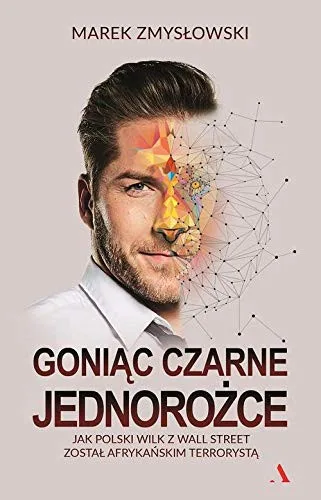
Wojtek: So we are not so totally negative, I noticed that there is some change on this market, and the approach to talking about money and business is somewhat different. I respect the approach of Marek Zmysłowski. He wrote a great book, "Goniąc czarne jednorożce", quite a few years ago. I do not know whether you had a chance to read it.
Rafał: I admit I have not read it or met him, but thanks right away for the recommendation.
Wojtek: A great book. Marek is a serial entrepreneur, I think I have a similar drive to his. He came from a family where money was not flowing, got into Rocket Internet, built an equivalent of Booking in Africa, an Interpol was chasing him there because of corruption, a great story. Now he is building Digital Nomad Cities in the Dominican Republic.
The recommendation: ICEYE and Polish tech companies
Wojtek: In Poland there are people who can do nice things in business. Recently I am delighted with one Polish company, probably few people know it: ICEYE. It is a world leader in SAR technology, meaning satellite imagery, governments of various countries work with them. A Polish company, Poles opened it. I am damn proud when I see such businesses in our country. I spent many years in tech companies, among others in software houses, and unfortunately in Poland we are often the shovel for other countries, but we can without shame be the brain: not only the digger, but also the site manager. It takes some time.
Rafał: Someone recently told me an interesting thing about the weak market for software and few orders for software houses. That actually it might be good, because very many projects in the world were done by great engineers and project managers from Poland for foreign capital and those people learned a lot, and now there will be better availability of experienced people for Polish organizations that want to build something, and maybe startups will arise that can compete on the market. During the pandemic hiring anyone who could write two lines of HTML bordered on a miracle.
Will AI take jobs?
Rafał: That takes us to the last thread: when will AI finally take over everything, I will have a robot at home and not have to do anything? Will it happen next year?
Wojtek: My personal opinion is that it will not take over. Yesterday I talked with the cofounder of Bards.ai, with whom I work, we do custom AI solutions for SaaS companies and big corporations. I ask him, because I am a bit afraid too of where it will take us in 20 years. He, a great machine learning specialist, says: Wojtek, look historically, when people went around with bows and spears and saw gunpowder weapons, they also said: Jesus, now everyone will shoot each other. It was regulated. I believe AI will not take our jobs, it will make them more efficient. In my view, AI itself will not take anyone's job, it will speed it up and make it more efficient. Imagine we have excavators, and many people used to say: why do we need excavators when we do great with a shovel. If you went back 70 or 80 years and showed someone a modern excavator, they would say: what the hell do I need that for, we have a horse and shovels. We are at the same moment, just in different times. If people do not want to go through that transition, meaning how to use AI to be better or change their skillset, then yes, they will drop out. Today very many AI agents are made every day, often boxed solutions do not deliver what is promised. A good copywriter is still needed, or someone who can use AI to speed up writing. I greet the guys from Surfer, a great company, with whom we are building their Surfer AI solution, one of the best SaaS companies from Poland. But you still have to figure out what you want to write, give the prompt, put in some work and thinking. It does not write for you by itself.
Rafał: Do you not have the impression that we do not know whether the acceleration in AI will not be huge? Midjourney changed in three months, what progress, and what progress there is with content done through RAG rather than the ChatGPT frontend. I remember testing GPT-2 in December 2020, we got API access, I greet Radek Paluszak, who signed up and bit his nails, how groundbreaking it was, and how weak. I feel like several centuries have flown by and that it keeps accelerating. I have a theory that in the space of marketing, SEO and performance agencies 9 out of 10 jobs will be taken over by artificial intelligence, especially low and mid tier. People with irreplaceable knowledge because of their experience will remain, and just as it was easy to get in and start doing digital marketing by watching YouTube and doing a few courses, soon it will not be possible, because you will have to work very long to reach a high level of experience.
Wojtek: To a large degree you are right, but I work every day with companies that come for AI solutions and say: we bought some solutions, but they neither work well, nor are correlated with our business needs, nor with how the organization functions, and they still need a dedicated solution. There is still a human factor, someone has to set it up, and after the project ends someone has to turn the knobs. Those who are now mid or junior must think: what do I do to become the operator of this AI. Seniors, someone who is 45, will not want to work forever either, there will be a natural transition and people will jump into operator vacancies. Those who resist will drop out. But there will be some work for them, because not everything will be automated, it would be huge costs. My mom said that when she was in her twenties, her mother said that when she is fifty, cars will fly. And somehow they do not. You can spit out an app in three days, you do not have to code for half a year and pay a million zloty, but it is not an app a bank could use. Someone will still do the backend, frontend, databases. If you put my neighbor, who sells car wrap film, in front of OpenAI or some other agent, he will not build you that app.
Will AI favour big companies or small ones?
Rafał: I am afraid of a few things: capitalism tends to maximize profits. I am not an optimist that huge companies will not pilot solutions that replace operators in factories. A company in the UK moved customer service to India and I could never settle anything there. The second iteration now is AI, trained on billions of conversations, and it is objectively better already. Thousands of people in India will be laid off. I have a feeling bordering on certainty that big companies will get even bigger thanks to AI, and we as small ones must also bite off a piece of the pie, because our margins will only fall if we do not start using it.
Wojtek: On the other hand, listening to people smarter than me, the boundary will blur somewhat that the big can do more thanks to AI, because being small you are fast. A friend, a veteran marketer from Texas, consults SaaS companies with 50-100 million ARR, and every year they make the same mistake: in December they meet for a strategic meeting and say: same as last year, just raise the marketing budget by 5 percent. They do not look at how funnels change, how customers' approach changes, how they buy and why. We are big, too big to fail, we go with this coke. That is a chance for small companies that cleverly optimize their time and small resources thanks to AI and can fight those big teddy bears that are slow, heavy: when they have to change something, it takes half a year, because an email must pass through a hundred rungs.
Rafał: An interesting thread. The question is where the small ones will learn to use AI. Does the company you are in deploy solutions only in large organizations, or also in smaller, ambitious ones?
Wojtek: We work with every cross-section of companies: small, medium, large. Strategically it should probably be a mistake, because if you are for everyone you are a bit for no one, but we have such a cross-section. I am not talking about totally small companies with 10 thousand annual revenue, but SaaS companies with at least 6-7 million ARR are already a client we can work with. A smaller project is 200-300 thousand per project, because the time of technical people is expensive. At a certain stage, if you are too small, there is no foundation for custom things, because most can be done by taking boxed products: I need a screwdriver, I buy one off the shelf, not a custom screwdriver. We work with startups, mid companies and corporations like Comcast, the third biggest company in the States. Most come with the question: tell us what we can do. It is a hard case, because not knowing the company you have to study business processes, what they would want to automate, whether it is back office or product. We prefer to make products, something that affects the client's revenue, because products give a bigger ROI than back office, which is time optimization and does not scale. We see growing suction on the market and more companies are aware that if they do not invest in AI, they will fall behind. Developers also come, not of computers but of buildings: big companies building apartment blocks have loads of ideas for optimization, more in the context of offers and documents. We have a nice case, I cannot name it, of a Polish state company that looks after the safety of flights over the Polish sky. We are proud that we are not only deploying AI that cuts costs, but contributing to our sky being safer, at least we believe so. Often companies do not come with the thought: how do we replace fifteen interns to save money. Fortunately. Though probably behind closed doors they discuss how to throw all these people out and replace them with one guy with one prompt.
Rafał: And regulation? What does Wojtek think about it? Legal acts are being created.
Wojtek: The worst thing is I have a feeling it is often done by people who do not understand it. The UK is no longer in the Union and there you can launch various models and test things, while in the EU we can do less and less. Because of that the market will not be competitive, because people from the States or the UK can do more, and it will not stop other countries. I would like there to be people in the EU who understand it, and not people making bans and orders. Even if the EU and the States said we regulate AI, someone in a basement would develop it, the Chinese or other countries, like weapons of mass destruction developed quietly in basements.
Rafał: I have an episode title: AI like a weapon of mass destruction. From what I read about the AI Act, really smart people who know the field worked on it and these are very general regulations that should not especially stop anyone from developing technology, they are more about use. I am not an expert, but I think I will catch a person who took part in that project and talk with them.
End of the conversation and the episode
Rafał: Wojtek, thank you so much for this conversation. We went through your professional history. I said it would not be easy because there is a lot and you have great experience. I am convinced listeners will take away a lot from this conversation as I have. I hope we talk again, when you take your current project to the stock exchange, because I think if you are at the center of AI, a fat valuation is probably coming. If you can slip me a share under the table, based on our new old acquaintance, remember me.
Wojtek: Sure thing, thank you. I hope something wise managed to be said. In super short form many threads, we did not manage to touch all of them, we would probably talk for five hours. Sincere thanks and greetings to everyone.
Rafał: Thanks, see you. Bye.
Listen and watch
The same conversation in your favourite app.
The full edited transcript as a Markdown file, with the guest’s details and quotes.
Back to top