

Who is Emilia Korczyńska?
- Who she is
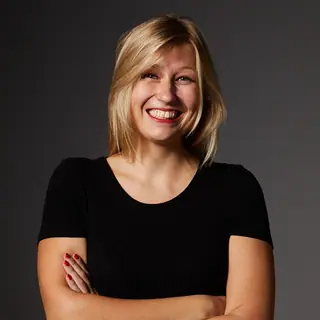
- Emilia Korczyńska, originally from Łódź, VP of Marketing at Userpilot, a company that helps SaaS organizations improve user experience and increase customer engagement. A graduate of the University of Cambridge (as she explains, a master's in linguistics), she lives in London.
- What she does
- She leads marketing at Userpilot, a company of about 100 people with offices in Austin and Dublin, with which she has been associated for about five years. Earlier she ran a translation and language services agency, worked at PayPal in Ireland, lived in China and co-created the startup Find in China there.
- What we talk about
- Growing up in Łódź, living and doing business in China, lessons from a failed startup, working at PayPal and Userpilot, experiences in San Francisco, choosing cities for events, ChatGPT's impact on traffic and search, and AI agents.
- Where to find her
- LinkedIn (Emilia Korczyńska) and the newsletter she writes.
Best quotes
„I always have this tendency that I like solving problems, not making money.”
„Maybe if something does not exist, there is a good reason for it.”
„I would definitely start by learning Mandarin really well.”
„Whenever you meet these people face to face, it is easier to talk business with them afterwards.”
Recommended materials and sources


Related conversations


Transcript
Host: Rafał Moszkowców. Guest: Emilia Korczyńska.
Introduction
Rafał: Our guest today is Emilia Korczyńska. Emilia holds a master's in philosophy from the University of Cambridge, but that is only one of many aspects of her impressive professional path. She is currently VP of Marketing at Userpilot, a company that helps Software as a Service organizations improve user experience and increase customer engagement. What is more, Emilia has exceptional experience behind her: she lived and worked in China, where she developed her own startup, and now she divides her life between London and the rest of the world. Emilia, I warmly welcome you and I am really glad you agreed to talk.
Emilia: Thanks for such a nice intro. I am not actually a master of philosophy. It is a title called master of philosophy, just a title like master, and de facto I am a master of linguistics. To be precise, just so nobody is surprised, because I am rather hopeless at philosophy and know little about it.
Rafał: Oh no, and I had so many questions.
Emilia: Let nobody quiz me on Kant, because my knowledge of the subject is very limited.
Rafał: I understood that Cambridge master's and thought it was inspiring, as if you had a full degree in philosophy. I know you spent a good deal of time at universities, so we will be able to talk about many things.
What was it like for Emilia Korczyńska to grow up in Łódź?
Rafał: Did I learn correctly that you are from Łódź? What was it like growing up in Łódź?
Emilia: I thought your first question would be: Widzew or ŁKS. That better conveyed what growing up in Łódź was like. When I lived in China, I once came out in front of the university where I taught, and a rather sizable guy who definitely did not look Chinese was standing there and asked me: Widzew or ŁKS?
Rafał: And what did you answer?
Emilia: I answered, and fortunately correctly, because in Łódź in the 90s a lot could depend on it. I like Łódź very much. As a child I did not think about how ugly it was. Now, even though Łódź has become much prettier, when you drive past the housing estates painted in pastel from the 70s and 80s, you can see it was more hardcore than we thought back then.
What are life and business like in China?
Rafał: I wanted to talk with you about China. I know little about that country, I have basically never been there. What are life, work and running a company like there?
Emilia: Extremely different from Europe, so much that I once wrote a little hobby book about it. It was a cosmic experience, as if you landed on another planet: not only a different language, but also the cultural aspects. I came there quite classically, through a university: I got a job offer out of nowhere at the British University in China. I did not even remember applying, so I thought it was a scam, but it turned out it was not. I was then running a translation agency that had grown into broader language services, including localization and content marketing in many languages. I was a bit bored with it, especially the initial translation aspect, so I took part in the recruitment, got the job and decided it was a great moment to experience something completely new and to use the chance to make some business.
Emilia: After a few months I met my future business partner, who worked at an app for expats. It was not the best app in the world, and the boss was not interested in my vision of improving it, so we both decided to quit, set up a company and make our own app that would do these things properly. In China access to maps in English and to apps aggregating local services and events was limited. Even if you got to Google Maps through a VPN, local businesses were not there, everything was on Baidu maps, and to use Baidu maps you have to read Mandarin, which was a huge problem for me. We came up with something similar to Foursquare, where users would add their favorite spots to a bilingual English and Mandarin map.
Rafał: That was 2011-2012?
Emilia: No, 2016-2018.
Rafał: The startup was called Find in China? What did not work out?
Emilia: It does not work anymore, we sold the company to a local employment agency for expats. We missed the mark with a very unreliable market study of how much Chinese businesses would want to add themselves to the map: the monetization model did not add up. Running the business in China was very burdensome, and the monetization potential turned out limited, so we sold the app to a company that could use the user base.
Rafał: The main lesson?
Emilia: I can never learn it, because I always make the same mistake. Maybe if something does not exist, there is a good reason for it. Making innovative businesses carries very high risk, which you can take when you have big funding. If you bootstrap something innovative and risky, you do not yet know how you will monetize it, and there are no paths beaten by competitors, it is exponentially harder and you need many times more resources to educate the market why this solution is needed. I always have this tendency that I like solving problems, not making money. In later startup ideas I fell into a similar trap: I focused on solving the problem and did not think how many people want to solve it at all and whether it would be profitable.
Rafał: If there is funding for solving a problem, monetization will come somewhere. I read a book about the history of PayPal, where two teams built solutions for palm devices and did not know which way it would go, but thanks to funding they found the problem to solve: payments by email. Someone wise told me that if you invest your own money in your own company, and a bank does not want to lend to you, something is wrong with the plan.
Emilia: That may be a good yardstick. There are exceptions, which get beautiful stories written about them, but in real life it is an outlier. Those were times when I did not even think you could take funding. In Poland, where I grew up, there was no startup culture. I had the experience of building a small lifestyle service business, my parents also run such businesses, so that was my reality.
What is business culture like in China?
Rafał: What surprised you most in business culture? That was in Ningbo?
Emilia: Yes. My life mistake was that when I learned Mandarin, I decided I would skip learning the tones. That led to funny situations, for example I had to get into four taxis to get home when my phone ran out of battery, because the driver did not understand what I was saying, I was not using the right tone. What surprised me most about the culture: it is a very relational culture. I am quite direct and I like radical candor: we say what we think, we do not play games. In China there is no such concept at all. Starting with basic things: I wanted a very transactional arrangement, for the agency to fill in the papers and deliver the company setup and visa, and for them it was five meetings, a tea ceremony and peeling special mandarins. You sit at the table, peel those mandarins for half an hour and do not know what to say. Such things cannot be skipped, because without them they will not write the papers with you.
Emilia: I remember the office was very rich, because in China everything is rich: gilded satin curtains, richly carved furniture with dragons. There was a small Buddha shrine there with candles burning. It is Friday afternoon, we are leaving, and the agency employee walks behind us. I asked whether he would not put out the candles, because leaving lit candles in a wooden shrine over the weekend seemed to me a health and safety violation. He looked at me nonchalantly and said: I believe Buddha watches over it. The second thing: the Chinese government is the Chinese government. If we think it does not look and does not watch, that is a big mistake.
Rafał: A real Big Brother?
Emilia: Yes. The agency did not do a thorough job and took the path of least resistance: it was easier to transfer the visa from one organization to another than to start the process from scratch. Because I had earlier been a teacher at the university, when transferring the visa they left my occupation as teacher. Someone from the government called my partner and asked why a teacher works on an app at a tech company. She kept her cool and answered: because it is an educational app. On Sunday morning, when I was in the shower, there was a visit to the apartment to check whether I really lived there, because in China you have 24 hours wherever you are to register at a police station. We also could not register the company, because if there is a foreigner on the board, there was a rule then that the company could not be registered within, I do not remember exactly, I think 800 meters of public buildings. China suspects you of espionage if you are a foreigner developing a business there.
Rafał: If you were to do a project in China today, where would you start?
Emilia: I no longer have enough contact with China to know what is happening there now. I would definitely start by learning Mandarin really well. I was totally dependent on my partner, and because candor does not exist there, at some point I did not quite feel I could trust her. That limited me a lot. I would spend a year on an intensive language and cultural course and understanding the place. I was totally unprepared.
Rafał: I heard someone mediates in finding a business partner in China. If you do not know Mandarin, the partner can twist you.
Emilia: Even if you know Mandarin, there is a chance they will twist you, just a smaller one. My partner once asked whether my then partner would be interested in being a fake engineer: someone pretends to be an engineer in a company so the company can get additional funds for innovation, preferably from a Western country, with a degree from a good university, but they do not have to do anything there.
Rafał: A straw man, in Poland they supposedly set up straw-man companies too. How long did you spend there?
Emilia: Over 2 years, about 2.5 years. Then I returned to the UK.
What did Emilia Korczyńska do at PayPal?
Rafał: What did you do at PayPal?
Emilia: Very silly things. It was my first job straight after university: the collections department on the German market, in Ireland. I knew German because I had also studied in Germany. I had then been accepted to a doctorate but without funding, so I could not take the offer and had no money to support myself in the UK without work, so I took the job offer without quite understanding what it entailed. I fell into the machine of an American corporation in Ireland, where you worked 11.5-hour shifts on the phone, on a dialer, and the systems were so tight that if you wanted to go to the toilet, you had to switch on bio break mode.
Rafał: Sounds like an SEO agency in Poland.
Emilia: Very tight productivity norms. At the time the experience seemed awful, but from the perspective of 12 years it was interesting how much you can arrange processes so everything is automated and processed. I worked there when PayPal was still merged with eBay. It was a dramatically bad app for many years, the pace of innovation was slow. It has changed a lot for the better now, but looking at fintechs, I do not know if it is because of regulatory limits, there is still a lot of room for innovation.
Rafał: Banks always lagged behind. I have had many adventures with banks in Poland recently, individually and for business.
Emilia: I am on Revolut support on average twice a week. I have business and private accounts there, and sometimes when moving money from one account to another, funds disappear from the frontend for a moment or the wrong balance is shown.
How did Emilia Korczyńska join Userpilot?
Rafał: How did your adventure with Userpilot start and what attracted you?
Emilia: It will again sound like my life is one great stroke of chance. Before joining Userpilot I worked at a Polish startup, Postfity, an app for managing social media, which later merged with another startup. To promote it I went in 2019 to the SaaStr Europa conference in Paris and ran into a guy from Pakistan wearing a T-shirt that said Stop user drop-offs in your app. I asked what it meant and he told me about Userpilot, we boasted about who had achieved better MRR over the last half year, because both apps were at a similar level. Userpilot was just starting, the beta launched in early 2019, there was a handful of founders and two early employees working for equity. Later we started helping each other: a webinar, a guest post, small marketing collaborations. At the end of the year he wrote asking whether I knew someone who would join part time for marketing, and I decided I would like to join myself, because I saw more energy than in the startup I was in. The founders were still working in software houses, so it went slowly, but I was fascinated by people going to the accelerator 500 Startups, now 500 Global. The guys were going to SF for a few months. I thought I would learn more in such a startup, and that is how my adventure began, which has lasted 5 years.
Rafał: It looks like you like joining very early projects, which has its dynamics, but it costs, because they are usually not organized companies.
Emilia: 100 percent. I like building things, the more innovative and harder to monetize, the better, although after five years of working with our CEO, who is oriented toward more rational monetization and things already proven, I am learning a more rational approach. The beginnings were crazy: there were 5 people in the company and a few thousand MRR, monthly recurring revenue. Now it is about 100 people, multi-million revenues, physical offices in Austin and Dublin. This year I ended up in Ireland again, a throwback, spent a few months there. I plan to stay until the exit and see all of it once.
What struck Emilia Korczyńska about San Francisco?
Rafał: I heard you liked San Francisco very much. What did you like?
Emilia: Most of all, how on the train from the airport to the center a person who was not aware of what time and space they were in spat in a fellow passenger's face, shouting strange things in some language only they knew, or how someone literally across from the Twitter office decided to relieve themselves between cars. I saw scenes I last saw playing GTA 2 at 13. I was there at a conference and I remember an investor came up to me and asked: what's your growth rate? He did not ask my name or what I do. I answered that it was very good, but too little for me, goodbye. Silicon Valley disappointed me. Social stratification in San Francisco is cosmic, and in downtown, as opposed to a hacker house in the suburbs of the Bay Area, the experience is extremely different. Never before or after have I seen as many crimes and offenses as in one week: shoplifting, robberies, car break-ins, huge homelessness, whole towns of tents. In front of the Twitter office there were medical tents where clean syringes were handed out. It is sad that this happens in the same city as the most innovative startups and the largest funding. I talked with a person who moved away after many years because the situation was getting worse and she feared for her children's safety. Locals said it was the result of bad political decisions, among others decriminalizing theft up to high amounts: security guards in shops did nothing when people took whole bags of products.
Rafał: I do not understand why it is done. I have been robbed several times in Poland and the police were not interested, and that is ultra socially problematic, because then you do not trust the state, and if you do not trust it, you do not want to pay taxes. Are you going to SF next year?
Emilia: I plan to organize events there next year, because the concentration of tech companies we want to do business with is the largest in the world. When we run ABM campaigns, account based marketing, 80-90 percent of the companies we run them for are located in SF or the Bay Area.
Where should you hold events?
Rafał: Does Europe not come close? London, Amsterdam?
Emilia: I say this not only from observation, but from data from prospecting tools. For events and ABM campaigns I set criteria, choose specific companies: a coarse sieve, then ever finer. When I have filtered, say, 2000-3000 companies, I check their geographic distribution, to amplify the campaign with a live event. Whenever you meet these people face to face, it is easier to talk business with them afterwards. They do not feel another AI SDR is hitting them on LinkedIn, but someone they really know and liked. Because we sell B2B SaaS, mainly to B2B SaaS companies, London is the only place in Europe where the concentration is large enough for geographic initiatives to make sense. I did two events in Dublin, which is also called a hub because of lower CIT, and the concentration was much smaller, it was harder to gather an audience. Tools like ZoomInfo or Apollo have fairly accurate data on distribution. I have a list of cities where it pays to run local initiatives.
Rafał: It is said Amsterdam is taking over London's role, because the Netherlands is in the Union and London no longer is, which I regret. Many American companies used to take London as their foothold, and now they take Amsterdam. The Irish economic miracle also came from playing with CIT.
Emilia: I regret it too.
How are AI and ChatGPT changing search?
Rafał: I cannot not ask about AI. How will the development of artificial intelligence affect what you do, your team's work and the creation of new SaaS products?
Emilia: A loaded question. The development of generative AI, LLMs, has a huge impact on my work. Since ChatGPT introduced search, referrals from ChatGPT in the first quarter of this year were about 78 people, and in the fourth quarter 30 thousand. And that is only referral traffic.
Rafał: From 70-something to 30 thousand in four quarters?
Emilia: Yes. People move their queries from Google to tools based on generative search, because they do not have to plow through five SEO articles to check a transactional question, like how to open a can of beans without a can opener. Only at the end of the article about the history of beans and why beans are important is there an answer. As someone who has worked in SEO since the dawn of time, you know we did things that were not entirely user friendly.
Rafał: We did only legit things.
Emilia: Me too, of course I am joking. It is changing radically, because the user finally has an alternative, although you have to accept a margin of error: sometimes AI will say something stupid. But you get compiled information much faster.
Rafał: My use of Google has changed critically. Since I have ChatGPT and Claude on my phone, I search Google rather for a product, where to buy beans, and take the instructions from the chat. I think as of December 2024 Google will no longer organize all the world's information and will become a marketplace, because the information an LLM gives is better matched.
Will AI agents replace SaaS, and what about monopolies?
Rafał: There is also talk of AI agents: that some SaaS solutions will be displaced by agents.
Emilia: Definitely, and we are looking in that direction, because a paradigm shift is already happening. The first attempts to introduce agents as replacements for specific roles are still inept, looking at AI SDRs, the quality of output is very average. But it will improve and we will get to a place where we will not need to do all the silly activities required just to operate software. I have behind me several months of intensive work setting up our first ABM campaigns: manually building reports, dashboards, connecting tools. It is not work on a campaign or content, but para-marketing ops, and the waste of human resources is gigantic. That is why everyone is so excited about agents: they will remove years of lost productivity. In development it is already happening, programmers have increased productivity fivefold thanks to Claude or ChatGPT.
Rafał: At our SEO agency based on content and data, agents built on our data will be a deal breaker: we are struggling with margins and with what Google does, and we can regain liquidity by replacing low and mid tier roles that are quasi data entry. I know that is not nice, and I ask myself who will buy once we squeeze so many people out of the economy. But we, people dealing with search engines, have no choice, because Google squeezes us and clients have fewer resources than 2-3 years ago. Not long ago people bought prompt libraries, and today we talk about building personalized agents. It is hard for me to imagine what progress there will be over the next 2-3 years.
Emilia: That is the beauty of technology development: what we cannot imagine today becomes the norm tomorrow. I wrote about it yesterday in my newsletter: there is a catch with agents, because they operate in existing ecosystems. Regulations sometimes stand in the way of progress, but often barriers come from particular business interests. Take CRM: a fragmented market, but a few big players, Salesforce, HubSpot. Salesforce is already rebranding to Agentforce. What stands in the way of an ecosystem with hundreds of times greater resources than your small startup releasing a copy of your tool and sweeping your yard? Some tools do not open their API or limit it, or crush other tools that use it, to keep a monopolist position. That will be the biggest barrier to the idealistic development.
Rafał: Beautiful visions crash against the human. I look with concern that bigger ones will be able to do even more and will try to limit the impact of smaller ones.
Emilia: It is a rational vision. I was inspired by a post by Scott Belsky about the Law of Displacement Speed, the pace at which small innovative solutions are swallowed by bigger players with bigger resources. In the best case you manage to sell your innovation to such a player, in the worst you get copied, because if something exists natively in the ecosystem, users will be more willing to use it.
Rafał: Something optimistic at the end?
Emilia: Agents will also make our lives easier. I am really glad that I no longer have to read about the history of bean cans to know how to open a can without a can opener. As an end user it is an interesting time, UX has always fascinated me.
Rafał: There is no point resisting, you have to adapt: let us learn, offer it to clients. And if I am wrong, we will still be wiser.
Emilia: I have the same approach, though it is a challenge: you have existing processes and limited resources, you row in one direction while sailing in another to learn the innovation. Not everyone wants to accept it.
End of the conversation and the episode
Rafał: That is a separate topic, adaptation to change, which we would listen to for 5-6 hours like on Huberman.
Emilia: On that optimistic note I have to run to another call.
Rafał: Emilia, thank you very much for your time, the insight and for telling your story. We touched China, Bali, the UK, Łódź in the 90s and landed in San Francisco. Thank you on my behalf and on behalf of the listeners. Bye.
Emilia: Thanks, see you.
Listen and watch
The same conversation in your favourite app.
The full edited transcript as a Markdown file, with the guest’s details and quotes.
Back to top