Rafal Moszkowcow: international SEO, GEO and AI search specialist
Who is Rafal Moszkowcow?
I’m CEO and Co-Founder of NON.agency, an international SEO firm built on AI-native infrastructure. I’ve worked in SEO for almost twenty years, more than fifteen of them in agencies, founding and running digital marketing companies in London and Poland. My work now sits where search is moving: international SEO and GEO, short for generative engine optimisation, which means getting a brand named in ChatGPT, Perplexity and Google’s AI Overviews.
I started in 2011 with Neadoo Digital, a small SEO agency in London, and a five-thousand-pound debt. We ran it for ten years. After that I ran operations across three agency brands and co-founded more companies.
I’ve had failures and I’ve had successes. Both led to the same conclusion: an agency that grows by hiring grows slowly and expensively. So I build companies that grow through systems.
This is international SEO as a system. Entering a new market means translating, localising and building authority in every language separately, and I’m building the infrastructure that runs that work. Content is published in Zeni.Studio and measured in Rank Tracker, and the results go back into the plan. Today it lives across four brands: NON.agency, SEODEV, Husky Hamster and Zeni.Studio. I’m merging them into one Growth OS, where AI does most of the work.
This is GEO in practice. In our internal lab we test what gets a brand named by ChatGPT, Perplexity and Google’s AI Overviews, and named accurately. Rank Tracker, our own tool, follows brands in Google, Bing, AI Overviews, AI Mode and ChatGPT, and maps share of voice: how often you appear against competitors on the same intents. What I don’t know yet: how stable citation patterns in AI answer engines will turn out to be. There’s no public data on it, and anyone who gives you a number is guessing.
I’ve run operations for agency groups, hired teams, opened offices and built the workflows that keep high-volume SEO work at quality. What I took from it: headcount is the bottleneck. Visibility work needs machines doing most of the labour, with a person steering. That takes a sound process, so the work is repeatable, and your own IP, so it has unique value.
For Polish companies the same work runs through SEODEV, which I co-founded with Rad Paluszak in 2023: effective, simple SEO. Audit first, KPIs agreed before the contract, one monthly report.
What is Rafal Moszkowcow’s career path?
2011 to 2021
Neadoo DigitalCo-founder, London
A boutique SEO agency in London built on direct contact between clients and specialists. Started with a five-thousand-pound debt and run for ten years.
2015 to 2021
CleverRankOriginator and Co-founder
A London agency for business websites, SEO and PPC. I came up with the idea and co-founded it, and my part was business development: winning new clients.
The Search Initiative, Search Logistics, SUSO DigitalDirector of Operations (COO) across three agency brands
Speed at The Search Initiative, scale at Search Logistics (hiring, training, new locations) and a shared operating core at SUSO, so each brand could grow without duplicating fixed costs.
2021 to now
Husky HamsterCo-founder
A link-building and outreach agency for the UK and US markets. Hand-built outreach works, and it takes an enormous amount of human coordination.
I’ve started companies, had failures and had successes.
Three principles I took from it.
01
Failure is data
Not every company I started worked. I take more to fix from failures than from successes, because success is easy to read as proof that I did everything right.
I’m not afraid of making mistakes; I treat them as necessary experience.
I take responsibility for my own development and for the decisions I make.
I regularly step outside my comfort zone.
02
Perspective is priceless
That’s why I’m doing an Executive MBA at Copenhagen Business School. A perspective from outside my own industry lets me ask better questions about my own company.
I ask questions that challenge my existing beliefs.
I stay open to arguments that may change my worldview.
I host the Globalne Horyzonty podcast and talk to people with different experiences.
03
Systems over heroics
An agency that grows by hiring grows slowly and expensively. That’s why I run companies on OKRs and PDCA and treat hero mode as a defect. If it happens twice, the process is the problem.
One WIG sits on top: the goal without which nothing else counts. A key result that wasn’t delivered gets the status “missed”. PDCA is the cycle underneath: plan the work, do it, check the result against the key result, and react before the next cycle starts. The full cycle is a quarter.
Every key result has an owner, a target and a status.
Every two weeks the whole company reviews progress together.
Clients work directly with the people who build their strategy, with no account management layer.
This is how I work because of it: I start from the goal, check the result and fix the process before the next cycle starts.
I’m not looking for perfection. I’m looking for the next thing I can learn and do better.
In business I’m stubborn and I look for solutions by questioning. I don’t like repeating patterns. At NON.agency I bring in innovations, and with them come confusion and a lot of risk.
What is NON.agency?
NON.agency helps challenger brands enter new markets in search and in AI answers. A good product and real ambition aren’t enough when a giant has more people. I call that the resource barrier. For a challenger, it means the budget gap with a giant matters less than it used to.
It’s my company, so read this as a founder’s account, not a neutral review.
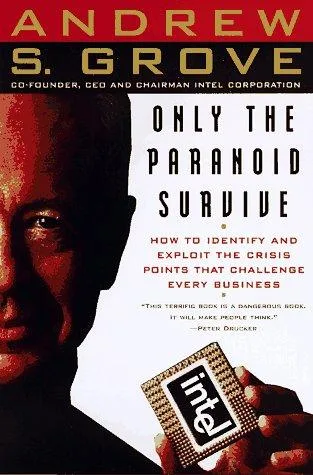
Strategic inflection points are real, and search moving to AI answers is one of them.
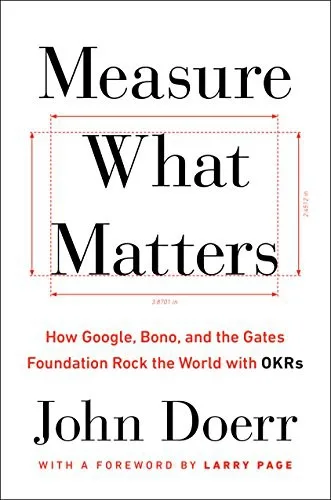
Measure What Matters
John Doerr, 2018
“Ideas are easy, execution is everything.”
A goal counts only when it is measurable and shared. That is how I run a company: with OKRs, not good intentions.
Quotes are from the English editions.
Entering a new market, or wondering what AI answer engines say about your brand?Tell me the market and the question. I’ll tell you what I’d check first.