

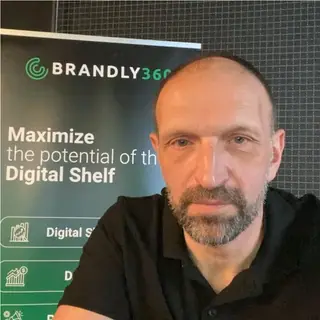
Who is Bartek Kowalczyk?
- Who he is
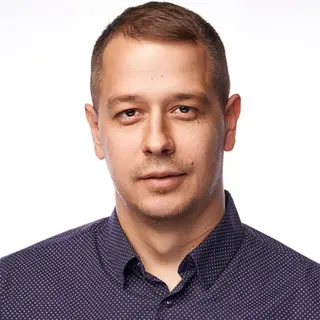
- Bartek Kowalczyk, an entrepreneur from Opole who has lived in Scotland since 2006. A graduate in economics from the University of Opole, father of two.
- What he does
- He started in sales at a Polish diaspora portal and then ran Polish Media Buyers (media planning and ethnic marketing). He runs PBLink, a networking organization building relationships between Polish and British business, and Automate Now, a company implementing CRM and sales and marketing automation.
- What we talk about
- The path to Scotland, ethnic marketing, business in the UK after Brexit, how Polish products and the Poland brand are perceived, where to start a business in Britain, networking with a plan and KPIs, and building a global business from a small company.
- Where to find him
- LinkedIn (Bartek Kowalczyk) and PBLink.
Best quotes
„Networking is not events.”
„People have to like you and trust you in order to pass on a good contact.”
„Not a transactional relationship, but a relationship with people.”
„Everyone has their own networking agenda.”
Recommended materials and sources
Guest’s pick
 blackswanltd.com
Mentioned in the episode


Related conversations


Transcript
Host: Rafał Moszkowców. Guest: Bartek Kowalczyk.
Introduction
Rafał: Hi, welcome. Today with us is Bartek Kowalczyk, who lives in the United Kingdom day to day. I think we will have a chance to talk nicely about how business works there and touch on many other things. Welcome, Bartek.
Bartek: Hi, warm greetings to everyone who listens or will listen, but above all I cannot wait for our conversation.
Rafał: I am very glad. I have a long list of questions, so I will probably surprise you a few times. You are someone who does many things. I remember when we met many years ago, I already thought: damn, how many interesting things this guy does. De facto you introduced me to networking. I had no idea what it was about, I came to one of the networking events you organized and saw first hand how it works. I think you have it mastered brilliantly.
How did Bartek Kowalczyk get from Opole to Scotland?
Rafał: But before that, if I remember correctly, you are from Opole.
Bartek: Yes, you remember very well.
Rafał: How did you get to the United Kingdom, or really to Scotland? Was it Scotland right away?
Bartek: Scotland right away. It is the road that most of our compatriots took in 2006. The borders had opened about two years earlier. I was finishing economics studies at the University of Opole. In emigration stories there is always something emotional: money is sometimes there and sometimes not, but there is that element of love. My girlfriend was studying in Scotland, in Inverness, on Erasmus. I visited her a year earlier, in 2005, spent time in Inverness and worked in various places. I came back, finished my studies, and together we decided: okay, we are going to Scotland, this time to Edinburgh. I have been here since then, since 2006.
Rafał: That is almost 20 years, half your life in Scotland. I had the chance to live in the United Kingdom for almost 15 years, mostly in London, and it feels like a snap of the fingers. I sometimes miss London and its opportunities, because for two years I have been in Poland permanently. But London still appears to me as a hub for many things.
Polish Media Buyers and ethnic marketing in the UK
Rafał: I googled Polish Media Buyers. Was that your first business adventure? What did you do?
Bartek: As entrepreneurs we dig around in various topics, and I say that means testing our abilities, our ideas, and each other. I was always drawn to sales. I worked as a salesperson at one of the Polish diaspora portals, and many people who came to me had one problem: so-called ethnic marketing for a company. That was my path. We planned media, because before Facebook the question was where you could buy advertising, where to promote, where to generate leads. My first client, as far as I remember, was DFDS Seaways, which offered and still offers ferry travel between the Netherlands and Newcastle, in northern England. My role was promotion. Later the road opened and it turned out there are companies that need help not only with ethnic marketing but also in Poland: I planned media for the bank BPH, I planned an ambient campaign in Kraków as a consultant living in Britain. That was my first experience with a first invoice.
Rafał: Do you think ethnic marketing still has potential in the United Kingdom?
Bartek: Absolutely, and not only in the United Kingdom. Migration will be a part of our lives. Look at Poland: we have people from Ukraine who need their own media, and you have to speak their language. It is a market worth reaching. In London half the people are from elsewhere, they consume their own media, eat their own food, call their friends. I remember a campaign with O2 SIM cards where you could call with Pikachu. Now everything is on WhatsApp, but you still need a SIM card with data. There are always such opportunities.
Rafał: In Poland you see this very much. When I first went to Britain in 2006, I was frightened and shocked, because Poland back then was very mono-ethnic and closed. I thought that mindset could not be changed so quickly. And it turns out Poles are a very flexible, intelligent, increasingly mature nation, and assimilation of people from various countries is going nicely. Diversity gives a lot of opportunities, in business too.
Bartek: It is a generational matter. Our parents grew up in completely different conditions. I am a father of two and their perspective will be different. We would like the process to be faster, but it is a mental process: people have to leave, come back, see how you can live differently, and only then does it take shape and become available in systems, even in business.
Is it worth doing business in the UK after Brexit?
Rafał: A lot has happened in Britain and in the world in recent years. Business in the UK: where to start and is it still worth it?
Bartek: I think yes. Above all, if you look at macroeconomic data between Poland and Britain, it is growing and reaching practically the same values as before Brexit. The pandemic happened, Brexit happened, you can cry over it, and I was never a supporter of splitting: it is always better together, even if we do not get along. But that is how fate went and I do not want to discuss what happened. You have to look at bilateral relations: Germany with Britain, Poland with Britain, Britain with the United States. Relations between Poland and Britain reach back even to pre-war times, we are talking about the government in exile, about political relations, and today above all military ones, which is important from the point of view of the war in Ukraine. When we come to the UK, everything is in some context. Second, I have lived here 18-20 years and we Poles, of whom there are several million, influence how relations with people are. People have wives and husbands who are Polish, families. Recently at a networking event my friend Stuart said: Bartek, my son is marrying a Polish woman. We have a wedding in 2025, the whole family is going, 40 of us. That is an impact on society and on business: you have to take into account building relationships, because the person we talk to may have a son or daughter who is getting married. We do not have to build the base, it is already known.
Bartek: Challenges always exist. The flow of goods is complicated and costly. If someone wants to ship goods, it is better to have them in Britain: not on dropshipping, but rent a warehouse, invest in a truck that brings in the goods, and then it is easy to build a process. Services are another matter, because it does not matter whether Brexit or not, we can deliver them from Poland.
Rafał: That is true, exporting is harder: you need a customs agency, it is best to have a warehouse on site, and return procedures are subject to regulations carried over from EU to British law and with larger volume that is a problem. I also wonder about inflation in Britain.
Bartek: Inflation is everywhere. I was in Poland recently, a cutlet on a train 50 zloty. We do not know how much of the price rise in the UK is due to Brexit, probably some percentage, but nobody proved it. During Brexit the pound fell below 4.50 and now it is stable between 5 and 5.20, so some companies say: we lost 10 percent because of Brexit, but now the pound is stronger and it comes out the same. Everything depends on mindset. If we plan to come in here, we need to try a bit harder, put more money upfront, and not test: let us send a product and see whether the market takes it.
Rafał: You say you need an expansion strategy, which I repeat like a mantra: prepare, recognize the market. My team at non.agency helps with that by analyzing prices, competition and search marketing. Very often decisions are random or not strategically prepared, and that market is saturated, nobody waits there with open arms.
Bartek: Boris Johnson once said that we would like to eat the cake and have the cake. First you have to bake the cake, build it, see how it rises, and we often want to eat it before we have produced it. It is not only a British market experience. The American market is the same, you just have to fly longer. Many companies enter Britain for branding: we will build a branch in London, and then we pounce on New York and Tokyo. London looks good on paper, it is English-speaking, two hours by flight, lower costs.
How are Poles and Polish products perceived in the UK?
Rafał: How are Poles and Polish products perceived in the UK? Once we were the plumber, the handyman, the builder. Has the sentiment changed? In Hungary I talked to a PAIH representative who said it is worth writing made in Poland, because the Polish brand is perceived there better than the EU one, and that some companies pose as Polish.
Bartek: In the UK it works so that made in UK or made in Scotland is very important, the lobby for buying your own products is getting stronger, especially in food: potatoes have to be Scottish. But Polish windows? People want a good window at a good price and do not think they want a Polish one. By the way, when buying a mattress, do we look at where it was made, or at comfort and reviews? There is no brand like let us buy something Polish, good, premium like made in Germany. If we talk about an Italian suit or a French restaurant, that is a brand. Nobody says that about Polish windows. Among Poles we know there are good things, but among British society that sentiment is missing. The brand we have is a brand among people: we are still treated as a good worker who will come to the job. In the services sector, especially construction, they will say we will do it well. My neighbor was building an extension for a year and a half because the contractor went bankrupt and he told me: if I had chosen a Polish contractor, it would have been done long ago. Those are his words: if a Pole said he would do it, he will do it, not wishy-washy, as they say here.
Rafał: I am getting at the fact that as Poland we do not build a brand, and we have super foundations, because emigration spread out and there is probably more positive than negative sentiment toward Polish migrants. Made in Germany does not come from nowhere, it is a matter of policy and investment, and there is a role for the Polish government. Not without reason Germans produce a huge number of things in Poland and sell them as German engineering.
How to start a business in the UK?
Rafał: How would you start a business in the UK today? Say I have success in Poland, but a glass ceiling, because I am an SME.
Bartek: Relationships with people. Not a transactional relationship, but a relationship with people. A well-known company, I think it was Reserved, said at one meeting: we sent a person to China, they are to live there a year and look for relationships, it means nothing yet, we are just building, observing how to position the brand. I would either hire someone in Britain who will be with us and build those relationships, or generate a person from my own company and say: go for a year, build relationships, build us a branch. It is an investment: that person must have a British salary, somewhere to live, it will be our person. Thanks to that it is easier to open a bank account and other things. You have to solve the visa topic, but a mass of Poles live here and you can find such a person. You have to be here to understand mentally and not make mistakes. At the same time a lot can be done on LinkedIn: watching industry leaders, where they appear, how they talk about problems, because to sell a product we must know the problem. But the bulk of business, especially construction and trade, is relational, meeting people and the chemistry between people. Only that chemistry builds the possibility.
Bartek: Imagine someone from Ukraine calls Media Markt in Warsaw and says they have a fantastic computer. They will not buy right away. It is the same in B2B: someone wants to sell screws, but someone has bought them for years from one supplier, so we must understand why they would buy from us.
Rafał: They are connected vessels: recognizing the market, marketing, visibility, the sales funnel, everything must be coherent. In Britain the market is very promising, it is one of the biggest e-commerce markets in Europe, but you have to prepare well.
What is PBLink and how does real networking work?
Rafał: Tell us about PBLink, the organization you still run.
Bartek: The concept is simple: building relationships based on events and on what happens after events. Networking is not events. Real networking happens outside the event. The event gives us a chance to meet people, but we must have a plan for what happens next with the relationship. Typically it is said that for a relationship to happen you need 8-12 touchpoints: we meet once, twice, comment on something on LinkedIn, send a text, call. That is usually a period of one to two years. It is about helping your network understand what we do, so they speak well of us. There is a method: people have to like you and trust you. People have to like you and trust you in order to pass on a good contact that will build a business, financial relationship. On that basis PBLink, also called Polish Business League, was created. At first it was my personal path: I founded a company, started organizing events with the British-Polish Chamber of Commerce, then it evolved into networking.
Bartek: Many people come to a meeting and say: Bartek, the same people are still there. The mistake is that we should also do something for the network. It is not about paying 50 pounds for an event or a membership, but about how we use what is there. Even when people build a network, the next problem is no strategy for nurturing it: in 2-3 years you may be doing something else, and I still want to keep in touch with you, so do we have a plan for it?
Rafał: In Poland networking is still in its infancy. I talked with an organizer of an entrepreneurship club who has to remind people to call the people from business cards after events, not to sell something, but to build relationships. In Britain it is natural: people do not sell each other anything for 5 years, and in the sixth year: here is Rafał, and Rafał does such things. My first office was in Tooting in London and the local Barclays organized a networking event every two weeks, the bank sponsored everything, you just had to come and talk. I met people there, some of whom were in touch until recently, someone recommended me after 10 years. Networking is a skill and it is worth thinking of as a platform: what can I put on it, how can I invest in it, rather than treating it so much like a client.
Bartek: It is education and a topic of our behavior. The boss says: how many contracts did you bring after that networking, and if there are no contracts, there is no budget. That is reality. A good network takes 2-3 years to build. In British business, a person who spent 20 years building a network will not directly open doors to someone they do not know. If you ask me for contacts in a given industry, I have them, but do I want to give them, if we are meeting for the first time? That is a trust issue. Someone says: I paid 35 pounds for membership, so I am owed a contact. Some people pay 10 thousand pounds across memberships. In networking you need a plan and KPIs, and the best KPI is the number of people you want to meet. 5-10 people a month is fair: two networking groups, 5 new people met in depth, that is 60 people a year, after 3 years 180 contacts who know us. Some relationships will not fit, and some will be perfect, for example accountants: some financial businesses like to talk to accountants, have 5 accounting contacts and give them leads. You have to see what our ideal networking contact is: not necessarily a client, but a person who can speak well of us or collaborate.
Rafał: It takes patience. I go to a meeting with a rule: I do not have to talk to everyone, but I want to invite at least two people for coffee a week or two later. I do not go for quantity. At InfoShare a man with whom I scheduled a meeting through the networking app tried from the first moment to sell me a meeting, not knowing what I do. He honestly said: they sent me here, we are all about to be laid off, I have to bring 5 leads. The bosses came up with an unrealistic plan that was pushed onto people. Everyone loses: the company has no goals, the person has no satisfaction, and I have the feeling the conference is pointless. In Britain I very rarely managed to do business purely from search, without relationships and local case studies it is very hard.
Why does everyone have a different networking agenda at events?
Bartek: Everyone has their own networking agenda. The person you talked to had an agenda of 5 leads. Imagine 100 or 1000 people in one place: everyone has their own agenda. Someone is looking for a partner, someone wants to just talk to someone because they are on calls all the time, someone has had enough of their work and is looking for a business idea, someone started a new job and is building a network around the industry. If we understand that everyone has an agenda, and we ask what someone's agenda is, we are more relatable. We can say: your agenda is not for me to sell you something, but to talk to Mark, whom I just talked to, so I will connect you. Everyone gains, and in their eyes I am someone who thought of it. And at some point someone will notice that this person has problems with search and connect them with you. That is the power of the network: like and trust. We must meet someone, like them, build trust, and only then does a lead come.
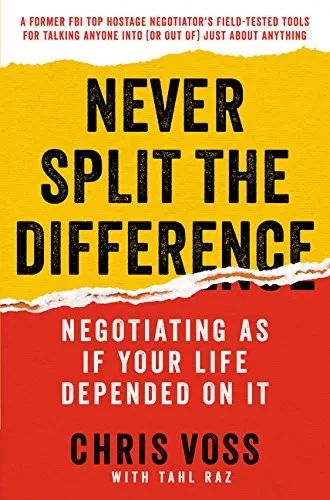
Rafał: A negotiation book helped me, Never Split the Difference by Chris Voss: asking the right questions and talking to a person without an aggressive agenda. We also changed our offers: they used to be we, we, we, and now the offer is about the client: about them, their competition, where they are and what they could do. Stop thinking only about yourself, do not push your agenda, listen to people.
Rafał: How do you join PBLink and who is it for?
Bartek: It is a journey every person has to make themselves. It is for people who want to get involved in a business community, above all if they plan to be in the UK, because we organize things online but we build relationships at face-to-face events. For companies that seriously think about investment, want to put someone in the UK and be here once a month, that is what we call a soft landing. We are not an accelerator that matchmakes everyone with everyone. We sell through expertise: if someone is a member, we do 5 events and ask what you want to talk about, we look for the place where you can be the expert. We have events of 150 people. We make short videos, media. One person on our side does matchmaking and calls people regularly. We look for trusted people who can help, rather than going into a phone book.
Rafał: For a company that wants to enter the UK or recognize the market, PBLink is a go-to place. I remember that many people from different industries came, and if there was a legal or accounting problem, there was always someone to recommend, sometimes for free. I will link PBLink in the description.
What is Automate Now and where did it come from?
Rafał: Bartek, you went into supporting companies in a different area: Automate Now. Where did the idea come from and what does it do?
Bartek: The idea came from having too many databases. Before the pandemic we organized 40-50 events: small and large, social, business mixers, big conferences. Everything was in Excel sheets, on Eventbrite, in forms, and there was no one place that told us who is who. We opened up to CRMs and used the HubSpot platform. Thanks to good segmentation the members themselves said: we have the same problem, help us. It is a good path for every entrepreneur: first find the problem, and then build services and products on that basis. The pandemic opened incredible needs, because everyone works remotely or hybrid and has to have sales, marketing and customer service in one place. We implement CRMs, Customer Relationship Management. I like the word relationship: how to digitize marketing and sales processes in a company. We work on a living organism, on our events and database.
Rafał: Do you work in Poland and in the UK?
Bartek: Now clients can plug in even from the States. We had a client from Melbourne, a British company whose employees had to connect at 6 am, it was a slaughter. Our core market is Poland and Britain.
Rafał: I like that you think globally. If you use English or hire someone who does, that is your ticket to the whole world. Let us research market X, the competition, prices, and build an entry strategy. You can build a safer business, not dependent on one market. Do you have to be big to scale internationally?
Bartek: Absolutely not. It is about self-confidence, how good you are. If we have it in the team, in skills, in English, in ways of building relationships, then why not?
Rafał: Confidence is built by openness of vision: we have global horizons, rather than thinking only about what is closest and complaining about ZUS, which I like to joke about. Yesterday I learned that ZUS gives contribution holidays once a year to micro firms employing up to nine people, though it lowers the pension, maybe an accountant will correct me. It is not so bad, Poland is a good place to scale from. Bartek, thank you very much. You gave an incredible amount of information and perspective, it will be valuable for everyone listening.
Bartek: Thank you very much.
Rafał: See you. Bye.
Bartek: Bye!
Listen and watch
The same conversation in your favourite app.
The full edited transcript as a Markdown file, with the guest’s details and quotes.
Back to top