

Who is Krzysztof Aleksandrowicz?
- Who he is
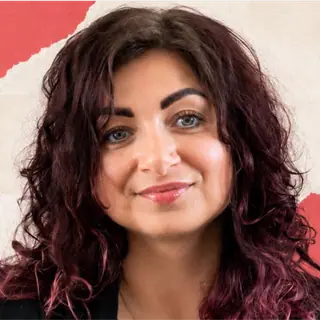
- Krzysztof Aleksandrowicz, Global Senior Manager at a large international corporation based in central London. He joined as the first person in the creative department, and after six years he is responsible for producing marketing film and photography. Earlier he ran his own multimedia agency in the United Kingdom.
- What he does
- He is responsible for pre-production, production and post-production of materials for campaigns, product launches and events, made for European markets in over 14 languages. He works in a team in which only about 10 percent of people come from the United Kingdom.
- What we talk about
- AI in video production and voice cloning, adapting ads to different cultures, the path from his own agency to a corporation, networking based on listening, long and short content, personal brands and user generated content, credibility of content in the age of AI, and whether AI will take jobs.
- Where to find him
- LinkedIn (Krzysztof Aleksandrowicz).
Best quotes
„Everything turned around when, instead of talking, I started asking questions.”
„When you learn, you grow, and when you grow, you do not get old.”
„Building a personal brand on social media is much easier than building an account for a big brand that works.”
„Will someone use it to control the world, or to make education free?”
Recommended materials and sources
Guest’s pick
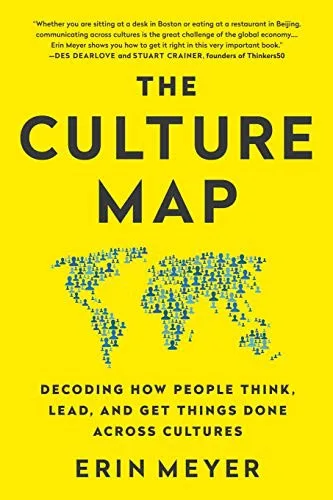
 erinmeyer.com


Related conversations


Transcript
Host: Rafał Moszkowców. Guest: Krzysztof Aleksandrowicz.
Introduction
Rafał: Hi, welcome. Today's guest is Krzysztof Aleksandrowicz, Global Senior Manager at a large corporation. A man whose career and professional experience are impressive. Krzysiek works day to day with people from all over the world in an international organization, and he also has several projects of his own in the United Kingdom, both those he developed successfully and those he successfully had to close. We are talking today, attention, in Bali, a place more associated with holiday ease than with business, but we will try to talk about both. Krzysiek, I warmly welcome you. Nice to meet after years.
Krzysztof: Hi, Rafał. What a decent intro, I actually liked it. Please send it to me by email later.
Rafał: AI wrote it.
Krzysztof: As I thought. ChatGPT, write for me. I can already see that prompt.
Rafał: No, I am joking, I wrote it this morning. I wonder what a Global Senior Manager does and why every word in that title is capitalized.
What does a Global Senior Manager do?
Krzysztof: Good question, I do not know, but that is how it is on my documents. I reached this position in the corporation over 6 years. I started as a creative person, I was the first person hired in the creative department. I remember that on my second day I got a brief written on a yellow sticky note stuck to my monitor. That was my brief. After six years, introducing new processes into that department, I reached the place where I am responsible for producing film and photography for the company's marketing needs. Whether campaigns, new product launches or events, small or large, I am involved: I am responsible for pre-production, film production and post-production. Besides controlling the process, I also define how it should look in terms of trends, design, form, length, where it will be shown, and I adapt the media to where and how we will produce it.
Rafał: Do you do it only in English, or in other languages?
Krzysztof: The company is present in the USA and Canada, but also across Europe. Every piece of material is made for the whole of Europe, in over 14 languages.
Will AI voice cloning replace voiceover artists?
Rafał: And do you do it with AI?
Krzysztof: No. Although I received a proposal at the last production of a recruitment film and I suspect that is where we are heading. But today, if we produce a film with a voice track, the first video is usually made in English, sometimes we use people from the company who speak into the microphone or appear on screen, and sometimes voiceover artists. We have proven voiceover artists, each region has a chosen one, the artist reads, and we adapt it in post-production. I recently produced a content-rich recruitment video of about four minutes. Translating four minutes of voiceover into 14 languages is a cost, so the company supporting the production proposed: we can do it in AI, take the voice of your VP, clone it, modify it and suddenly that VP will speak 14 languages. At that time I thought it was a great idea, because people know his voice in English and it would build a bond with the person they see. But the companies wanted to charge the same money as for voiceover artists. I thought ethically whether I prefer to invest in people or in AI technology and pay for the same outcome, also knowing that AI voice is sometimes a bit broken, imperfect. I went with voiceover artists and prefer to pay people.
Rafał: If you would pay the same, it is a good decision. There is an app, HeyGen, which I used, in which you can convert your own video into practically any language.
Krzysztof: I saw that the solutions do not cope when the languages have different roots. If we translated from Polish to Czech or English to German, it worked. But if we went from a Romance language, say Italian, to English, the accent fell apart. You could feel the AI.
Rafał: I translated my English into Mandarin and it was great, although I do not know Mandarin. There is a Polish company ElevenLabs, a unicorn, dealing with voice cloning, brilliant. For our company I recorded a greeting for a client calling our phone number in several languages, and I am weak in Spanish and Swedish, so ElevenLabs solved it, I could clone my voice.
Krzysztof: It is different when you produce marketing video meant to evoke emotions. Voiceover artists, with their accent, intonation and the weight they put on elements of the text, know how to use their voice as a tool. AI tools do not have that yet.
Rafał: I agree. On YouTube I saw a playlist of Temu ads, you can cry with laughter in various languages, in Polish too. It is marketing clownery. But professional tools are already saturated with voice: if you want to clone a voice professionally in ElevenLabs, you sit three hours in front of a microphone reading a book, and the tool recognizes your intonation and emphasis. I am not inviting anyone to take someone's job. We are all a bit afraid, because it is a revolution like the invention of the internet or the railway. You have to be at the front to understand it.
Krzysztof: Absolutely. When I first sat down at a fixed line and fired up the internet, I understood I could have any information I want. I felt similarly some months ago when I first launched ChatGPT and dictated a prompt, as if speaking to my assistant, and got a factual answer, written better than I would, in 3 seconds. I felt we stand at the beginning of a new technological road that will change how we approach work and the time we need.
Rafał: My team says I communicate better and better. And I simply have a prompt for Claude from Anthropic that straightens my emails. Even simple use of AI improves communication.
How do you make ads in 14 languages for many cultures?
Rafał: With 14 languages you work with many cultures. How do you cope?
Krzysztof: It brings many challenges, including diversity of people, their appearance, skin color, hair color, sets: a street in Britain looks different from one in Radom or Brazil. The first solution: not all campaigns run simultaneously in all countries, so already in pre-production we know whether a campaign starts only in the DACH market, then we use different models and different shots than for the Spanish-Italian market. People receive the message differently and expect different things in an ad. If a product is pitched to you by someone not from your country, you believe the ad less than if you see someone similar to you, speaking the same language, in the same city, and you can identify with them. I remember from childhood in a small town near the Czech border an ad for chewing gum: a woman in high heels runs through New York, her heel breaks, she takes the gum, tears off the heels, puts on flat shoes, a man getting out of a Porsche gives her an OK sign, she rides up to the 40th floor and has a great day. As a boy from a block of flats surrounded by forest, I could not identify with it. I rode a Romet bike, and the highest floor I had been to was the fifth floor of a post-Soviet block. Producing ads, we take into account how people grow up and what surrounds them.
Rafał: That makes sense. And in your team there are many languages and cultures?
Krzysztof: The company is in the center of London and you would think there would be more British people, but only 40 percent of people in London are British, and in my office, where about 100 people work, maybe 10 percent. The rest are Italians, Spaniards, Poles, Scots, Irish. Multi-culti opens eyes and helps when working on other markets, because you can ask directly: does this voiceover sound good, does this look like a street in Brazil?
Rafał: Does it bring communication challenges?
Krzysztof: Sometimes. There were clashes where an Italian with his expressiveness very expressively explained what he disagreed with, and more reserved cultures, like Scandinavian, could feel offended. I do not want to go on stereotypes, it also depends on how long someone has been in Britain and in a corporation. There are great courses that help us determine areas of development.
Rafał: There is the book The Culture Map by Erin Meyer, which shows in research how different cultures are. Stereotypes also come from culture. It helped me understand that an expressive Italian approach need not be madness or a demand for immediate action, just taking part in a discussion.
What was Krzysztof Aleksandrowicz's career before corporate life?
Rafał: We met long ago in Britain, over 10 years ago.
Krzysztof: In 2012 we met for the first time at PBLink, at a networking meeting.
Rafał: You had a company building websites and doing graphics, and you also advised on business. What worked, what did not?
Krzysztof: Everything worked and I treat everything as learning, I would not be where I am without those experiences. I ran an advertising, multimedia agency, we created marketing content, photos, photography, hence my skills today. Sometimes companies came with a product and said: Krzysiek, I have no idea how to sell this, and from a company producing photo and video we became marketing advisers. They were British companies, but also Polish ones, run by Poles in Britain. We worked with companies doing websites, SEO and PPC campaigns.
Rafał: One lesson you would take away? Just do not say never give up.
Krzysztof: Two. First: listen. Let people talk. For me personally it is hard to listen and ask questions, but it is key. An anecdote from networking: at the first ones I rolled in with pockets full of business cards, thinking it was about presenting myself as well as possible, talking about my services. For several months it did not bring results, the cards ended up in the trash or in the wash. Everything turned around when, instead of talking, I started asking questions. Instead of hi, I am Krzysiek, I have this to offer, I asked: who are you, why did you come here, what are you looking for. People started sharing their needs and I could tailor my product. People appreciate being listened to, everyone has an ego that grows when someone asks questions. That is also why we go to psychologists: someone listens to us. People laid out their cards and I could judge whether I want to work with them, what stage of business they were at and whether I could offer anything. My business turned around. The second lesson: do not stop learning and taking on challenges. When you learn, you grow, and when you grow, you do not get old.
Rafał: My experience is the same. At the start I talked only about myself: I will solve every problem for you, if you have money. Maturity comes with age and retrospection. Today networking is my top 1 for getting nice companies to work with. We are a boutique agency, we do not attack every client, we have a limit of 2-3 new clients a month. I remember your company UNICO.
Krzysztof: I ran it with Alex, who is still my friend. We learned a lot. For two guys in a rented office we had big brands: one of the biggest construction firms, the French Bouygues, which builds most skyscrapers in London, and hotels like InterContinental, for which we did photography and video. I thought such clients were unreachable, that you need a gigantic agency, but really you need an idea and the ability to talk to the right people. Despite the year we have, talking to the right people, drinking coffee with them and talking as equals still brings the best results. I know your agency does SEO and winning clients through the internet, that is one branch, but the biggest projects come through good relationships.
Why do relationships and authenticity matter in business?
Rafał: I agree, relationships start in different places: in search engines, at networking, over a glass of wine. In April I was at a British SEO festival in Brighton and Rory Sutherland of Ogilvy said in his keynote that business needs people: to do business you have to be able to listen and understand another person. With mass automation and AI, when we push the human out of their role, business becomes flat. Business based on relationships works longest and brings the greatest benefits.
Krzysztof: Absolutely. Bill Gates reportedly, asked about his company's success, answered he owed it not to sitting up at night writing the first operating system but to drinking coffee with the right people. I have also noticed that in the age of polished content, automation, articles and video written by bots, like Coca-Cola's recent holiday campaign made entirely by AI, people turn away from overly polished content and return to roots: ads shot on a simple camera or phone, long, unpolished content. Sam Sulek in the fitness world has millions of views on 40-minute films of workouts that he posts daily. They no longer want only fast dopamine content, although some people still scroll TikTok.
Rafał: I have no research, but micro-series in Asia, in China or Vietnam, episodes of 30 seconds to 4 minutes on TikTok break records. I agree there is a return to authenticity, but I do not know how many people return to it. I like podcasts and long content, I do not look for shortening a book, that is absurd to me. The trend is rather that we look for a dopamine hit every moment through nonstop scrolling. I see with clients that ROI from long content is falling: blogs even on large sites do not do well, people look for quick information.
Krzysztof: As a counterargument: if you are building a business and a brand, longer content will bring more loyal followers. How many short pieces did you watch in the last 4 days?
Rafał: I do not have Instagram or TikTok. I was on TikTok for a few months, strange things were displayed to me. On YouTube I do not click shorts.
Krzysztof: I am a victim of shorts, although now I limit them heavily. I watch them because of my work, to know what is trending. In short content people do not pay attention to the author but to the content, so they do not build a relationship and the personal brand does not grow. Longer content filters people with a longer attention span, builds a bond, authority, and it is easier to sell something later, if someone intends to.
Rafał: Or to pay on Patronite. I listen every week to the podcast Dział Zagraniczny, I pay, I feel a relationship with the author, because the material lasts 30-50 minutes and I have a chance to remember who this is. In shorts it would not work. I also support the portal OKO.press: they make long content, have no ads, live on donations. They did interviews with owners of Polish ecological companies, I was looking for new solutions then, and to this day I am subscribed to almost all of those they sold me, although they did not want to sell to me.
Krzysztof: As people involved in marketing we have a resistance to simple tricks, but sometimes there are tricks we do not notice.
Rafał: In our industry guest posting can be such a trick: a natural article, supposedly not about the client, but in three paragraphs it is about the client. If anyone still reads anything on the internet, they may think it is natural, while it is promotional content, contrary to Google's guidelines for webmasters, but we ignore them.
Krzysztof: We do not ignore, we change trends.
Rafał: Now for many informational queries you get a thread from Reddit or Quora: user generated content returned to the top, after algorithmic changes that started in December 2022 with the Helpful Content Update. I say it is an update that is not about content. Most guidelines Google sells us are not true.
Krzysztof: At least they give some guidelines. On social media there is no clean document of truth, so it is always an educated guess: a similar company makes this content, it works, I will try.
Rafał: It is the same as 10 years ago in Google: we must have a blog, because competitors have one.
What is UGC and why build a personal brand?
Krzysztof: On social media the most clicked and saved content is still educational content from solo creators.
Rafał: I talked with Damian Sałkowski at the event Poznajmy się about personal branding and how much worse brands click than people, even from those brands. I feel expensive content directly on brand accounts will never have positive ROI.
Krzysztof: That is why brands invest in UGC, user generated content, and bend over backward so independent creators, or those dependent on their money, make materials about their products. Brands lack something very valuable that individual creators have: their own face. Building a personal brand on social media is much easier than building an account for a big brand that works. Big brands have millions of followers, but they do not monetize it. A personal brand rests on three pillars: authority, sharing educational content and relatability, that is a connection with the person watching. It is easier to build a bond and sell something. How can you identify with a Parker pen?
Rafał: It must be an investment of time, knowledge and money.
Krzysztof: It takes time and knowledge. If you are a trainer, a yoga teacher, a psychologist and want to use the channel to share knowledge and find clients, you have to invest time, but as a specialist you have already done a big part of the work, because you have the knowledge. A phone is a beautiful tool: you start and begin talking, and sooner or later you will gather people who need your knowledge.
Rafał: Maybe I see problems everywhere? Such power of influence is available to everyone, and looking at influential people in niches, especially in politics, it is not always good influence.
Krzysztof: Absolutely. Such power brings great responsibility. On the internet there is a lot of nonsense, for example a dietitian who says the best way to lose weight is starvation. But increasingly such people are verified by users. Reddit is a great example: if fake news appears, sooner or later a specialist will appear to verify it.
Can you trust UGC content and AI influencers?
Rafał: There are UGC agencies that aggregate hundreds of thousands of people who are not influencers or do not know they are, and you can buy such a campaign, showing a product to millions of people in a very authentic way. I feel uneasy: it seems legit, someone shows a product in a good context, but they are part of a campaign.
Krzysztof: I have been in Bali for 6 months and met many people who are UGC influencers. They have several accounts: one shows interiors, another food, a third travel and lifestyle, and depending on the company they use the right account. If you are a good creator, the message is done so cleverly you would not say it is an ad. The difficulty is finding creators whose profiles do not drip with ads. Creating content that is true or looks true is not easy.
Rafał: It scares me that you do not know what is true, like Orwell. Platforms must label product placement, not in all countries. In Poland there is an office, UOKiK, that watches this: if someone gets compensation, they must label it. In the UK there is nothing like that.
Krzysztof: In Poland yes, in the UK no.
Rafał: We already have fake influencers who do not exist, yet record, create, monetize. Did you watch Black Mirror? There was an episode about a fictional singer who was a hologram created by an algorithm.
Krzysztof: In Asia there is a K-pop artist who does not exist, her concerts are based on holograms.
Rafał: There was also an episode with an eye implant that recorded everything you saw. Today for a few dollars on Alibaba you can buy glasses that do this.
Krzysztof: Meta released glasses that record and display images. They look like ordinary glasses. Combined with AI this may revolutionize consumption and production of content. I suspect content will appear that does not absorb us so much that it pulls us away from driving a car.
Rafał: It is a dystopian reality. In Bangkok the degree to which people were hypnotized by phones looked strange to me, I felt like the only one turning my head. Maybe I say this as someone who loves the smell of a book and old Zanussi films from a projector.
Krzysztof: I try to understand and accept it, because I do not want to be a boomer. My grandmother told me: do not sit in front of the TV, you will ruin your eyes, my mother: do not sit so long at the computer, a computer will not feed you. Both were wrong: my eyes did get worse, but the computer is my main work tool today and it feeds me. If we pushed away evolution, we would still be riding horses. It is the next step of evolution in how, how fast and in what quantities we consume content. Our brains will adapt, I do not know after how many million years.
Rafał: For now they are not ready, the costs will be big.
Krzysztof: There are statistics that year after year the speed of information strongly affects mental health. So become a psychologist or open a platform that deals with it. An AI psychologist.
Rafał: There is already something like that. A friend uses a custom GPT into which he uploads recordings and notes from sessions with his psychotherapist and bounces ideas. It is one of the better uses.
Is AI theft of intellectual property and data?
Krzysztof: I live in a villa with a person who does automations for companies, and ChatGPT is his best friend. Version five is about to come, with much greater capabilities than four. What people do by loading information is shocking, and how many chatbots are already available: from biologists, mathematicians, writers.
Rafał: Do you not see it as the biggest theft of intellectual property in history? OpenAI and other companies take information, we all feed them our materials. The company put in great technology, but without the knowledge of the people who produced the information, it would not be as good.
Krzysztof: I agree. The question is how much we believe in conspiracy theories or in how the Terms and Conditions are constructed: who owns the data, where it is stored and whether we agree they share it further.
Rafał: Hardly anyone reads them. The book Mindfuck by Christopher Wylie about Cambridge Analytica describes how Facebook data was used to profile voters and tailor campaign messages.
Krzysztof: As I understand, the company running Trump's presidential campaign pulled information from Facebook about what interests people in different parts of America and tailored the message: in Texas they talked about farmers, in New York about low taxes for corporations. Returning to your question: yes, we are witnesses to how we feed AI information, and it serves to perfect the engine and build the next version. It is like debating why the knife was created, for killing or for cutting bread. Will someone use it to control the world, or to make education free?
Rafał: I think AI development will change our whole lives and that there will be those who use these tools to manipulate others, and in political parties or corporations the temptation to earn more will exist. That is a risk.
Will artificial intelligence take our jobs?
Rafał: Are you not afraid you will lose your job?
Krzysztof: No, because I try to stay informed and use these tools every day. Companies and people who push this knowledge away and do not want to accept it will become a tool like a calculator may be afraid. Just 3 years ago my partner wrote emails dictated by her manager, today that is no longer needed.
Rafał: It reminded me of the film Darkest Hour about Churchill dictating with a cigar in his mouth.
Krzysztof: A lot of jobs are threatened, but not with extinction, rather with modification. Take product photography: until today, or a year ago, you needed a studio, lighting for a few thousand, a great camera, a retouching specialist, a stylist. Today it is enough to take a photo of your product with a phone, put it into an AI tool and a well-phrased prompt: I want my phone shown with a glass of water, lit by window light. You get five photos on different tables and can modify: the table should be white, not blue, flowers instead of water. Such changes once cost time and money. The profession of product photographer will shrink. Will it disappear? I do not know, we still listen to music on vinyl. It is a matter of adapting, observing and following so as not to become uncompetitive. Brands that missed changes died: Nokia missed the move to smartphones, BlackBerry did not want to give up its keyboard.
Rafał: I had a BlackBerry, it was the best phone I ever had. But other standards were set.
End of the conversation and the episode
Rafał: Krzysztof, thank you very much. It was great to meet after so many years, talk, find out how many things you do and that you are not afraid of AI at all. Thanks and until next time.
Krzysztof: Thanks a lot, Rafał, and see you.
Listen and watch
The same conversation in your favourite app.
The full edited transcript as a Markdown file, with the guest’s details and quotes.
Back to top