

Who is Kasia Szatyłowicz?
- Who she is
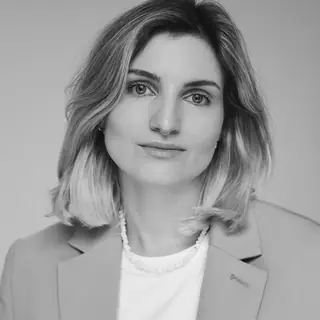
- Kasia Szatyłowicz, an experienced marketing leader with over 7 years of experience driving growth for technology startups. She currently leads marketing at the Swiss company Lightly, earlier was growth director at Lakera, a company dealing with AI security, and worked at V7. She lives in Zurich.
- What she does
- Lightly builds computer vision tools: it helps select the right visual data for training models, offers a framework for training and fine-tuning models, and a solution for deploying them on devices, for example in cars. Kasia also works with a company building AI agents and AI workflows.
- What we talk about
- What computer vision is and who uses it, how AI changes work with data and content, the future of models (large versus small, specialized), brand identity and authenticity in the age of AI, the role of community and Reddit, regulation, a growth marketer's tools, measuring B2B marketing effectiveness, and a failed experiment with a freemium plan for students.
- Where to find her
- LinkedIn (Kasia Szatyłowicz).
Best quotes
„People buy from people.”
„Either I will be afraid of it, or I will understand it.”
„The most important thing is to start educating yourself.”
„People still like to buy things that are handmade.”
Recommended materials and sources
Guest’s pick


Mentioned in the episode


Related conversations





Transcript
Host: Rafał Moszkowców. Guest: Kasia Szatyłowicz.
Introduction
Rafał: Welcome warmly to all listeners of Globalne Horyzonty. Today in our podcast we host Kasia Szatyłowicz, an experienced marketing leader with over 7 years of experience driving growth for technology startups. Kasia currently does marketing at the Swiss company Lightly, which specializes in tools for computer vision, and I hope she will tell us what that actually is. Earlier she was growth director at Lakera, a company dealing with, how could it be otherwise, AI security. In today's conversation we will try to focus on what working in the area of growth marketing in technology companies looks like, how artificial intelligence is used, and what the future of these tools is. Kasia, good evening, welcome to the podcast.
Kasia: Hi, thank you very much for the invitation. I am very glad we managed to find time for this conversation.
Rafał: Great, me too, really. You do cool things, you have done them for years and you do them with flair, so I am doubly glad you are here, because I think you can tell me personally many things and clarify some for our listeners. I wanted to start by asking you to explain what Lightly does.
What does Lightly do and how does computer vision work?
Kasia: Cool, I am glad that is the first question, so I will say it briefly and I hope in a way that makes it easier to understand. Lightly, as you mentioned, does computer vision. I did not even know there is a Polish equivalent of that word, wizja komputerowa, so I am learning something here. We do three things, really. The first is data curation, selecting data, visual data. Obviously this area of machine learning has several aspects, and we deal with the visual one. Just as there is now a whole boom for LLMs, for all those language models, there is also now a growth of interest in multimodal models. That is what it is called, I think.
Rafał: Yes, multimodal.
Kasia: Exactly, thank you very much. We deal only and exclusively with vision, only photos and only video.
Rafał: So it is a vision model, one can say.
Kasia: Exactly. Just one more thing I will add: we do not offer models, we offer tools thanks to which people can train those models themselves. We have a tool so they can select the right photos and videos on which they can train their model. We also offer them a framework thanks to which they can train and then fine-tune, I do not know how to say that in Polish, the model. We also offer a solution thanks to which they can deploy those models on hardware, for example in cars, and collect all the data in real time. Imagine a Tesla that has a camera and Lightly software. While the Tesla drives, it collects all the video and takes photos, and that data is put back into the system, and machine learning engineers can then improve those models even more.
Rafał: Wow, that sounds incredibly advanced. And Tesla probably has something like that. I once heard that Mr Elon said Tesla is not a company that produces cars, but a company dealing with data and artificial intelligence.
Kasia: Exactly. Here I will add something that is mega key, and many people outside this area are not aware of: what matters is how your model behaves in real time, in a real environment. Sorry in general that sometimes I cannot express myself, these are phrases that are hard to translate. Let me give an example. We may have a camera in some warehouse, and its task is to monitor safety: it checks whether people wear vests or helmets.
Rafał: So in Polish I will say: health and safety, BHP.
Kasia: Exactly. To train that model at the start, you need a lot of video and a lot of photos, so the model can recognize the particular elements, like a vest. And it is mega important to keep improving those models, because there are many situations in which they may not be so good at recognizing those vests. There is, for example, something we call occlusion: something in the environment may be changed so the model cannot recognize it. That is why models, even though they are in production, must be improved all the time, and they are improved because data is collected all the time and models are trained on that new data all the time.
Rafał: Is it your technology? Or is it based on some models, commercial solutions of other companies?
Kasia: No, it is our technology, but again: we do not give them the models, they train the models themselves. What is important to mention is what Lightly's value is. Let us say 5 years ago you needed a lot of data for the model to learn what it should recognize, and everything had to be described. There are various, we call them computer vision tasks, tasks that computer vision can do. One is image classification, the simplest example: you can classify photos based on whether it is a cat or a dog. Another task is object detection, looking at what is in a photo and making a so-called bounding box around the specific thing you want to label, meaning give it some tag.
Rafał: Mark it in some way.
Kasia: Mark it, thank you very much. That connects with my experience at an earlier company, V7, which did exactly the labeling. They had a technology, a tool in which people uploaded a million photos and had their workers who, photo by photo, marked various things, put it into their model and taught it. What happened over the last few years is that models learn much faster and need much less data. It is called zero-shot learning, these are new techniques. I will not go into it, because I am not an engineer, but the point is mainly that much less data is needed, and data was always the biggest problem: collecting it and labeling it was very, very expensive. What Lightly does now is help people select specific data thanks to which they can train a model as fast, meaning as effectively, as possible. When they upload thousands of photos, they do not have to go through them and choose which photos are suitable for training, Lightly does it in an automatic way.
Who are Lightly’s clients and what is computer vision used for?
Rafał: Who is your client? Who is it for? You said a bit about car manufacturers, I read somewhere that automotive may be an important business space for you. What else? I cannot totally imagine that you can put a billion different things in it, but do you have some persona?
Kasia: It is less connected with a persona, they will always be machine learning engineers, computer vision engineers. But if we think in terms of industry, as you said, automotive is very important to us. We also have agriculture, meaning companies that want to plant more effectively or detect weeds. A very good use case, which was nice at my previous job at V7, is healthcare: we worked a lot with hospitals and companies from that category. Doctors spend the most time going through very many scans of different patients, for example CT or X-ray, and it is a very important task. There are companies that for many years have built models thanks to which they can find, for example, cancer much faster and with greater precision. For example with skin photos, they detect skin changes. It is a very important industry, how do you say that in Polish?
Rafał: Branża.
Kasia: Exactly, a very important branża. Really any industry in which people use cameras and where it is important to automate something that can be detected by cameras. The same with manufacturing: imagine a production line where instead of someone having to stand and look whether the packaging is damaged or the bottle has a dent, there is a camera that detects it.
Rafał: You totally clarified for me the usefulness of such tools. I imagine that in a factory there is manual quality control: at the end someone rejects those potatoes, which are then thrown away, and in Lidl there are none, because in Lidl there are only perfect and ideal ones. I wonder what people will do. Well, they will retrain, it has happened many times.
How is AI changing data labelling and writing descriptions?
Kasia: It is interesting that you say that, because it is an interesting evolution of the last few years. It is why the company I worked at earlier, which built tools for labeling data, made such a big pivot toward LLMs. Very many companies that did this often outsourced it to countries in Africa, in Asia, to much cheaper countries. That is changing and many companies unfortunately had to change direction altogether, because that much data is no longer needed. LLMs can classify and mark photos, because they understand what is in the image. If you put something into ChatGPT, it will describe the image perfectly, which earlier people had to key in.
Rafał: I said that half joking, half serious, but I think a ton of simple, repetitive, mechanical jobs will be eliminated, for example assessing that proverbial potato. On the subject of vision models, we recently tested something like this: we had a huge online shop, God bless it. We managed to download all possible photos of all products, in a gigantic database. Thanks to a vision model we managed to write, of course with many prompts and corrections, unique descriptions of those products. This application in search marketing is a perennial pain, and you come from search marketing, so you know: when you have big shops that use products from manufacturers, the descriptions are most often duplicates and not unique at all. I do not compare these solutions, because our scale and application is like a small chicken coop, but that model totally understands what is there, and later through the API we can generate in any language descriptions of brilliant quality in unlimited quantity. Then it is only on us to get it indexed. I think it is totally the future. Every day when I talk with Radek, my partner, co-founder of NON.agency, we say: you know what else we could do? We try a bit to infect people with enthusiasm, not fear. Maybe sometimes there is something to be afraid of in the context of AI, but fear will not help. You have to adapt and learn to manage these tools, because they are still tools. You look at AI up close and I wonder whether you have an opinion on what, in the near future, say a year, three years, we can expect from this technology. Your feelings.
Kasia: Uff, a hard question. It reminded me, when you mentioned descriptions: I started my career writing descriptions for some shop, and they were descriptions of floors. I remember traveling and in the meantime writing descriptions of various floors for a shop. How interesting it is to look from the perspective of these nine, ten years, how much has changed and how everything can now be automated, and on such a scale.
Rafał: A small digression: it is also worth knowing that we are in a bubble. You and I and a few colleagues. I will not say who, from which agency, but a very large company, someone told me that these models may do for descriptions, for some basic descriptions, but will do only a part, because most will repeat. There are loads of people who waste their potential, the time of their employees, intellectual potential, and in the worst case their clients' money doing repetitive, mechanical things by hand, only because they are a little afraid to open their heads and take a step further toward experiments. We are in a bit of a bubble, but I like that bubble.
Kasia: I like that bubble too. Returning to your question: I can only predict the next six months, maybe a year. Something else I wanted to mention, because I did not manage to update LinkedIn: I now also work with another company that deals with AI agents and building AI workflows. I have many insights, because the team is very technical, they do a lot of research on models, both multimodal and language models. We create agents, at this moment it is more AI workflows than agents. Everything that can be automated and is repetitive is already being automated. If someone does not automate it, then as you say, it is a waste of money and time. I think the most important thing is to start educating yourself. And the nicest thing is that you can educate yourself with those models. You can literally talk with those models about where to start and how to learn. It is incredible that you can learn about them with them. And it is free.
Will large AI models get pricier, and what about small ones?
Kasia: From what I see and from my conversations with people in the industry: something I heard three months ago, before DeepSeek appeared, was a comparison of OpenAI and the whole LLM boom to Uber. Uber at the start was very cheap, because the whole business was, as I will say in English, subsidized by VC money. Venture capital was actually paying for the company to work. The fact that 5 or 6 years ago Uber was much cheaper was mainly because they raised a lot of money and had to have people very quickly so that they adopted their solution. Why do I mention it in the context of LLMs? Because those models are now also free, and there was a belief a few months ago that in 2025 access to them would be much more expensive. We know OpenAI loses enormous sums every day on all those subscriptions, because usage is so large that they cannot be profitable. Recently I saw they want to offer plans even for twenty thousand dollars.
Rafał: A much more expensive plan came in recently too.
Kasia: Yes, the $200 plan, ChatGPT Pro with deep research. That was the thinking three months ago, so I thought it was true that access would suddenly be much more expensive and would stop being a commodity. But DeepSeek appeared, which changed the dynamics a bit for everyone. For those who do not know, and probably everyone already knows, because it was everywhere, it is a Chinese open source model, much more open source than Llama from Facebook. It showed that it is possible to make those models for a fraction of those costs.
Rafał: In theory, because there are conspiracy theories. I do not know whether you heard. I joke that VC money, meaning money from investment funds, was replaced by money from the People's Republic of China. Maybe there is some truth in it, maybe not, but I too was surprised when DeepSeek came in and what it began to offer, in what form and quality. But I wanted to interrupt you, because what you say about the road to profitability makes me recall the PayPal story. I read a book about how PayPal came about, "Founders". I have recommended it a few times already, it is not outstanding literature, but a very pleasant one. PayPal paid 20 dollars to every user for being a user, then 20 to everyone they referred, and 20 to the one who referred them. They had VC money only to drive growth, because they knew there is a critical mass: at some point stickiness, meaning the user's adhesion to the service, is so high that the user cannot withdraw. Then they say: aha, this is the moment, now welcome. Today PayPal is probably the most expensive financial service imaginable, which I sincerely despise for its inability to adapt technologically, for its customer service, really for everything. But so what, if hundreds of thousands of customers use it and there is no other option. A similar case may be Uber. Today even when you order a Bolt in Europe, you say: I am ordering an Uber, and when you are in Asia, you do not say: I am ordering a Grab, but: I will take an Uber. The model caught on, you are so glued to it that you cannot leave. And I today, just do not tell Anthropic, which is my favorite company: if Anthropic said, you know what, Rafał, from these 20 we will make 100, I would say: fine. I am so used to using Claude that I cannot wiggle out of it in any way. Maybe I would protest for two days, but then I would think it still replaces X time or X people for me. I think it may be so, unless those Chinese models or alternative models totally keep developing.
Kasia: Just quickly, I will add something I am very excited about and am waiting for this year. Everyone is very fascinated by very large models: GPT, Claude, everything that now comes out of those big models, also in Europe Mistral or Aleph Alpha, I think that is its name, maybe I garbled it, but we can check. But what I am waiting for are domain specific models, meaning small models, very well fine-tuned for specific tasks. Now there are general models: you put in a task and it will be okay for most, but it is not specialized for one specific task in one specific industry. You can fine-tune those models, but you need your own engineers, it takes time, it is expensive, because you must have your own GPUs. In the computer vision industry I am in, I am waiting for small but very specialized models. What we see now means that not only the big models will be cheaper, but all models. That is mega interesting and I will keep in mind what happens in this industry with small models.
Rafał: I did not think about that, because a group of the biggest ones formed and one does not look further, but I agree that specializing models in a specific industry may be a breakthrough. It is a bit like SaaS: if you have a solution for a specific industry, you solve specific problems, then you will find your space. Most people outside our bubble do not know what it is about and are overwhelmed: okay, there is a company that charges serious money for refining a model for my data, but I cannot find an application for it. People are afraid to ride that wave. If much more affordable solutions for specific industries appeared, I think absolutely, and of those industries and problems to solve with efficiency and productivity, especially in factories, there are billions to be made.
Kasia: If someone hands me an AI RevOps, meaning a person who handles sales operations and is able to build those flows in HubSpot or other tools, I buy it blind, because it is, at least for me, a big case in which for now neither GPT nor any other model can suggest anything or set anything up for me. A human still has to think here, because there are so many processes in a company and so many different things to think about. It is not yet that you say what you want and have it set up, but I think we are not far from it.
Can a brand stay authentic in the age of AI?
Rafał: Interesting musing. I wanted to ask you about something else. A question titled brand identity in the age of artificial intelligence. If marketing content is increasingly generated by AI, and when you look at video, TikTok, shorts, the impression is that every second one is assisted or generated by AI, I wonder where the real brand identity lies and whether brand authenticity can exist in a world of automated communication. Sorry for such philosophy, but you are so deep in this and marketing-wise very strongly equipped with experience. I have the impression that brands have diluted completely. That is why maybe there is a turn toward personal branding, only that too starts to run through the sieve, because people water it down. How do you think about it?
Kasia: Great question. I have thought a lot about it over the last months, because I see this problem myself on LinkedIn: I read posts and can tell that every second, every third is generated or at least edited by AI and there is no insight in it, only some very superficial comment. As I think about it, it has not really changed for years: it is just the assumption that people buy from people. And I think that will not change. It is interesting that there are already several companies, and we will go a bit in that direction too, that under their emails or products write that it was made by human. It reminds me of the industrialization of making clothes, which we can now make very cheaply, at large scale.
Rafał: At someone's expense, simply.
Kasia: At someone's expense, yes, but what I am getting at: people still like to buy things that are handmade. It is still a wow that those shoes are handmade, or that bag.
Rafał: You are right, I agree one hundred percent. I once read that people, when they saw what a factory produced, were delighted, and later everything was produced by factories, so they started to miss what is made by hand. Except that what is made by hand is available only to the elite, and everyone else has access to what the factory produces. One of our specialists spoke with a client sensitive about generative AI and noted that the content on his landing pages is produced 100 percent by a human. Only that equally good or marginally worse content produced by a machine costs 1 euro, and produced by a human 120. I fear it will be very elitist. But what you said about LinkedIn: I am sometimes guilty. When I lack the intellectual potential to change or improve something, I use LLMs, I read it two days later and think: oh, maybe not, but I will not delete it, it would be embarrassing.
Kasia: Well, you already have likes. I will add that I also do not see a big problem in content being created. What I am getting at with people buy from people: a good example is the company Clay. They played it super well, suddenly popped up with all their ideas on how to revolutionize outbound. For a year, wherever I look and ask someone, everyone uses Clay, a company that does outbound. They reached the place where on my LinkedIn for several months it was Clay, Clay, Clay everywhere, because they invested a lot in their partners and in their community. I know there is a turn toward personal branding, much is said about leadership, that CEOs should write content on LinkedIn. I think it is true, because it is always worth having some person behind brands, but even more powerful, I do not know how you say it in Polish, with more potential, is going not even in one person who is the face of the company, the CEO, but even more in community.
Kasia: One thing at the back of my head, which I wrote a post about a few days ago on LinkedIn, about Reddit: I notice in my Google searches, when I still search in Google and not in GPT, over the last few months, that in almost every search of mine, in the top 3, I have some Reddit thread. I was never an active Reddit user, I played with it a bit, with ads, because they were very cheap and my audience was there, but now Reddit keeps ranking higher and higher. It makes me think, because the whole brand of Reddit is built around community. It is interesting to make such a big, serious turn or step toward community, authenticity and partnering with people.
Rafał: In the SEO industry, oh my God, what conversations those were about Reddit and how Reddit stole traffic. Before the Helpful Content Update, at the end of 2022, it started ruining search results, and Reddit started gaining incredible amounts of traffic. We had a case, a small digression: we added forums to content sites, affiliate sites, that had say 5 thousand articles and no usefulness. And we managed to recover some traffic thanks to that, because Google treated the forum as community usefulness. Of course it never returned to earlier positions, but there is some turn. I think it is a chase for authenticity. I often wonder where it will go, because on Reddit there are already bots that post and comment. Human greed has no limits. Similarly I think AI influencers, created by AI, will soon exist, or already do, or we do not even know we are buying from them. It will be hard to have brand identity, authenticity for sure, but in such a flood of content.
Who should regulate AI and curate content on the internet?
Rafał: I do not know whether you feel this too, but I, even though I am not a super active user of many platforms, escaped to Bluesky and LinkedIn, because the rest overwhelms me. There is simply so much of it on every possible topic that I cannot sift it. Once on Facebook I treated it so that people, my friends, liked certain things, engaged with topics that might be shared, so what they liked more, where their engagement was greater, was something that interested me. I had such content curators. And then a change of the algorithm on Facebook led to it that the more messed up something was, the more heat it got, and the feed got so broken that I escaped from all Meta platforms, because I think it is an intellectual paralysis. Where is the role of content curators? Who will be the curator? Will it be an algorithm driven by machine learning that will shape us from childhood and show us certain things in some bubble? If those social media platforms dependent on big companies heat up even more toward LLMs and use the mechanism in which we keep pulling the lever to watch the next short, I worry about the future, because people shape their views of themselves and others on that basis. Do you also perceive it as a threat, or is it only my conservative view?
Kasia: No, absolutely. When I started working in AI, changing industry from e-commerce to AI, I asked myself the question: either I will be afraid of it, or I will understand it. I spent the last 6 years working with engineers and in marketing, trying to understand this world, what is happening in research and what the predictions are. For roughly a year, since I was at the World Economic Forum, because we organized a panel in Davos with Yann LeCun, who is VP of AI at Meta, a French researcher living in the States, responsible for Llama, Facebook's open source model, we discussed whether AI should be open source. That was before DeepSeek appeared. LeCun had very good arguments that it should be open source, that it democratizes knowledge: a person in India can translate content from English into Hindi. But over this year since the panel I think I changed my thinking a bit, looking at everything that happened at OpenAI, at the people who left, Ilya, Mira Murati, the CTO of OpenAI. I have the impression it is all heading in a direction in which we stop having control over what happens in this world and start getting lost. Long story short, it worries me. I think many people will return to in-person meetings. From the marketing side I think there will be a return to conferences, events, things that are...
Rafał: Handshakes.
Kasia: Handshakes, exactly. I see that as a positive, but I agree with you that it starts to worry and overwhelm me. Nobody has one company or one unit that would monitor it.
Rafał: Something is supposed to arise in the Union, I think the AI Act has already been written, but the initial assumptions seem a bit general and I am not a great supporter of overregulation. My approach is that across the world there are overregulated things and a bulk of things not regulated at all. But something must arise, because it is such a great power in the hands of smart people, not necessarily good ones, that should somehow be controlled. We as humans made, in my opinion, a mistake in founding the internet. We created a model in which on the internet money is made by acquiring information about people, and the company can profile you perfectly and trade your data, pretending that the company's services are free. I know that sounds radical to many listeners. But if someone reads the story of Cambridge Analytica or the recent elections in Romania, you can see data is used for a very bad purpose: for disinformation on a gigantic scale, changing geopolitical arrangements and the lives of tens of millions of people. That is the first mistake. I fear that in AI, though I am a great fan of these tools myself, if we do not regulate it wisely in time, the worst dreams may come true. It is not that we will have a Terminator running around cities, but that we will be so deformed by untrue information that it will be hard for us to establish social contacts, and social fabric is our basis of psychological security, which you can already see in the loneliness epidemic. I am curious how we landed in these topics, starting from brand identity. Maybe I am simply hallucinating.
Kasia: It connects, because before Lightly I worked at Lakera, a company that deals with the security of artificial intelligence. My CEO at Lakera was an adviser to the European Union committee that wrote the AI Act. What is hard in regulating AI is the decision at what level responsibility should be: the model level, the application level or the user level. I am also not for regulating everything. JD Vance was at the AI Action Summit in Paris and criticized Europe and said we should think more about AI opportunity and not AI risk. It is hard to disagree with that, even though I disagree with very many things from the current administration in the States, but that is a separate topic. He had a bit of a point that Europe is a bit confused and lacks those specialists. Fortunately they worked with companies like Lakera so that they had technical people who could say what it should look like from the technical side, because it should not totally stop us from developing companies. It is a hard topic.
Rafał: Full agreement. Recently in Poland, yesterday or the day before, one of the ministers said that all OECD countries have a digital tax on digital giants, so Poland should too, and the American ambassador in Poland replied that they should think it over again, no tax on American firms. Neither the American model is perfect, nor the European slow-mo is in many areas. I think we need to find some platform to protect users from abuse at the same time. It is a thick topic, as you said, there are many levels. I would not like to be responsible for it, but it has to be done, because otherwise we will wake up in a really messed up world and will not even realize it, because that world will tell us it is colorful.
Why are VC funds turning to European startups?
Kasia: I will start something more positive. What you said about disinformation: at the World Economic Forum in Davos last year, disinformation was designated as the number one risk to the world connected with AI. Many people imagine it as something terrible, and really it happens more like this: you see the Eiffel Tower burning and think it is really burning, because it looks so realistic that you cannot tell the difference. I saw such a video a year ago, it was a total breakdown. But more optimistically: I think everything that is happening now is good for Europe. That is, it is hard and nobody knows what will happen. I know people in Poland are probably more emotionally involved, maybe there is more anxiety. But I talk with a very large number of investors, VCs, and I see now a very big emphasis on startups in the defense industry, and on the fact that there are many funds that want to invest in founders in Poland, in Europe. We have ElevenLabs, greetings to Mati, because we were in the same high school, who is doing great, but also Lovable, one of the fastest growing SaaS companies, because they launched only in November, I think. There is a big emphasis and a turn toward investment in European startups, also Polish ones. That is a positive echo of this political situation.
Rafał: I heard that too. It is good to hear, because for sure too many European companies ran away to Silicon Valley. Maybe the American administration will so spoil relations, so hinder expansion to the States, that finally the Europeans' dream will arise, our own Silicon Valley, because we are not at all dumber, and certainly not poorer, either intellectually or financially, than Americans. We have a better system, a better life, and everything in Europe is better than in the States, maybe except films.
Does using AI take away a marketer’s creativity?
Rafał: I am thinking about one more topic: the evolution of creativity. I wonder how the definition of marketing creativity changes in connection with AI. You can copy your thoughts, send them to AI and have tens of thousands of ideas. I seriously wonder whether in a world driven by artificial intelligence there is actually space for human creativity. Philosophically, but it touches me, because I wonder whether what I write, do, create, record is still mine. I use various kinds of LLMs at such a scale, I have projects. My thoughts are copied, my thesis is written. I produce something and wonder whether it is my creativity. It is not about legal issues, but totally intellectual.
Kasia: It is hard for me to answer, but it probably depends on the definition of creativity. I stopped feeling bad about using LLMs to create content. I have no problem with it, I do not think, oh dear, now everything I say is really the voice of LLMs. What I focus on and what matters to me is looking for insights and things I learn. Those are very often things related to AI or processes. And whether an LLM helps me communicate those insights does not matter that much to me. I look at my work in terms of creativity more as looking for insights: how can I fix various processes, automate them or optimize them. That is for me the essence of creativity, because GPT can give you some ideas, but superficial ones. The knowledge you gain by building something, running campaigns, and the insight you have from that process are key for me at this moment.
Rafał: I do not know whether you can answer that precisely, but what you say resonates with me. I meet people, we work with clients, who are not so tech savvy. Recently I heard that someone started using Gemini in Gmail or GPT and replying to emails and had impostor syndrome on full: it is not me, Jesus, how can I. That provoked me to think, because I do not have such dilemmas, I very often reply through AI and all meeting summaries are through AI. But sometimes something ultra-creative: I am responsible for service development and often use it to brainstorm. Then I wonder whether I came up with that service, or those automations. A very philosophical musing. I feel as if I had a chip in my head and an additional processor. I generally love it, because I do better and more thanks to it, but I have a philosophical worry about whether it is mine.
Kasia: I must send you a meme, you can share it on LinkedIn. The meme is about how on one side you have someone generating an email with AI and saying: oh, it's so nice, I can generate this long email with AI, so I don't have to write it. And on the other side someone who receives that email and summarizes it with AI, saying: oh, how great, this is such a long email, I don't have to read it all, I can just summarize with AI. Two people who should be talking to each other, both using AI, one to write the email, the other to summarize it. It is an interesting showing of how human connections in the age of AI can be a bit tricky.
Rafał: One and the other person do not necessarily make it easier, because it may be that one person writes very simple thoughts in a convoluted way, because LLMs tend to, and the other receives those convoluted thoughts, in which what matters is one sentence, and says: dear God, this has to be shortened. If one person had written the one sentence they want, the other would have read it. I understand, it may be a very funny meme.
Kasia: I will send it to you, maybe you post it on LinkedIn or I will.
Rafał: I will post it when you send it. It will be the cover for this conversation.
Which AI and marketing tools does Kasia Szatyłowicz use?
Rafał: I wanted to move to your work, because you are a growth marketer. You work to make companies grow, in technology companies. One more second on AI, but in the context of tools. Which tools do you use day to day?
Kasia: I will start with an AI tool that is very nice and probably not yet so well known. It is called Convergence. They have an agent called Proxy. It is a free tool, you can buy credits to run the agent if we want some bigger tasks. The promise is that you can put in any task you would like to carry out. It is not great at all tasks, but I use it for scraping. For example when I need a list of 20 influencers on YouTube who talk about computer vision, it can log into my YouTube through my data, scrape, find by keywords all the videos related to computer vision and give me that list. You could probably do it with GPT search too, but I have the impression Proxy is much more accurate and precise. They can also find nice threads on Reddit based on keywords, so I recommend checking it.
Rafał: I will link it, I say right away, because it sounds very nice, a bit more than some scraper.
Kasia: Yes, you can do various tasks. I also used a tool for building AI workflows that is very trendy now: a Zapier, but AI powered, with more functionality. It is more a tool for people who handle technical things, because you often have to connect APIs, you have to play around a bit more. Unsponsored, but I also use that team’s tools now, because the team builds AI workflows, ready-made workflows for marketers, for scraping, also for recruiters. Those are three typically AI things, and besides that Claude, Perplexity, GPT Search, Gemini not so much, but it happens sometimes. I do not know whether to mention ordinary tools like HubSpot, Ahrefs, Surfer.
Rafał: Ordinary for whom. Wow, you have such a technological set, I straightened up. But it is true that good marketers use many different tools, because not all are good for the same things.
Kasia: Exactly. From our Polish yard Surfer, greetings to Michał and the team, you had Michał on the podcast, I think.
Rafał: God, what a great guy. It was great talking.
Kasia: A great team, a great product. I do not know how they will develop now, maybe it will tank a bit in terms of clicks, but I think they will figure something out. I am not running any growth experiments now, but I very much recommend FullStory, if someone likes watching what happens in their product. It is for product analytics and for recording sessions, a really nice tool, rather underrated. Not so many people know it.
Rafał: I peeked, because I often look at technology on various sites. I wondered what it is for, because I once used Yandex.Metrica, in the times when Russians were not so aggressive. I recorded sessions for an LED lamp shop in London, we made a heatmap. Already in 2012 I did professional SEO, when everyone was still blasting with PBNs, so I am proud of myself. I had to understand where those users were from and what they do on the site. Another matter that I could not read it. FullStory looks like a premium, broader tool.
Kasia: Yes, there is product analytics, but it also records sessions. There is also LogRocket, similar. Now I am starting to use PostHog and I really like that company, because they have genius branding. I think it is one of the best brandings, next to Clay, or maybe even better. I have a post I must write about this company, because they do so many things right. Their CEO on LinkedIn is incredible. It is a product for product analytics, the whole product is open source. They have a funny website, everything is very transparent, their whole team, how much they spend. They also had a funny Valentine's offer, a banner: what are you doing here on Valentine's Day. They do marketing great. I am exploring the product now, and once I know it is okay I will certainly recommend it, but it is worth checking, they have a super team.
Rafał: I entered their site and Ursula von der Leyen is smiling at me.
Kasia: That is GDPR probably.
Rafał: The branding is wonderful. I will ask you to send me links to these tools, because I will want to link them. FullStory I heard somewhere, but since you recommend it. And Clay I did not know either, I am in some other bubble and it did not reach me, but it looks great and I think many of our listeners will be interested.
How to measure B2B marketing effectiveness? MQLs and lead scoring
Rafał: I wanted to ask about one more thing, which is a kind of holy grail: B2B marketing and measuring effectiveness. How do you approach measuring the effectiveness of marketing activities? Which metrics are the most important for you?
Kasia: A river topic, but I will try to be brief. For me the North Star is always inbound. When I enter a company, I am hired to make that company start humming when it comes to inbound. Usually they are not known at all, everything they do is sending emails, cold calling. The metrics I pay attention to are of course pipeline generated by marketing, meaning how many opportunities we have that have a marketing source. It translates into MQLs and leads. And here a small asterisk with MQLs: I know there is a lot of discussion about whether it is the right metric.
Rafał: Can you expand on that MQL for a moment?
Kasia: Marketing qualified leads, sorry, I speak in abbreviations, jargon. The reason it is a controversial topic is that for a lead to become marketing qualified, it has to go through some scoring process, qualification. The whole path in B2B marketing from learning about your brand, brand awareness, because someone saw an ad, someone entered the site, to closing a deal, talks and demo, can in some companies and products take a year, a year and a half. It is a very long sales cycle. The problem with MQLs is that we as marketers like to think: we have nurturing, people will read that email, then they will go to the site, and it never works like that. I am probably the worst example for all companies: when I look for some marketing tool, I enter, come back after a year, ask someone, click on ads, do a demo, then do not buy. On my example and probably that of most people we know that the path is not linear. But still there is no other metric that lets you say this is a person who is marketing qualified, we can nurture them, and they showed us through intent and through their demographic profile. I pay attention to two things: whether it is right for us demographically, meaning whether they have a good title, whether they are from a company with this many employees, this revenue, from this country, and the intent aspects, meaning whether they were on pricing, whether they had a webinar. Long story short, I have lead scoring set up and that is how I measure it, but I know there is a lot of controversy and I am waiting for someone to come out with a new initiative. Emerging ones are already going from Marketing Qualified Leads to Marketing Qualified Accounts, so the naming keeps changing, but it is a concept that works for me.
Rafał: I remember when I once built something like that. We also have a small scoring, but we are a small company and it is relatively easy for us. Lead scoring was always the clue to understand, but for that you need to know your CLTV and CAC, Customer Acquisition Cost, Customer Lifetime Value, meaning the total value of the client and how much you actually pay for them. If it is at scale, instead of logistic regression you can at some point use LLMs trained on your parameters and data. What is the problem, even to pull demographic data and compute everything before the lead we qualify goes to that person, and the slightly less qualified one, for example, goes to an invitation to a webinar, but no bigger action.
Why do marketing and sales argue over leads?
Kasia: Whenever I come to companies, I have no problem thinking it does not matter to me whether the lead is marketing source or sales source. Obviously it matters for the sales team, because their compensation depends on whether it is a lead they worked on. But really the separation of this is marketing's and this is sales' makes no sense for the business as a whole, because it only creates clashes. I do not know any team where marketing and sales do not fight about who generated more pipeline, what the lead source is. It is so counterproductive for the business. I do not know sales that well, but this model in which we pay commission for closing deals, and BDRs get money for bringing someone to a demo, as an additional motivation, makes no sense to me. I would rather pay someone a good base salary to do a certain number of calls and demos a month.
Rafał: We are touching motivation and transparency. We have a similar view. I have the feeling that we artificially separate those teams, artificially antagonize them, through lack of transparency in money and in what we want to achieve together, meaning lack of shared goals and a road to the goal, and I am not even talking about missions or visions, which some laugh at, but it is as important as everything else. We have a set of people who behave a bit like robots and close the chapter as soon as they leave, and do not work together. I have the impression the bigger the company, the bigger that is. From my experience from conversations, because I never ran a huge company, thank God. I think I would not find my place.
Kasia: Amen.
Rafał: I think it is short-sighted. There are so many things connected with motivation. How confused thinking about what is motivating is. When you sometimes talk to someone who runs a company, I hear that money motivates over the long run. There is data and research that says it does not. It is a signal, and a signal is not motivation. Motivation comes from within. Money motivates you to earn as much of it as possible as easily as possible, without thinking whether it will bring you anything over a longer horizon. Company owners sometimes think that way about their employees: he thinks only about money, because you taught him so. So what is he supposed to think about, if he does not know what you want, and you just want him to bring 4 clients a month, and only hold him accountable for that, and if he brings three you call him onto the carpet and give him a severe reprimand. Why are you surprised? A big mental problem to get through. Good that you talk about it, and surely there are examples in the world where it works well.
Kasia: You must invite someone from a good sales team, at some scale-up, to talk about it, because I am very curious what it looks like from the perspective of people on a sales team. I have the impression that we marketers, I do not want to say we have it easier, but gosh, it is pleasant to be in marketing: you can be creative, you do not have a quota. Of course you have goals, I also have pipeline and inbound ones, but everyone understands I cannot conjure something overnight. This work is much more creative and much more about experiments, not back to back, where sometimes you have to sell a product that is not good and spin noodles in people's ears about products you do not believe in yourself.
Rafał: Tell that to people who sell SEO in the world.
Kasia: Now especially.
Rafał: It is not easy, all the more when the service is still delivered in the style of 2009. I sincerely sympathize with sales. I think they may have big tensions toward marketing, because they probably need three times more leads to sell this service, and thick friction arises.
Why did the freemium plan for students at V7 fail?
Rafał: One last question, because we could sit for hours: experiments and testing. I am sure you have done many more experiments in your life than you can remember. One experiment or test that spectacularly failed or spectacularly worked.
Kasia: That was a total failure. A short story from V7. As I said, we also dealt with computer vision, we had a product for labeling data. V7 was a product for Enterprise. We wanted to go more mid market to enterprise, because you as an ordinary person probably have no use case to buy V7 and label something and build your own model, because it is expensive. But we had an idea that there is one group of users, more individualists, who may need this product. That group were students and researchers, people who have machine learning lectures at university and do something with computer vision, but are researchers and have to train some small models, so they have to label photos and video. We decided V7 would go a bit more PLG, because then PLG, product-led growth, exploded as a term. Our CEO came up with the idea: let us make a free freemium plan for students. I was of course in charge of the whole project.
Kasia: It did not work out as we wanted. We did not want to give it away just for free and burn engineering resources, so the plan was that those people could use the platform for free, label things, upload data, but that data and all the labels, meaning the datasets, would be public and hosted on V7, so everyone else could access them, because datasets are the most valuable in this machine learning world, as they are hard to find. Long story short, I did the whole onboarding, new screens, a totally new process, we launched it at conferences. And of course total flop, because all those datasets they made were something from a few photos, which nobody else could use. Hosting those datasets cost us. It was not needed by anyone, so a total fail.
Rafał: What was the lesson?
Kasia: To do much more research on whether it is needed at all and whether that user generated content makes sense. We were so set on having any user generated content. We also did not think through the costs: when those people label, we do not pay for it, but when they train models on our GPUs, we do pay. If we gained nothing and still lost, not big sums, but the sheer volume of people coming to V7. Well, it did not work.
Rafał: More research, more preparation, but sometimes it cannot be done, you have to test, experiment, because maybe something works.
End of the conversation and recommendation
Rafał: Thank you very much for your time. An incredible conversation, we could sit here for hours, it seems. I could listen to you about how you work with AI, what you actually do there, so maybe there will be a moment in the future. At the end one question: could you recommend to our listeners a book, a course, a film, anything you find inspiring or that helps you in your work?
Kasia: I will recommend a podcast, you did not list that as an option, but I hope it is allowed.
Rafał: On purpose.
Kasia: I very much recommend the podcast and the Substack blog of Lenny Rachitsky. I think that is how it is pronounced, I do not know if I say the surname right. It is one of the best known blogs and podcasts on product management, growth and so on. I am part of his community, I will do a meetup in Zurich soon. I recommend it mega. If you type Lenny Product Management, everyone will find it.
Rafał: Yes, I see Top Voice on LinkedIn, I will link it and thank you very much, I will take an interest. I did not know him. God, how many things I still do not know, but thanks to meeting such great people as you, I can learn new things and each person gives me some interesting course, film, podcast, and thanks to that my range of knowledge widens and I hope my listeners' too. Once more thank you for taking part. You can surely be found on LinkedIn, so I will link you. If you have topics connected with product development, B2B marketing, it is worth reading her posts, because many interesting things happen there.
Kasia: Thanks, great. We probably talked for several hours. Remember to put the meme on the cover, if it is a good format.
Rafał: Yes. I ask you to send me those links to the tools. I will find the meme in the right variant, I will share it with you and we will publish this recording in about a week and a half. Thanks very much, all the best.
Kasia: Thanks, see you.
Rafał: Bye. Ciao.
Listen and watch
The same conversation in your favourite app.
The full edited transcript as a Markdown file, with the guest’s details and quotes.
Back to top