

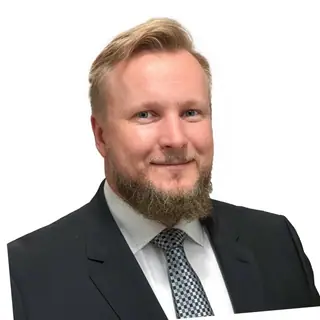
Who is Monika Sarapa?
- Who she is
- Monika Sarapa, owner of the Warsaw language school Custom Made, an ICF-accredited certified language coach and a pioneer of an innovative approach to learning foreign languages. Earlier an English teacher (mainly business and legal English) and a project manager at an IT company, with a Scrum Master certificate.
- What she does
- She runs a school working exclusively with business clients. For each company she creates an individual program combining language and business goals, supplemented with culture training. She uses the neurolanguage coaching method and elements of Agile and Scrum in teaching.
- What we talk about
- The path to founding the school, neurolanguage coaching, why it is worth learning through short-term goals, the languages the school teaches, the most common cultural challenges in foreign expansion (including the example of Malaysia and India), the impact of AI on language learning, the future of human-to-human contact as a premium service, and advice for companies preparing expansion.
- Where to find her
- LinkedIn (Monika Sarapa) and Custom Made.
Best quotes
„Language preparation is not enough.”
„The human will be the premium, and AI will be widely available.”
„It is better to prevent than to cure.”
„I recommend preparing first and then conquering markets, to save money.”
Recommended materials and sources
Guest’s pick

 lubimyczytac.pl


 openlibrary.org
 erinmeyer.com

Related conversations


Transcript
Host: Rafał Moszkowców. Guest: Monika Sarapa.
Introduction
Rafał: Welcome warmly to another episode of the Globalne Horyzonty podcast. Today I have the great pleasure of hosting an exceptional person who combines the world of business, language education and modern technology. My guest is Monika Sarapa, owner of the language school Custom Made from Warsaw, an ICF-accredited certified language coach and a pioneer in an innovative approach to learning foreign languages. In today's episode of Globalne Horyzonty we will delve into topics related to learning foreign languages in a business context. We will learn the secrets of business culture training and find out more about her experience supporting companies during foreign expansion. I am convinced that today's episode will give you loads of valuable knowledge and inspiration. Monika, welcome to Globalne Horyzonty.
Monika: Thanks, thanks a lot. Rafał, thank you very much for the invitation. I am glad that today we will talk a bit more about various cultural aspects.
Rafał: Great, me too. I always start with saying the pleasure is so far on my side, we will see what happens at the end. Nice that you are here. I have a few interesting questions. Foreign expansion, but linked with culture, with language, interests me enormously. Our listeners for sure, and my clients without a doubt, because it is an aspect that is not always very well looked after. I remember that when we met I had a kind of tic: damn, we have to talk here, because you do things that are very important and often underrated.
Why did Monika Sarapa found the language school Custom Made?
Rafał: Your path is not a standard one. What inspired you to found a language school that focuses on those cultural aspects in a business context? Where did it come from?
Monika: You know what, it is really two different inspirations. Two experiences inspired me to found the school. I used to be an English teacher, mainly business English, a bit of legal. When I had the experience of working in language schools that bet on typically book-based learning, those were the first inspirations to go my own path. I started to work directly with companies then, because I very much disliked stereotypical language teaching, meaning we just ride through the next page from the book. Students had to learn many things that were totally useless to them. Then I had a small break, which is also quite significant, because I worked at an IT company as a project manager, so a totally different experience. That experience showed me how important it is for me to make decisions for which I can take full responsibility, because I know why I am taking it. Not decisions imposed by someone from above, but totally mine. Those two experiences, being a teacher and creating a personalized learning path for a business client, plus the ability to make my own decisions for which I can take responsibility, led me to found a language school.
Monika: The aspect of language training supplemented with culture was born a bit later, during the school's existence, very organically, from a client's need. The client was growing, trying their hand at foreign expansion and, as unfortunately is the case for most in Poland, first we go into expansion and then we look at what is not going well and where we have to apply some fixes. It turned out that the fix is getting to know the culture after the fact, so that is where supplementing language training with the cultural aspect came from. Naturally I concluded: right, indeed, that is something companies do not take into account at the very beginning. I admit that unfortunately most of our clients are the group that only applies a fix, instead of preparing from the very start, that is, first getting to know the culture. Rather we go to the market, and then we will look at what is not going well.
Rafał: I observe that often too. I take part in the technical aspect, I am not talking about logistics, but about marketing, that is what I specialize in. We are able to scale companies to different markets. We also help them scale in Poland and here they most often cope well with culture and language aspects, but for other countries I often trumpet about it. I cannot of course force anything or, God forbid, take responsibility for it, but I often ask whether any research in that context was done, or whether customer service employees are trained how to serve dear ladies and gentlemen from France, for example, because it is a slightly different service than in Poland. I understand your motives and I think that a service like you offer is needed. Preparation of this type can save loads of dough, speaking very colloquially, meaning money, in the future.
What is neurolanguage coaching in language learning?
Rafał: I also read that there is neurolanguage coaching, a method.
Monika: Yes, that is right.
Rafał: Honestly, I do not know what it is, and I think most of our listeners do not either. What exactly is this neurolanguage coaching, language coaching? Is it not just a fancy word? How does it differ from traditional language teaching? If you could explain it a bit.
Monika: Sure. Neurolanguage coaching, breaking those words into their basic factors, combines several things. Neuro came from brain research, meaning neuroscience, and in Polish probably more neurobiology. It is years of research on how our brain functions, what stimulates it to activity, in what way it works best. That is part of this approach. Then we have language, meaning the whole method is used in language learning. And coaching is a bit of an addition, because it is about enclosing the whole method in a schema taken from coaching: working on short-term goals, in fact above all breaking it down into short-term goals, I will say why in a moment. Working on motivation and using coaching tools, like for example guiding the student to the realization that they also have to take responsibility for their learning process. Strangely, students who want to learn a language rarely realize that they should also take responsibility for trying to learn it.
Monika: Most often it is like this: I go to a course and expect that the teacher will, in some magical way, drive all their knowledge into my head, pour it through a magical, invisible funnel, and after half a year of learning I will know everything they passed on to me. But learning anything, we should take a bit more responsibility: know why we are doing it, why we want to, and if we want to and declare it, we also have to do our part to consolidate it, to utilize that knowledge, and work at home too. Those are the three elements that make it up.
How does learning with short-term goals and strengths work?
Monika: The method itself is based on working with short-term goals. We define a main goal, for example you need to prepare for a presentation at a forum, at a foreign conference. It is a very broad notion, right? So we break it down into smaller goals: making the presentation, you need to introduce yourself, introduce the concept, the agenda, then do the opening, say what your topic is, develop it, say thank you, and also do networking at the end. Each is a small goal we work on a bit separately, so that your brain gets at the end of each achieved goal the information that it has succeeded, a kind of dopamine hit, a motivational hit, that certain steps it carries out one by one have been achieved. Because if we assume I want to learn a language at the B1 level, you can learn it and learn it and learn it and at certain moments not even notice what you have actually achieved. You can count that okay, I completed grammar, past simple, present simple, present perfect, I learned it, although I cannot yet apply it so well in practice, or I learned a thousand words, but if you think about what I need it for, how I can utilize it in real life, it is sometimes hard to define. So we work on motivation, on the fact that we have reached certain milestones.
Monika: In this method we also work in iterations. If we worked out, for example, the goal of doing the opening of the presentation, then at the end we check whether everything is achieved, whether the person is really able to do it satisfactorily enough for the student to be proud of it. The student is to say: yes, this is what I cared about. But if not, they have the right to say: no, in the next iteration, instead of moving straight to the next goal, I would like to work on this more. The student, let us call them the coachee, takes complete control over the process of their learning. This method, which is also from coaching, is directed at people who know specifically what they want. That is why I most often direct it at CEOs, directors, senior managers, company owners, because they really know what specifically they need to prepare for at a given moment, what specifically they need to practice, so they have their specific goals. I am not saying people in lower positions could not know it, but it is rare that they have at present such a very precise goal. It is harder for them to define. Perhaps it is a matter of decision-making. I would not want to define it from above, but from experience people at higher levels have specific needs here and now, like the mentioned presentation or a conference talk.
Rafał: Based on such dopamine hits. There are lots of such games, apps now, but it is a very logical idea for learning a language. As we probably all remember, and I certainly do, my learning of English in the model of the Polish Prussian school, as I call it, was a nightmare. God, how bad it was. I de facto learned nothing. I learned more washing dishes in England than in those 7-8 years of going to Polish school. Among other reasons because there was no dopamine at all. There was only cortisol in syringes.
Monika: Yes, that is true.
Rafał: And there was no goal either. The goal was to slip through. It is very nice that you use neuroscience to teach people a language, in a cultural context as well, because I think it brings better results. And if this is about anything, it is about results.
Monika: I will add that an important aspect, which we also smuggle into other courses, is to work on your strengths, because surely not every one of us learns in the same way: not everyone is a visual, auditory or kinesthetic learner, so it makes a big difference. If we take into account your strengths as a student, meaning how you like to learn, what negatively triggers you and what positively stimulates you to learn, what kinds of activity you like, which make it easier for you to remember and to transfer to real situations, we then work on that kind of activity. So that you can achieve the set goals as fast and as pleasantly as possible. Because if you enjoy learning, the motivation is sustained all along and the effect is achieved more easily and more steadily, it lasts longest.
Rafał: Definitely, we are programmed that way, so I think it helps mega.
Which languages does Custom Made teach, and in which projects?
Rafał: In which languages does your school work? Out of curiosity: are they some exotic languages, or more local, from the European perspective?
Monika: We work with companies and focus on working only and exclusively with business clients, because we can offer them more interesting programs. We tailor for each an individual program so that, besides language goals, they also achieve their business goals. As you can guess, companies most often bet on English, because it is the most universal.
Rafał: The lingua franca today.
Monika: Exactly, a global language we can apply even in international expansion. If you have more than one country in your plans, then from the business point of view it is the most universal investment. Of course we also get projects in other languages, such as Polish for foreigners, where directors of international companies come to Poland to take up the position of CEO or regional director. They have to be taught Polish at least. Of course there is German too, although it is not as popular as in previous years, interestingly. We also teach Italian and I see growing interest, maybe because they like it, I will fly to Italy.
Rafał: Elena Ferrante, when I one day read her in the original, I will send myself a kiss. It is such a beautiful language.
Monika: Very melodic and expressive, right? Wonderful. It is not so difficult, although some grammatical aspects are quite tricky. I once made an attempt to learn it, dropped it, but maybe I will return. Spanish is also gaining popularity, mainly I think because of our compatriots' real estate investments. Real estate offices and agents are also very interested in that language.
Rafał: Interesting that the main Polish hubs in Spain are in Marbella.
Monika: Exactly, the most common destination now for our compatriots who want to emigrate to Spain. Of the more exotic languages I think Norwegian. I now have a project together with a colleague who also has a language school. We are carrying out a very interesting project: teaching Norwegian to Indian nurses who are relocating to Norway. And here is the interesting thing, that we are really combining three cultures. Mostly they are Polish teachers who studied Norwegian, so we have Polish culture, which has to live through that cultural clash with India, because they meet those Indian nurses, which sometimes brings very interesting situations. And at the end of this thread we have the culture of Norway, which also has to be conveyed and supplemented within the language learning, because at the moment of relocation they have to find their way in the new culture. A very interesting project.
Rafał: Nice projects. I think there will be more of that.
What cultural challenges do companies face when expanding abroad?
Rafał: As a company working with Polish companies doing foreign expansion, what are the most common cultural challenges Polish companies meet during foreign expansion? We have our own long list, but I am curious whether you have yours.
Monika: It is hard to say whether it is long or short. I suspect we could list more problems. The most common problem is misunderstanding. For example in training. We have a client who opened their branches in Malaysia and India. They did it first, meaning first they approached the expansion, hired people there who were coordinators and were responsible for hiring employees on site. They approached it sensibly, because obviously it is then easier to communicate: a person who is on site and is, say, Malaysian or Indian knows their culture, so it is easy for them to communicate. The problem appeared only when those people had to be put up against employees who are here in Poland, for example the training department. The training department was responsible globally, for all branches, for implementing the company's organizational culture, for onboarding, I do not know what other trainings, but generally they had to train the employees who were both in Malaysia and in India.
Monika: The problem that appeared was that during those trainings employees nodded, said they understood everything, everything was okay, the training supposedly went successfully. But after the training it turned out those employees really did not take much from it. The first conclusion of the training department was that apparently their English as trainers is too weak, maybe they conveyed something wrong, since they were ladies, so they asked for a completely separate course group to be created for them, focused on English in the training context. We asked further what the need was and whether there was a problem to address. Out came the whole story about the trainings carried out for Malaysia and India, so we asked whether, then, any internal company trainings had taken place to get acquainted with the culture. And suddenly a picture I have before my eyes, probably often seen in films: silence and only crickets playing.
Rafał: Tumbleweed.
Monika: Yes. A little lamp lit up right away: aha, so there were none. Well, now we know where the problem may lie, because the English of the whole training department was not the worst. It was level B1, and some ladies even had B2, so unfortunately. The highest is C2, that is native level. B2 is strong.
Rafał: That is very interesting, because it is a very underrated thing, the cultural matter. I really understand that some in companies do not realize its weight. We will thunder here that it is important and you have to prepare for it, you simply have to do it. Sometimes it can have a simple form, I think: you need to buy a good book, a good interesting course, and best of all catch someone from that culture and bring them to the company, let them tell about communication, what is well viewed, what is badly viewed. And there may be prosaic things here: in Bulgaria, for example, when you say yes, in Poland you mean no, and when in Poland you say no, they think it is yes. Banalities in theory. I do not want to trivialize it, absolutely, quite the opposite, but those simple things must also be covered, because to us, company owners, CEOs, expansion managers, certain things seem obvious, and our employees may not have that awareness. And then that cultural clash, as you nicely said in Polish, happens and there is a question of why it does not work or why the profitability of the venture is not as we assumed, why we cannot achieve our goals, KPIs. But look where the first thought went: is the English good? Not in the context of whether we can communicate.
Monika: And the most interesting thing is that probably one of the signals could have been that in Asian culture usually one does not say directly "I do not know, I do not understand", because it comes from saving face, from preserving honor. They simply do not say it directly. So simple things like not asking closed questions, yes or no, but asking an open question: then that person does not have the problem that they have lost face, using this metaphor, and does not have to say that they do not know, do not understand, that maybe they are somehow dumber because of it. They answer an open question, give a broad answer about what they understood or did not understand. Sometimes those are simple fixes, of course it is one of the elements, but it is worth knowing when taking up any cooperation with Asian countries. I once saw a simple, prosaic example, a video on YouTube: a tourist asks for directions and asks whether it is this way. Again a closed question, yes or no. The first person he meets says yes. He asks the next person he meets, pointing in the opposite direction, whether it is this way, and that person also confirms: yes. So generally you can choose which way you want to go.
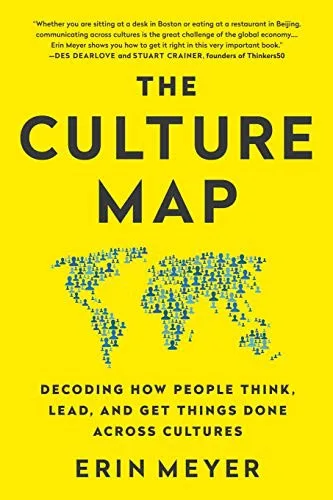
Rafał: Exactly. It reminded me of Erin Meyer's book, "The Culture Map", generally about how to communicate effectively in business. I do not usurp the role of an expert, because you are the expert and certainly not me, and I do not even tell people what to do. I simply think you have to start doing it somehow and going through those cultural matters. To arrange in your head where we position ourselves in relation to the people we will work with, communicate with, sell to, Erin Meyer's book may be a basis for changing thinking or starting to think in the right direction. It shows a lot of scientific grounds for understanding that certain things are worth doing, and they are not as distant as they might seem, and the potential benefits of that understanding are gigantic. I always joke that standard operating procedures will not solve everything, and thinking about other people is equally important, and how we communicate with them.
How is AI changing foreign language learning in business?
Rafał: I have a few more interesting questions. About the future of language education. It sounds a bit pompous, but we cannot escape the fact that we have a technological revolution of the scale, and let everyone insert what they want, because I have heard different things: landing on Mars, the steam locomotive, the internet, fire, the spear, Prometheus. Whatever we insert into this parenthesis I coined, it is a technological revolution on a gigantic scale. I wonder how you think about language education in business in the age of the development of mainly generative artificial intelligence. Are you already implementing these solutions, or planning to? How do you see your work in the context of these technological changes?
Monika: I am a terrible fan of various new technologies, so I test everything right away. I often get the question whether language courses will soon cease to exist at all. I treat AI as support, so we definitely use AI in our daily work, for example it supports us in analyzing a large number of language materials we already have, and in improving our programs. We prepare each program separately for each company, because each company has separate business goals, so it is a lot of work and AI supports us here. We can load a large amount of our internal data and materials and prepare framework programs, which we then only have to refine. Again I lacked a Polish word.
Rafał: On the subject of cultural matters.
Monika: Yes, almost. Somehow improve, perfect.
Rafał: Recently someone said in Polish "sfine-tune'ować".
Monika: Yes, exactly.
Rafał: Wow, incredible how much anglicisms, English-language culture, especially in technology, soak into us.
Monika: It is often conditioned by how often you use a given language. At some point it starts to replace another language you use. I remember that when I was in translation studies, English with German, after some years, when I went to translation classes from German, only English words and constructions appeared in my head, and when I went to classes from English, I thought only in German. It was hard for me to switch. Lately I see that my brain functions more and more with difficulty in Polish, because I soak in and consume more of that English.
Rafał: Absolutely, I have it too. Often when I record something and then listen back, I say: wow, I did not even realize I said that with an anglicism. Because I lived many years in Britain, I use a wonderful variety of Polish called Ponglish. It is an absurd language of communication, incomprehensible to the English, incomprehensible to Indians, incomprehensible to Poles in Poland, and comprehensible only to Poles in the UK. Sometimes it is strange to listen to and I was part of it myself. But returning to AI in your industry: let us levitate a bit in hypotheses, based on what you know and what you have already done, where can it go? It is not that we should say oh dear, we will be afraid or not, but how you look at what is available today, and we put forward a thesis that it will keep developing. How will it support, change your work?
Monika: I think it will make it easier for people to access practicing that most important skill, speaking. Already now you can chat with ChatGPT or other apps. When you have a lesson with a teacher, a native or anyone once or twice a week, it is still little. Until now between those lessons students had the chance to practice vocabulary in exercises, read, listen, and that work boiled down to passive knowledge of the language, and they had a problem with further practice: outside lessons they could not practice the language, unless they used it at work or had friends. At this moment it is already available, you can converse with AI in a free moment, practice in English. If you are good at prompting, you can program it to correct your mistakes. In the future I think designing solutions that are interesting and useful, supporting your language progress, will be commonplace, meaning supplementing natural communication, whether with a teacher or a business partner. I do not think we will totally move to electronic translators, at least not in the near future.
Rafał: What does near future mean in the context of AI development? Someone recently told me: Rafał, the near future in the context of AI development is a week.
Monika: Exactly. I think it is still ahead of us, there have already been solutions like an instant translator: you connect an earpiece to your ear and have real-time translation with some lag, because it has to first process the input of the second language, translate it to yours and only then translate you. People will still want to converse themselves, despite everything. It will be a nice quick fix: you need to communicate with someone right now, you have no time to learn a new language, say Chinese, and you have to start cooperation with China. That is happening now by email: you have no time to learn Chinese, but you can put it into a translator and send an email in Chinese. Whether it is correct, it is hard for me to judge, but it is available. Suppose someone needs to quickly communicate with a supplier from China. There is no chance of learning Chinese in a few days, so maybe they will use a translator. But learning a language itself will still be popular, because we like to travel and would want to delve into the culture ourselves.
Rafał: You see what a beautiful link you made back. Honestly, as I think about it, I had a thousand thoughts in my head. The first, a small curiosity: a Polish company that I bow to daily, because it is wonderful, does great things and is run by people whose courage inspires me, ElevenLabs. Recently, I think, at the European Commission, I would not want to misrepresent it, but so it seems to me, there was that interpreting at conferences, booth interpreting, I do not remember what it is called.
Monika: Simultaneous.
Rafał: Okay. They implemented AI and it works smoothly, at scale, for all languages, thanks to the solutions ElevenLabs has in the context of audio and simultaneous interpretation. So when I think about what you said and look at the market, the world, it is total hypothesis, but my belief is that people mostly will not learn languages.
Monika: Mostly, probably. I also have the feeling that it will be more of a premium service, for those interested who would really want contact with a human, with culture. You want to go away for longer, travel around Asia or Spain, and you want to feel that culture live, the real one, to talk with the owner of some restaurant or bar, ask how he lives, how the market in Spain really functions. There will certainly be a limit to such interest. As people we are simply lazy, if we have faster and easier solutions.
Rafał: What an unpopular thesis.
Monika: But that is how it is. All technological solutions are there to make life easier for us, but those conveniences lead to us getting lazy.
Rafał: I think we do even more things we should not be doing at all. All those tools making life easier that are supposed to save us time. As humans we are obsessed with controlling our life and time, it is a philosophical matter. We design most things to regain time, and really time cannot be regained, because it is not ours at all. But returning to what you said about teaching: I caught that it will be premium, custom made, by the way.
Monika: Lectures.
Rafał: Recently I talked with another person, from another industry, and we also drew the conclusion that interpersonal relationships will be in low supply and high demand. Because everything accelerates, the more AI tools we have, the more time we theoretically should have, and the paradox is that we have less, and it will be premium. Conferences once cost little and you could travel around the world, and today the normal price is several hundred euros, because you can meet another humanoid. In language teaching I feel it too, I hope I am wrong. I can meet Monika, I can afford it, she will teach me, will motivate and inspire me to develop language or deepen cultures. But the bulk of my learning, if it happens, will happen with a personal assistant Monika, a virtual one. When you teach, or your team, there will be consultations where you can touch, handshakes, and the bulk will happen through your digital version, because those digital versions already exist today.
Monika: But you are going in that step, because look, at this moment in-person meetings, where you can really touch each other and high-five, are already more premium than the very popular online meetings at the moment, because those save us time. Going further, we will move to human-AI interaction. The human will be the premium, and AI will be widely available.
Rafał: We will be our digital copies. I am not even laughing at it, a bit maybe, because it sounds silly: what do I copy, what am I, Dolly, that sheep? Will I be some hologram? Jesus, I do not know. In me there are two currents of thinking. One is that it is great that it is developing, that we are going in this direction, it is inspiring and exciting, and on the other hand: what is going on here, I will never keep up. The world is falling into paranoia, an obsession with saving time, making AI, we are flooded with fake news. It is hard for me to catch the middle. But I think everyone who touches this has such dual thinking: on one hand cool, I would like to be in it and take part, and on the other hand the power of these tools is so enormous that you can get lost.
Do AI and time-saving also apply to developing countries?
Monika: Definitely. But we should also consider whether it is the case that in our bubble it develops so fast, and it is not necessarily so popular among the rest of society. In the world of capitalism time is very important, and if you go to so-called third world countries, where people are poor but still happy, time is important to them too, but they do not fill it, I do not know, to the second with work, but with relationships with their family, friends. There is a completely different perception of time. Among us, where capitalism reigns, we go toward applying ever better improvements, time-savers, a bit of word formation I will apply here. All the tools that can save us time, including AI. But that does not mean they will be popular at the scale of 50 percent of humanity. Maybe it is only 30, maybe 20 percent. We will see how fast it develops.
Rafał: The scale of availability will widen. It is a bit like with the internet. I do not want to return to those railways you mentioned.
Monika: On the other hand, sorry to interrupt, as far as language learning goes, AI can also have a positive effect for poorer countries, whether African or poor Asian ones, where people look for contact with other countries, to break out, to leave or to start working in larger companies. It may turn out that thanks to AI and how available it is, how cheap it will be, those people will have a chance to learn a foreign language, for example English, and open the door to a so-called better world, bigger earnings for themselves and their families.
Rafał: Let us hope so. It would be nice if the threshold of accessibility to learning, development lowered so it is easier for people from developing countries to jump in, but really from every country and every social class. I do not know, maybe that is why I am a defeatist, but I always see more threats. Not because it bothers me or that I will not use it. I am an advocate of using these tools for specific purposes, but in the context of disinformation, social paralysis, political turbulence I have the feeling: how to prevent it? I cannot find a solution, because I am intellectually too weak for it, but I fear whether people will want to find a solution. I do not want to end negatively, so fine, but such reflections are very nice, because I have a plan that in a year with most of my guests I will return to that philosophical fragment where we consider these things, and see what came true, what did not, or how wrong my thinking was.
Monika: I hope you do. I will gladly listen to such an accounting.
Rafał: I will, you can count on me. It is already recorded, so there is no chance, I will not back out.
How do Agile and Scrum help with language learning?
Rafał: A second more for personal reflections. What gives you the greatest satisfaction in what you do? Because you could do other things, and you do exactly this.
Monika: Probably really the field for creativity, because although I try to focus on strategy, development, in a way sales too, somewhere I keep tinkering, searching, modifying and sometimes even introducing training directly, myself, or my teachers, using a combination of different fields and implementing them in teaching English. We talked about neurolanguage coaching, but I use the coaching tools themselves also in completely different kinds of language courses, into which I increasingly try to implement elements of Agile and Scrum. As I mentioned, I worked at an IT company and in the meantime got a Scrum Master certification. I got acquainted with it then, although it was 10-12 years ago, and I will say honestly that then in Poland Scrum maybe did not develop correctly, but the idea of Scrum itself pleased me terribly and I looked for where it could be applied. For some time I finally found an application in language courses. In programs, especially for new clients, I try to smuggle it in as widely as possible: using coaching, working on small goals, we also use the division into milestones, called in Scrum sprints, and that is how we work on programs: arranging programs, we divide them into sprints, iterations, improvements, so-called reviews. We implement in language learning not only coaching but also Agile. That is probably what gives me the greatest fun, and of course including different cultures in all of it, because I love it.
Rafał: A very wise and nice approach. We are talking about Agile, Scrum, about the manifesto that arose to avoid waste and senselessness, so as not to make software for the sake of making software that in the end does not work anyway. It is in contradiction to Waterfall. It is interesting that you use it. Recently I wrote a few articles for our blog about different methods of managing projects or progress in search marketing. I tested different things: from Six Sigma through Scrum, the agile approach, through Kaizen and others, until I stopped at PDCA, Plan, Do, Check, Act, combined with Objectives and Key Results. It is great that you do something like this, because very often those methodologies for managing a process, a project seem inaccessible outside building software.
Monika: That is absurd.
Rafał: Why? You can adapt it. It is not a perfect reproduction of the book by Sutherland, who wrote about Scrum and agile methodology, but you adapt, that looseness in fitting a solution to a problem so as to solve it better is brilliant. It always inspires me when people take something from a slightly different industry: you know what, this suits me, I will change it and fine, let us do things better thanks to it.
Monika: Exactly. All those methodologies you listed, most often used for managing projects, can in fact be applied in every aspect of life and we probably often do, only we do not name it. Think of building a house. It is in fact a life project that you have to adjust non-stop depending on conditions, because the contractor does not show up, you have to quickly find a fix, and that is also an agile approach that we use in everyday life. We adapt to conditions. I very much like using methodologies, frameworks or solutions not from my industry, but ones I see I could implement in language teaching, because I see they could help our clients achieve their effects faster or in a form friendlier to them.
Rafał: Nice, I like that dynamic and respect it mega.
What should companies do before foreign expansion?
Rafał: Attention, dear listeners, advice section. What advice would you give at the end to companies preparing foreign expansion, in the context in which you can look after it? One or two pieces of advice, so-called actionable points.
Monika: It probably depends on the market too, but certainly language preparation at least of salespeople, because I assume that in expansion we always have to have a salesperson, whether the company owner or a salesperson from the company, who must communicate fluently, whether in English or in the language of the country we want to go to. Best if it is a person from inside rather than outside. Language preparation is not enough. Cultural preparation is a must, because if we send a salesperson to a completely new market, especially if it is to be B2B sales, it is an absolute must have for that person to first get to know the culture. I cannot imagine arranging meetings with potential business partners or clients without getting to know how it functions in that specific country.
Rafał: 100 percent. So we return to what we said at the very start: do not neglect it. It does not cost millions, I suppose.
Monika: Although who knows. Certainly you can lose millions by entering a market blind, meaning trying to adapt sales methods that work on the Polish market to a new market without proper research. You can lose millions and it will turn out what companies most often do: after a year of operating and without results, when we have burned money, only then do we invest in cultural or language-cultural training. So I recommend preparing first and then conquering markets, to save money.
Rafał: Yes, and let us stick to that. I repeat it like a mantra: first strategy, first research, then we build. Once I heard from a large Polish company, paraphrasing: hey Rafał, we would like to enter the Czech Republic with our sales. I say: great, an interesting, mature market, attitudes toward Polish products are relatively good, lately changing relative to the past, it operates on marketplaces, especially Heureka.cz, you also need to be on Allegro, but we need to do a full market analysis and fairly deep research, so that we know what exactly we are facing and whether it is worth it in the cultural, technical, operational and logistical context. I do that research and it costs X. I waited a week for a response and got: you know what, for that much we will set up a shop, run ads and see whether it works. I say: regards. I did not check whether it worked, so maybe it turned out it worked, that would be a tragedy, but let us not do it like that. Sometimes you do not even know how much you lose. Opportunity costs are very often impossible to count.
End of the conversation and recommendation
Rafał: The last thing from you, dear Monika: a recommendation. It is a segment I recently introduced. A book, a film, anything you could recommend to me personally and to our listeners.
Monika: I will say so, I do not know whether it will be a light read, but on the subject of the culture of the United States. I was recently, some time ago, at a networking event and a meeting with the author Maciej Jarkowiec, who writes quite a lot about the States. His book "Powrócę jako piorun" moved me very much. It is a book about the situation of the Indians and how the United States approached colonization from the start, through the whole later history, how the fates of those Indians turned out, how they were treated also in the modern world, in the 60s, 70s, 80s and later. It moved me very much and inspired me, when I return to the States, this time to see the west coast, to definitely go to Montana and try to visit an Indian reservation, because it is a really interesting topic. As for film, also touching on those Indians, a series inspired me recently, which is a bit of a spin-off of Yellowstone, in which, by the way, it is also nice, but the situation of contemporary Indians is presented in quite a small part. The spin-off is called, I think, "1923" and it shows Montana and the history of among other things a ranch from the years before the Second World War, but there is also a whole Indian thread: how the Indians were treated in that modern world, what the assimilation schools for Indians looked like. A very interesting and moving picture, as regards that Indian aspect. I recommend it, really well made.
Rafał: I would add to that, in case someone wants to supplement it. Although I have not seen those things or read this book, so I say right away that I am taking it up and will return to you with information. There is a fantastic book, a great tome, a bit of an alternative history of the United States: Howard Zinn, "A People's History of the United States". A book that shows this country from a totally different perspective and thanks to which you can start looking at the United States differently. The man is no longer alive, but he was a very acclaimed author in the States, although it was not without problems, because the theses he puts forward and the facts he cites are not to the taste of part of the majority in the States. You may run into that. We recommend these three things, I will describe them in the episode description. For my part, Monika, thank you immensely. You do great things, you talk about them interestingly. I think what your team does is a key element in foreign expansion, but not only: both for widening our thinking and for creating new neural connections. That is also necessary and here AI will not replace us in creating new neural connections and will not cure us of Alzheimer's if we do not learn.
Monika: That is a good point.
Rafał: Yes, learning helps in the fight against Alzheimer's, and that will be the title. Once again thank you very much. It was a pleasure for me and I hope until next time.
Monika: Thank you very much. I enjoyed talking with you very much and it is nice that I could share certain aspects of my work. I wish all companies not to wait half a year or a year until the first cultural problems appear, but to prevent them, like in medicine: it is better to prevent than to cure.
Rafał: All the best.
Monika: Great, thanks, all the best.
Listen and watch
The same conversation in your favourite app.
The full edited transcript as a Markdown file, with the guest’s details and quotes.
Back to top