

Who is Karolina Kołodziejczyk?
- Who she is
- Karolina Kołodziejczyk, a specialist in social media and influencer marketing from Wrocław.
- What she does
- For several years she has worked at the agency Midnight Issue, which runs campaigns with creators and ambassador programs for brands. She combines marketing with journalism, writes for one of the platforms, and recently started a book club.
- What we talk about
- How to set a campaign goal, price and vet an influencer, secure a collaboration with a contract, measure results, and how AI and the offline world are changing the industry.
Best quotes
„You should rather think about the goal and always start from the goal in influencer marketing.”
„If you do not have it in an email, assume that you do not have it.”
„This credibility is now much more important than authenticity, which never existed, and even if it did, it is not tangible.”
„I am of the opinion that we should automate processes, not relationships.”
Recommended materials and sources
Guest’s pick
 empik.com


Related conversations



Transcript
Host: Rafał Moszkowców. Guest: Karolina Kołodziejczyk.
Introduction
Rafał: Hi everyone! Welcome to another episode of the Globalne Horyzonty podcast. Today we are going to dive into a world that for many of you may seem as fascinating as it is mysterious. The world of influencer marketing.
Rafał: Karola, welcome to Globalne Horyzonty.
Karolina: Hi, thanks for the invitation.
Rafał: Say three words about yourself. Where do you come from?
Karolina: I come from Wrocław, but I do marketing, like probably everyone who is invited here or passes through your agency. I specialize in social media and influencer marketing at the agency Midnight Issue. I also combine this with journalism, I write for one of the platforms. I also recently started a book club, so culture and marketing intertwine in my life.
Rafał: Nice, thanks. Are you looking forward to the plan of the conversation?
Karolina: I am. We will start from the basics, but we will add some flavor to it. It is an interesting experience for me, because I have been in this for several years, so some things are obvious to me, and then I looked through the outline and realized that they are not so obvious at all.
Rafał: They are not. I would like to approach this from the perspective of a total layman in influencer marketing. I know something, I have been somewhere, I have seen something, I have worked with someone, but if I had to start from scratch, I would have absolutely no idea where to start.
Karolina: Like you with SEO. I think I am similar with search engine optimization.
Rafał: Cool. If you ever want to find out something about SEO, I will gladly tell you.
Karolina: Sure. Let us go for it.
Rafał: Okay, then let us start with the absolute basics.
What is influencer marketing and who is an influencer?
Rafał: What exactly is influencer marketing?
Karolina: Influencer marketing is advertising a product, a service or a brand through influencers. It can happen either on their channels or on the brand's channels. Then we use not the creators' reach, but their image. We can also combine the two, for example by creating collaborative posts. Just like on Instagram we have reels that can appear at the same time on the creator's profile and on the brand's profile. And then we really have two goals in one.
Rafał: Okay, good. And who is an influencer, really? Is it a person who has a certain number of followers, a certain engagement, the involvement of their users? How do you find out whether someone is an influencer?
Karolina: You know, for me it is a person who has influence, as the name suggests, on purchasing decisions, on how we spend our time, for example that we will go to an exhibition because someone recommended it to us. You can be that kind of influencer really in your own micro-environment. And every one of us, I think, is such an influencer every day when we recommend a movie to a friend.
Rafał: Like when you tell your mom who to vote for?
Karolina: Yes, only nobody pays you for it. Or maybe they do, I do not know about your case. But if someone is already paying you for it, then I think you can call yourself an influencer, because you have an influence on purchasing decisions and it is your source of income. The numbers do not matter here. We have very small influencers, up to 10,000, even with a thousand followers, who regularly work with brands, and we have those with millions. So numbers are not a limit.
Rafał: Okay, and is it the same as celebrity marketing?
Karolina: No. Although many celebrities are now influencers and vice versa, so it is hard to point to a difference. The difference is that the celebrities of the past were usually known for something other than being celebrities. Admittedly we had people who went on shows like "Bar", I do not know if you remember that cult one. But usually they were actors, actresses, journalists, singers, athletes. They first had to prove themselves with some talent, some work, and get somewhere, and only then did they start cashing in on it, for example by advertising products. So it did not start with advertising products. Now we have it a bit reversed. We do not have to have some specific skill, we can show our daily life, what we do, where we go, what products we use, and we are influencers. Do you understand the difference better now?
Rafał: Yes, definitely. So celebrity marketing is Krzysiu Ibisz?
Karolina: Yes, Ibisz. A bit televisual, with television roots. These celebrities are now moving to Instagram, because the era of classic television is slowly ending. They have to change their source of income and they are trying, with varying results. Let us not hide that it is not easy for people who spent their whole lives shooting TV commercials on huge sets where they had people for everything, and now they get a product and a phone and are supposed to record something at home, and they are terrified. But they too have to adapt to market realities.
Rafał: Okay, so I understand the difference now, thanks for the explanation, because honestly it was not clear to me. So if I were to sum up: celebrity marketing is people who did something in life and thanks to that have influence, and influencers are mostly people known for being known.
Karolina: Yes, although that is a big simplification. You can be, for example, a great psychotherapist who starts educating on Instagram, starts collaborating with brands or launches their own products. Then we cannot say that such a person is known only for being known, because they usually provide real value.
Rafał: Well, yes, there is some achievement. I said it mockingly, what I meant was that...
Karolina: ...that it is not done. It is fun to mock. It is a profession that tops the rankings when we ask children who they want to be. We hear: influencers. Yes, those are the rankings today. And on the other hand, when there are rankings of which profession is the least respected, then again we have influencers, next to politicians.
Rafał: I knew politics was in there somewhere.
Karolina: Yes, it is. Maybe in second place or first, I do not remember, but they are the top two positions. So we envy them a bit, and at the same time we mock them a bit.
Rafał: It is the same with politics. We envy those people their power a bit, and on the other hand we cannot stand the way that power is exercised.
Karolina: Influencer marketing is also about power, power over people's decisions.
Rafał: That is true. We will soon reach the conclusion that we generally envy power. But let us move on.
How are influencers divided, and what do nano, micro and macro cost?
Rafał: I have heard about micro, macro and nano influencers. Can you tell me what that means, and whether these are sensible divisions, or whether they exist only in someone's head?
Karolina: They are conventional, because every agency will tell you a different division. I can present one roughly and tell you what it depends on. We are talking about the size of the influencer, meaning how many followers they have on a given platform. My main platform is Instagram, so let us focus on that. Nano influencers are the smallest ones, say up to 10,000. I think that within your micro-community on LinkedIn you can be a nano influencer, unless you have more than 10,000.
Rafał: I do not. I have 3007.
Karolina: Then we can call you that. Then we have the ordinary influencers, meaning micro influencers, of which there are very many, up to say 80,000, and going up to 100,000 those are the so-called mid. And after that it is all macro influencers. There are many divisions. You may hear that macro influencers start only from 500,000 followers, but that does not matter much. It is a conventional division and brands work with each of these ranges. It is not the case that you work only with some, and skip the nano influencers.
Rafał: Okay, but does it also differ in price? I mean, the more followers, the...
Karolina: Usually yes, because what a brand mainly pays for is reach and image. And image is also related to the fact that the more recognizable a personal brand you are, the more your image is worth. But I have come across all kinds of pricing. It happened that the smallest influencers had higher rates than those much bigger than them, because there is no standardization of rates here. It is somewhat shrouded in secrecy: someone throws out an amount, then that amount is negotiated and everything is very discretionary.
Rafał: That is marketing for you, everything unregulated. I once heard that Kuba Wojewódzki charges 100,000 zloty for an Instagram post.
Karolina: I think that is very possible. I have not worked with him, but those are not amounts I do not come across.
Rafał: We will talk about it more later, because it is interesting.
Karolina: Those are not the biggest amounts.
Rafał: We will find out in a moment who charges the most. Okay, but I have another question that interests me. Does a bigger reach always mean higher effectiveness?
Karolina: No, because we adjust effectiveness to the goal of the campaign, to the goal of the brand. The highest possible number of views of a reel is not always your goal. The brand's goal may be sales, and then it does not mean that a celebrity with 500,000 followers will sell you the most. Often these smaller communities sell better, because they have more engaged people from a given industry. We can also pay more to an influencer who has a better image, and then our goal is more about improving the brand's image. Such an influencer does not have to have such big reach, but for some reason is important to us in terms of PR. So you should rather think about the goal and always start from the goal in influencer marketing. And not like this: a client comes and says: "Let us do it with Ania Mucha. Let us do it, because she is big, because everyone knows her." But what for?
Rafał: It is like that everywhere, even in our field. It is very funny. I talk about SEO from my own perspective, and in my head it is the father and mother of the industry, because we are the ones who first talk about reach, about algorithms.
Karolina: Like that math teacher who says that mathematics is the most important.
Rafał: Yes, yes, the mother of sciences. It is amazing. God, I am old, because influencer marketing has existed for many years and it is still new to me.
Which platforms does influencer marketing work on?
Rafał: I have one more musing. On which platforms is influencer marketing most often used? I understand it depends, but are there any most popular platforms in Poland where this works?
Karolina: Instagram, YouTube, TikTok. LinkedIn is still just getting started in this industry. It is developing a lot when it comes to employer branding, building a personal brand and things like that, but in influencer marketing we are seeing attempts, more or less successful. Instagram and TikTok are the platforms that are always priced and always worked on. YouTube depends on the format. It is usually more expensive, because these are full-scale productions, 20, 30, 40 minutes, an hour. It works better for tutorials, reviews and more creative things that you may not be able to do in a one-minute reel. Least of all, I think, Facebook. Facebook is not really a platform for influencer marketing.
Rafał: Does it still exist?
Karolina: It does, very strongly among the older age group. There is a lot of engagement there, so if you advertise as a brand aimed at people over 40, you can achieve very good results.
Rafał: My mom writes to me on Facebook, and then says I do not reply to her, because for three years I just...
Karolina: You have not used Messenger?
Rafał: No. Maybe that is why I ask such questions, because I do not use Instagram much either.
Karolina: So what, just LinkedIn?
Rafał: I only have LinkedIn now, yes. And apparently I pronounce it wrong in Polish. LinkedIn. You do not say it like that.
Karolina: Hard to pronounce. TikTok is easy.
Rafał: TikTok, LinkedIn, whatever. Anyway, I had a moment in my life when I just had an overload of information, and those algorithms killed me.
Karolina: I understand and I envy you a bit, because it is a privilege to be able to switch off in this industry. I cannot really switch off.
Rafał: And I have to pay people who tell me how it works.
Karolina: Well yes, you win some, you lose some.
Why do people trust influencers and what does the law say?
Rafał: Let us move on with influencer marketing in a psychological context, because this may be a silly, naive question. Why do people trust influencers more than traditional advertising? I have heard such opinions. I have not read any big studies, but supposedly that is the case.
Karolina: That is true. It is one of the forms of marketing with the highest return. In the United States, I believe, for each dollar invested you get four dollars of return on average. So this is something that really works if we use it skillfully. Why does it work? Because influencers are more like neighbors who are friends to us. It is as if a friend came to you whom you know a little, because you watch the daily series she serves up to us: I got up in the morning, took a book, read, went to yoga and so on. And one day, when she came back from yoga, she decided to put on a cream and recommend it to us. Completely naturally woven into her day and her way of life, which is well done. We trust it more, because it seems to us that these are recommendations from friends.
Karolina: Influencers are also usually not as distant as celebrities. The celebrities we talked about are people we watched on the big screen, and we did not have such access to their lives. There were interviews, there were paparazzi, but it was more at a distance. Here we usually have private life displayed on Instagram, and because of that we become attached to these people. It is funny, because we do not know them, these are their internet personas, but that is how it works: they seem trustworthy to us. And it is not like we have an actor we do not recognize, appearing in an ad, and we know it is an ad. Even when we know it is an influencer's ad, we think: okay, but actually I like them, maybe they recommended something once that worked for me, so why not try this?
Rafał: Is that not manipulation, by any chance?
Karolina: Is not every ad manipulation?
Rafał: Fair point.
Karolina: Exactly. Manipulation is what influencers do against the law, meaning not labeling collaborations. In my opinion that is already manipulation, because then it can seem to outsiders like a natural recommendation, when it is an ad. That is why I am glad that Polish authorities have taken this on and increasingly large fines are being imposed on influencers who do not label collaborations.
Rafał: That was a European regulation, right?
Karolina: Yes.
Are there industries where influencer marketing does not work?
Rafał: Okay, so we have talked about where it works, how and why. I think I understand, I believe and trust, because I also see what is happening. But are there industries where it is completely a tool we should not use?
Karolina: You know, nowadays I do not know if there are such industries, because we have experts in practically every industry. Even if there are B2B industries or more specialized ones, they can turn to experts on LinkedIn. They do not have to be stars with big names. They can be small creators with knowledge that will help the brand. Not necessarily sell for it, because not every industry has direct sales, I do not have to tell you that, but perhaps in terms of image or building an expert position it will give us something as a brand, even in the construction industry, say.
Rafał: Damn, right. When you were saying that, I thought I see this every day. Only that rarely does anyone mention that it is a collaboration, when they talk about some tool in my industry, an analytics tool, a tech tool.
Karolina: Exactly, I do not know if these are always collaborations. It seems to me that labeling collaborations on LinkedIn is also only just getting started.
Rafał: I do not know whether it is there at all, really.
Karolina: We had that case of Fornal, which I told you about earlier, the Polish volleyball player. It is an interesting example of an ad on LinkedIn that was received very coldly. He works with Rexona, and I think he still does, and comments started to appear under posts on LinkedIn from that volleyball player's profile. For example there was a post about a girl who is stressed before job interviews, and there was a comment from the volleyball player along the lines of: "Good luck, and maybe use Rexona deodorant."
Rafał: Seriously?
Karolina: Yes. It is the latest example that was much talked about in my industry. It is a rather interesting attempt to bring influencers to LinkedIn.
Rafał: I would say it was a bit far-fetched.
Karolina: A bit so, because it is using an image and not influencer marketing. It is not a person who was active on LinkedIn. He really lent his face, and nobody believed he could actually have written that comment. It was very much a miss, but the fact that it happened at all, and on quite a large scale, that many people talked about it, shows that we are making attempts at influencer marketing on LinkedIn.
Rafał: Will you think I am going into conspiracy theories?
Karolina: Well, I like conspiracy theories.
Rafał: Maybe we will get there too, we will see. But maybe on that volleyball player's profile those comments were done on purpose so that we would meet here today and say: look what a flop, because we named a brand.
Karolina: Sometimes it is like that. Even we sometimes, when we do something with a client that may go viral, and we know that maybe not in a super good direction, there is always some risk that it will be talked about, but not necessarily the way we want. And we know that in the end it will be good for the brand anyway.
Rafał: Right, because there used to be a saying that it does not matter how they talk about you as long as they talk. So maybe it should be called flop marketing.
Karolina: As long as it is loud.
How to start influencer marketing: goal and budget?
Rafał: Let us talk a bit about practice. I am coming back to that brand that is learning influencer marketing, meaning me. How should I start thinking about it? Where do I start with influencer marketing?
Karolina: With why you are doing it.
Rafał: Okay. I want to sell.
Karolina: You want to sell. What? Services?
Rafał: Specialized ones.
Karolina: Okay. So you just want to hire influencers, let us say specialists from the industry, who will give your sales and recognition a bit of a boost?
Rafał: I want to reach decision makers in companies in Poland and English-speaking ones, who decide on marketing budgets.
Karolina: And by reach, do you mean showing them an ad with a particular influencer, or do you want them to take some action, to call you?
Rafał: I would like them to find out that we exist.
Karolina: So your goal is recognition, not sales. Then we take the budget, that is the next thing. What budget do you have?
Rafał: Can it be cheap?
Karolina: It can always be cheap.
Rafał: And good? Fast?
Karolina: Influencer marketing has a high return, as we already discussed, but getting into it is not super easy. For 10,000 you can of course do something, but you will do it once. I like to think of it as a process, even though these are usually campaigns carried out once, unless someone is, for example, a brand ambassador, then it affects the overall image. Such a one-off shot may bring something, but it will not give us real conclusions. So the budget is very important, but so is the fit, and that is probably key beyond the goal: the fit of the influencer to the industry, to the brand, to your values and so on.
How to find an influencer and check whether their followers are real?
Rafał: And how do I find such an influencer who is good for my brand?
Karolina: Besides asking agencies, you have tools that work, but I have tested a lot of tools and I am the biggest fan of searching for influencers by hand. Of course we have our own internal gigabases of influencers we work with, we price them and so on, and we use them. But I usually go in and search by hand. I know some already, a very large part. I look at who fits a given industry, but not in a zero-one way. Because these people, unless we are talking about a super expert industry, like yours for example, have to fit above all the lifestyle that the brand promotes.
Rafał: So if we have a vegan brand, we will not put in a steak fanatic?
Karolina: Exactly. And if we have a vegan brand, say a vegan restaurant, we do not have to send only an influencer who specializes in going to restaurants, a foodie and so on. We can send an influencer who is, for example, a yoga teacher. That will fit her lifestyle anyway, but it will not be so direct. That is one way to think about it too. And of course we also have to match the type of influencer to what we want to achieve, because the influencers who sell are not necessarily, as we said, those with the biggest reach. Those with the biggest reach will do recognition nicely. In the case of your brand, we could go for a few marketing experts, not necessarily just SEO, just a bit wider, and give them some money to say nice things about what you offer.
Rafał: So we pay attention to reach, to fit, and to anything else?
Karolina: To the scandals around. And there are a lot of scandals in this industry.
Rafał: Scandals, now I like it.
Karolina: The industry is full of scandals. Sometimes I work with someone, then a scandal breaks out and such a person ends up on a blacklist, because hardly any brand wants to be associated with certain things. We have had scandals related to the exploitation of children, we have had scandals related to animal suffering. There are many such heavy scandals. There are also smaller ones, some image quarrels, someone being badly talked about because they had a fight with someone. It is a bit like reading Pudelek and translating it into what the brand can get out of it and whether it is really worth risking the image for big reach.
Rafał: Okay, let us close the scandals for a moment. How do I check whether an influencer who wants X money from me has real followers?
Karolina: There are tools for that, for example HypeAuditor. You paste a link to such an influencer and you get two important pieces of data. The first concerns their engagement rate, meaning what percentage of the people who follow them really engage with the content: comment, like, and not just scroll on. That is very important information for us. The second is what percentage of the followers are fake, mass-created and so on.
Karolina: I often come across situations where people have several tens of thousands of followers, and 40 percent of them are, say, fake followers. Then the engagement rate will be lower, but also the algorithm does not reward such people, because it sees that those are bots. Instagram even carries out purges, and there are situations where an influencer suddenly loses several hundred followers overnight. They talk about it openly. Those are exactly the Instagram purges, where Instagram shuts down inactive accounts that are only bots. So it is worth checking. It is also worth checking the reach we see on a profile, because it is always some public reach, for example views of reels. With posts you do not see it, but then we ask the influencer for such reach, preferably from the last month.
Karolina: Demographics is also a very important thing. Does the influencer actually have fans in Poland, if we operate in Poland? Or are they, for example, fans from Dubai? Are they women or men, and what age? Because when we have a brand, we usually have personas we want to reach, and it is good if these personas overlap to some extent with whoever the influencer speaks to. Not necessarily with who they are, but with who their audience is. There are situations where there are, for example, super pretty girls with a lot of followers, and cosmetics brands go to them, and when you take their demographics, it turns out that 90 percent of the audience are men.
Rafał: I wonder why.
Karolina: I wonder why. But that brand overshoots, because it pays a higher amount for reach that does not get where it needs to. Unless those men buy those creams for their girlfriends, but I think that is a small fraction.
Rafał: Yes, that is what I think.
What are the forms of working with influencers and rights to content?
Rafał: And as for forms of cooperation: since we already know what to pay attention to, how to prepare, and how to check who is fake and who is not, we wonder what the forms of cooperation are. Is it always just a fee for X, or do we have flexibility and can we negotiate?
Karolina: Usually we can negotiate. Usually a basic package is priced. I will talk about Instagram, but we can move it to TikTok: one video and one Instastory. That is the most basic package. Or, for example, one film on YouTube. Usually those are the prices and those are the deliverables. But a lot of things happen around it that brands often forget about.
Karolina: For example, the rights to distribute the content. The fact that we bought one reel from an influencer does not mean that we can download it as a brand and put it on our profile, even if the influencer sent it to us for approval. That is usually paid for separately. We can negotiate it into the price, but in the basic package we are strictly buying the fact that this reel will appear on the influencer's channel. We do not have the right to use it anywhere else. It is not our property. We are only buying a place at that influencer's with that content.
Rafał: So we are buying a spot on a billboard?
Karolina: Yes, really. And not so that we take a photo of that billboard and hang it all over the city.
Rafał: It seems logical.
Karolina: It seems logical, but brands, having the impression that they are paying for a video at an influencer's, consider themselves its owners, and that is not the case. We also have additionally paid promotion of the material. If we want to boost a given material, for example in Meta Ads, that is usually also an additionally paid action at the influencers'.
Rafał: Oh my God, everything is extra. And tell me, is there a chance to agree on a percentage of sales?
Karolina: There is, but those models are used less often and often with smaller creators.
Rafał: Such an affiliate model. In the States it is very popular.
Karolina: Yes, much more in the States. Here we usually price it with normal amounts. There are also such collaborations, only influencers are reluctant, because they prefer to have certain money.
Rafał: Still cash in hand?
Karolina: By Blik.
Rafał: Blik me those ten grand.
Karolina: Yes, rather than such illusions. All the more so because these influencers do not necessarily sell, as we already discussed. They are not only for sales. I had a situation: an influencer who had a million followers, and there were four sales from her link. We have discount codes or personalized UTMs, so we are able to track it. And there were four sales. It seems very little, only she was not hired for sales either. She was supposed to reach as many people as possible for us.
Rafał: Okay, right, that was not what was measured.
Karolina: Well yes, it would not pay off for her to take a rate in the form of a percentage of sales.
What is a brand ambassadorship in influencer marketing?
Rafał: Sure. And do long-term partnerships exist? Because the way we are talking, I have the impression that we choose some people, give them something, they publish it, we measure it and move on to the next ones. Is there a form of such long-term cooperation?
Karolina: Ambassadorships, for example. Right now at Midnight Issue we run the ambassadorship of Jessica Mercedes. I do not know if you remember, I told you once that Jessica is hanging at a bus stop in your Poznań. It is part of an ambassadorship with the cosmetics brand Oriflame and we have ongoing activities here. Something happens every month. Last week we were in Cannes, where at the film festival Jessica as the brand's representative walked the red carpet and had her makeup done with Oriflame cosmetics and so on. Such collaborations are mainly aimed at increasing credibility.
Rafał: Jessica's or Oriflame's?
Karolina: Oriflame's, but with a benefit for Jessica too, because she is tied to one brand that she promotes, and that also raises credibility in the eyes of her audience. She has a chance to test these products, to actually get to know them. With one-off shots, sometimes these creators are not even able to get to know the product well, and they have to say something about it. Here we have an ambassadorship, so we know the brand, we have long-term activities, people associate this brand with a specific person. It is a kind of face of the brand.
Rafał: Right, of course.
Karolina: In traditional celebrity marketing the same thing is done. There are also bank ambassadors, after all.
Rafał: Yes, yes. It also reminds me of a washing powder.
Karolina: There was also this guy with his younger son. Yes, exactly.
Rafał: That is how I remember that powder. It does not wash that well, I do not know if you know, I checked.
Karolina: I have not used it, you see, maybe it inspired you, not me.
Rafał: My mom for sure. It was 1994.
Karolina: But it worked.
Rafał: Yes, but the powder does not work.
Karolina: I see a lot of benefits here.
Rafał: Of course. Such a long-term partnership seems much more sensible to me for a company like mine, because it looks less like an ad and more like the brand got a recognizable face.
What legal obligations and contracts apply to influencer marketing?
Rafał: Let us move on. Legal obligations. We have already said that these materials have to be labeled as collaboration. And whose side is that on?
Karolina: On the influencer's side.
Rafał: Okay, and is there anything else we should pay attention to? Me as a company, say?
Karolina: It is definitely always worth having contracts. And in detail, what I mentioned, it is a bit boring, but the fields of exploitation have to be listed in detail: where, how, for how long, in which countries we want to use the materials that the influencer potentially records for us or for themselves. Non-competition clauses too. A good practice in the industry is not to give competitors back-to-back days. It varies, so it is worth making sure that the influencer has the same understanding of ethics in the industry as we do.
Rafał: I see you are smiling.
Karolina: That is the story. Usually it is not written into the contract, although there are also contractual non-competition clauses, which of course raise the collaboration fees. Those are the main things. How we can use the materials, it is very important to specify that as much as possible.
Rafał: Good, I am writing it down, because it really is important, and I have a built-in aversion to administration and bureaucracy.
Karolina: It protects us later.
How to measure campaign effectiveness?
Rafał: Let us talk for a moment about return on such an investment. I assume that the listeners, but also I personally, wonder how to measure the effectiveness of influencer marketing campaigns in the short and long term.
Karolina: Well, again I must, I will be boring, come back to the goal. If our goal is sales, then we have, for example, a discount code.
Rafał: That is simple.
Karolina: That is quite simple. If our goal is recognition, then we usually look at reach. I work with clients by setting specific KPIs, for example that we want to reach X people in total in a given campaign or achieve Y views. And I am held accountable for that, and the influencers are too.
Rafał: Okay, and is there a good metric, for example the number of likes? Some ratio?
Karolina: The post engagement rate. Just as we have the profile engagement rate I mentioned earlier, we have the post engagement rate. In the case of a video we take the number of likes, comments and saves, meaning all the deeper interactions with the post, and relate it to the total number of people the video reached. It usually comes out between one and six percent.
Rafał: That is interesting.
Karolina: And when, for example, we want to do a short-term sales collaboration, and our product is of a type that appeals to people who are actually looking for bargains and promotions, it is great to rely on such people in a campaign. Because that is concrete. It is no longer storytelling, it is not polished ads, it is not image, but it is concrete, and that is often very effective.
Rafał: Definitely. I think that if someone has an account just to show people discounts, rebates and so on, that is perfect. I wonder whether that Biedronka versus Lidl war has moved over? Or is it not there?
Karolina: There are profiles strictly about one chain, for example only about promotions at Rossmann, I am more in the cosmetics industry. Somewhere there is only Hebe, but usually it intertwines, because nobody is attached to a single chain.
Rafał: Good, since we already know how to measure success, I think we have learned a lot. Really, I would definitely approach thinking about influencer marketing differently now. Let us talk for a second about mistakes. What are the most common mistakes brands make in influencer marketing? What mistake could I make, for example?
What mistakes do brands most often make in influencer marketing?
Karolina: I think you could fail to think about the goal, just spend the budget and then not know what to measure at the end.
Rafał: What do you mean?
Karolina: Because when I asked you at the beginning, you said it was about sales, and then we came to the conclusion that you would like to be recognizable. So we have two different goals and the question is what you would measure then. You might also not be familiar with influencers' rates and overpay, because that is also very discretionary. If someone has no experience, they do not know whether to negotiate or not, whether it is a market rate. And legal safeguards. That is also a common mistake that brands make.
Rafał: Yes, now I remember a situation: recently I took up an invitation to collaborate with an influencer and there was nothing there, there was no contract. Actually I did not know what I went there for, I paid the money and I have not even measured it yet.
Karolina: And the question is whether you had control over that content, because it is important to agree on clear approval of materials, but also to create a good brief beforehand.
Rafał: That was actually done, there was a brief.
Karolina: But those briefs are exactly the thing that often falls short, because a brief is not "record a nice video with our product". We have to do it in much more detail. I increasingly talk first to the influencer already chosen by the brand and ask how they would like to tackle it, because let us not hide it, these people know how to generate views, where to start a video so that it sells and so on. So I compare my concept with the influencer's concept and on that basis I create a brief which is accepted by the brand. That brief is our framework of cooperation and it makes sure nothing surprises us.
Karolina: And I have a story, that once something surprised me very much. I do not remember anymore whether it was in the brief or not, but I was running a larger campaign with a popular candy bar brand. The campaign was combined with a lottery: buy bars and win, say, a bungee jump or a thousand other experiences. Our idea was to take influencers and show these experiences in real life. We involved, among others, a YouTube channel. Our YouTuber, by the way very popular now, decided to add one experience of his own outside the catalogue we had defined. It was a tattoo: a girl he took from the street went for a tattoo blindly, and the tattoo turned out to be a cactus resembling male genitals. I received such a material and of course I did not send it to the client, because it was a very family-oriented brand. The whole campaign was supposed to have a tone aimed at young people, children, families. But such things happen. Apparently I did not write in the brief at the time: "Please, no tattoos with male attributes."
Rafał: No cacti, please.
Karolina: No cacti, exactly.
Rafał: Because I was going to ask about horror stories in the industry. That sounds like a rather mild mistake. Do you have any other interesting stories, horror stories, where you completely did not expect it to turn out that way?
Karolina: You know, I think much more happens at events, because what I also wanted to say is that influencer marketing is increasingly moving offline. With the agency we organize more and more events and trips for influencers. Like I told you about Cannes. That is already a point of contact with reality, and not just being on Instagram. And at events, as you know well, things happen. Once, for example, an element of the set design caught fire. There were candles arranged in such a way that suddenly everything started to burn. Such things happen. Most horror stories, unfortunately, are stories I cannot share.
Rafał: Here we will put up a big NDA sign.
Karolina: Yes. Related more to private arrangements, creators, tussles, how it actually looks from the inside, than to what comes out afterward.
Rafał: It is probably not an easy job.
Karolina: It is not easy. You need a lot of patience, to repeat things again and again, and to be very meticulous. If you do not have it in an email, assume that you do not have it. Someone will tell you later that it was different, and there will be a problem. That is why I make sure ten thousand times that all arrangements are in an email.
Rafał: I once had a colleague who, whenever there was any scandal, always said: "Wait, I have it in an email."
Karolina: I do the same. It seems like such a pleasant industry: oh, we will write to the influencer, maybe we will catch them on Instagram.
Rafał: It seems so pink.
Karolina: Yes, it seems pink, but from my experience it is not so pink.
Rafał: Hardcore?
Karolina: Sometimes, sometimes. But sometimes it is fun, sometimes it is interesting.
Rafał: Like every job, I suppose.
How are AI and virtual influencers changing influencer marketing?
Rafał: Let us say a word about the future and trends. I could not not ask, I would not be myself. There are already influencers, influencers, I wanted to say AI influencer persons, but actually I do not even know how to say it.
Karolina: They are not persons, right?
Rafał: Exactly, because they are not persons. Although when I looked at her yesterday, she seemed like a person to me, so you can go a bit crazy. Do AI and new technologies affect influencer marketing? That is a very silly question, because of course they do, but maybe tell me how they do. Do you see it already now?
Karolina: Tools are able to automate certain processes and, for example, show an influencer matched to an industry. But they will rarely show you the scandals, or the fact that in terms of values or aesthetics it does not quite fit us. Aesthetics matters in general. Not every influencer from a given industry will fit a brand from that industry, because they may have a completely different recording aesthetic. It may be less pretty but more convincing, and the brand wants a polished material like from an ad.
Rafał: And they record authentically.
Karolina: Yes, they record very naturally, talking to friends, but that is not what the brand expects. I think AI could recommend them, because they would be from the right industry, but they would not necessarily fit the brand's vibe. And that is already very subjective.
Rafał: AI can verify that for you too.
Karolina: It can.
Rafał: But that is a separate thing: research, searching, analysis. I think that can be automated with artificial intelligence and it could speed up the work massively, even do a preliminary filter.
Karolina: Yes, however there is also a lot of work in emails and relationships in this industry. A huge part of the work is done through relationships and that is exactly what I notice after years has key importance. Relationships with influencers, with influencer managers, because that is a whole separate category.
Rafał: A separate category of human.
Karolina: Yes.
Rafał: Here too there should be a sign saying NDA.
Karolina: Yes. It definitely helps, improves processes, helps measure results and create reports too. However, there is still a lot of the human element in it, and I am curious how AI would handle certain situations in which you do need a human approach to the influencer and to approach it a bit psychologically.
Rafał: Watching this from very close, I think we are around the corner from the moment when we will have an assistant who will be our clone and will be able to reply without much emotion, but in a natural way. I already use something like that today: my emails go through an AI filter to get rid of passive aggression from them.
Karolina: It happens to me too that I throw something into the chat and create emails with the chat. However, even such a simple thing, that I write an email and the manager calls me back and we always have a bit of small talk, makes cooperating different. You can automate certain things, you can even generate your own voice and plug it in. You can do various things, you can go very far. And I am of the opinion that we should automate processes, not relationships, and that is probably key for me.
Rafał: I agree. Business requires relationships, especially B2B, and relationships are still people. You have probably said already that virtual influencers are not the future? But I cannot get over how it looks now and how it might look.
Karolina: I have not seen the effectiveness results of such campaigns. I did not reach such data, so that is also important. Such persons may have even a million followers, which is really a lot. The question is whether they are effective enough to sell something. I think partly yes. If people follow them and engage in that series, because it is a bit like a TV series with a plot created by some person, then in the end it may lead to the sale of a product. But in Poland I also sense a distance from brands toward it. It is not a topic that conversations start with when you think about choosing influencers for a given campaign. What is important about influencers is that they are real people. Although those too are, of course, their internet personas.
Rafał: That is exactly why I thought about it. On one hand, in a way we are collaborating with clones of these people, with their image. But this is a very personal approach: I buy absolutely nothing from influencers. When something is promoted, a red light comes on. Unless someone promotes art or culture, then I go for it.
Karolina: I was just about to ask.
Rafał: Yes, I go for art and culture and I am very susceptible, because it actually widens my range of thinking about what is possible and who is worth listening to. But to buy, I do not know, a red light comes on for me. And for example I see there is a company called BookBeat, which, I have the impression, is absolutely critically desperate, because through many well-known, interesting influencers it just tries to push its product, and it totally puts me off. I am oversaturated.
Karolina: But you are probably in the minority here, because I recently saw data from a report by Studio Plac in Warsaw, which records podcasts. I do not remember the exact data, but I think 60 percent of people are not bothered by ads in podcasts and have no problem with them.
Rafał: Okay. I am not bothered either, but they have no effect on me whatsoever, and if they do, it is a negative one. But that is totally personal.
Karolina: It is also quite a new thing, advertising in podcasts. Podcasts in Poland are on a continuous rising wave, there are more and more of them, but there are also gaps that can be exploited, advertising too. I notice more and more of it, actually. We do placements too.
Karolina: Recently, for example, I noticed an ad for Psi Bufet. I listen to a lot of those true crime podcasts and it is a nice contrast: at the beginning we have Psi Bufet, that my doggy now has Psi Bufet, and then we go into the crime story.
What are the trends in influencer marketing: offline and events?
Rafał: To finish this segment: where is the industry heading, what trends do you see this year?
Karolina: What I already said: offline. More and more is happening offline. We do events for influencers, we do events for consumers, we send people on trips, like now to Cannes. We had a combination of an event for an influencer there, because we sent the ambassador Jessica Mercedes, but we also had a consumer part: two people, ordinary consumers, could win a trip to Cannes. We have a collision of these worlds here, which increasingly intersect offline. I do not know whether it is just an effect of the pandemic. It seems to me it is also an effect of overstimulation from the fact that we are on our phones all the time. People look for experiences with a brand offline and involve influencers in it. We also do, for example, live podcast recordings, meaning something that is ultimately online, but we do it with an audience and as an event. People really crave these experiences.
Rafał: Maybe it is about authenticity, a sort of closure? How will you do an event with a virtual influencer? Will you give a hologram of them?
Karolina: Wait, I am not afraid yet. People are, however, excited when they see these influencers live, and I see how they react. Everyone wants a photo. It is a kind of curiosity, whether they look the way they do on the internet or not.
Rafał: That they seemed taller.
Karolina: Whether she is nice, whether she smiles and so on. And then people think: okay, I have already seen her, she actually exists. Maybe that credibility grows a bit this way too. That is one thing. And the second is credibility. A few years ago there was a lot of talk about authenticity in influencer marketing, and even when I went to conferences for bloggers and for the industry, it was the number one topic. Everyone talked about how to be authentic in influencer marketing. Everyone only and exclusively about that.
Karolina: I am a bit of the opinion that there is no such thing, and the CEO of our agency, Angelika, taught me this: there is credibility. Because how authentic can an ad be? It is always an ad. Even if someone agrees with it, someone else paid them for it, prepared a brief, and they presented the product according to the brief. But credibility is more important, because that is exactly whether the influencer fits, whether, for example, they are an expert in the industry, and when they say something about a cosmetic's ingredients, it is reflected in their education. Then people think: okay, a cosmetologist, a chemist said something about the cosmetic's ingredients, so it is probably credible. That is why this credibility is now much more important than authenticity, which never existed, and even if it did, it is not tangible. You cannot define it, while credibility you can somehow define, if only by examining the person's background. There are more and more such expert campaigns. We also do a lot of those.
Karolina: We do a lot of podcasts in which guests who are experts in a given industry are invited, connected to the client's industry, and that is more convincing than a celebrity talking about candy bars. Because that is also a matter of mismatch. I see a lot of people with very big reach, for example well-known footballers, who change their personal brand into small coins, appear with things and advertise things that everyone knows they would never use. It is not something from their price shelf. Then it is hard to talk about the credibility of such a creator and the ad. But when we have a creator who regularly uses something, we see it as an agency, we write to her: "Hey, let us do a campaign with this brand, we see that you use it", then even if she does an ad, her audience knows that she used it anyway. And that is credibility.
Rafał: So she has credibility and authenticity follows from that credibility a bit. I thought in the other direction a bit, honestly. When someone is credible in what they do, then that authenticity is natural. Just like you talk credibly about influencer marketing, to me you are totally authentic.
Karolina: You see, so let us always start from credibility.
Rafał: Nice. I have one last question.
Karolina: Go ahead.
What to do with a budget of 30,000 zloty?
Rafał: I have 10,000 zloty.
Karolina: Set aside more. Come on.
Rafał: Okay, I have 30,000 zloty, let us say. What can I do with it?
Karolina: You know, again I will be very boring, let us go back to the goal. What is your goal?
Rafał: I want to do awareness. I want people to find out about this brand of ours.
Karolina: If we want to do awareness, we can take, for example, one bigger influencer from the industry who is a well-known face and will give us reach. We can also take, for example, three smaller influencers who will build reach for us, because together they may generate as much as that one bigger person, but additionally add the image of an expert. So you can start testing different models. However, after such a one-off campaign not much may happen. You may see some changes in the numbers, but it is a bit too early to draw conclusions, all the more so since your brand is not known at all in the world of influencer marketing.
Rafał: In the world of influencer marketing, probably not. I would like to change that so that it is known in the world of people who make decisions.
Karolina: Well, then you take experts. For 30,000 you can easily get three, four mid-sized experts.
Rafał: But what do I get from them? Reels, do you think, or will I get a joint appearance from them? I know it depends.
Karolina: What would you like? I think it would be nice to combine these activities, because I like to think about it as us building a bit of a partnership. It is different when a brand has no face behind it, it is some global creation, and different when it is a more personal brand or actually a small one. Then we can exchange some deliverables. We can invite each other to podcasts, on both sides. She can shoot a reel, you can write something for her ebook. And all of that can work on a reciprocal basis. But you can also approach it in the traditional way. You are releasing an ebook about SEO for beginners, you want to sell it, and you take a few experts who will review it and write, in your case in my opinion, a post on LinkedIn. Maybe add something on Instagram, but it is a more expert content and they will review it credibly.
Rafał: Thank you very much.
Karolina: You are welcome.
Recommendation and closing
Rafał: I think that sounds like the beginning of a good plan. And finally, and here I will surprise you, I would like a recommendation from you. It can be a book, a tool, anything, not necessarily related to influencer marketing. It can be an exhibition.
Karolina: Okay. And can it be related to influencer marketing in part?
Rafał: Sure, it can.
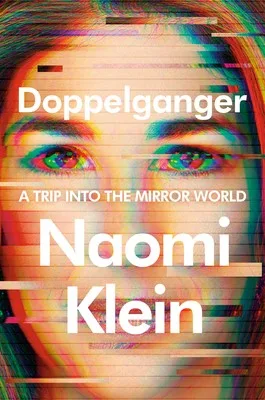
Karolina: Good. There is a book by Naomi Klein, "Doppelganger".
Rafał: Okay, I have heard of it, but not read it.
Karolina: It is great, I am reading it now, finishing it. It is exactly about what we talked about, so it was my first thought when you asked me this question. It is about those internet identities that we create, and about our doubles that circulate on the web through us or somewhere beside us, even when we lose a bit of control over our image. A very interesting view, which also changes how we look at authenticity, at the naturalness of all this, and at how we feel about it.
Rafał: Is it published in Polish?
Karolina: Yes.
Rafał: Great, thanks for the recommendation, I will put it on my list too, I already have a list for this podcast.
Karolina: It is a rather big shame list, like everyone's.
Rafał: Yes it is. There is always too little time, but I like reading, so nice. If our listeners wanted to find you, where is best?
Karolina: Either on LinkedIn: Karolina Kołodziejczyk, just my personal profile. They can also follow the social media of our agency Midnight Issue. You can also find me on Instagram, the profile karkapisarka, where I share recommendations like the one I just gave you, information about the book club I am creating, and my texts.
Rafał: Great, thank you very much. It was a pleasure.
Karolina: Take care.
Listen and watch
The same conversation in your favourite app.
The full edited transcript as a Markdown file, with the guest’s details and quotes.
Back to top