

Who is Mateusz Sobieraj?
- Who he is
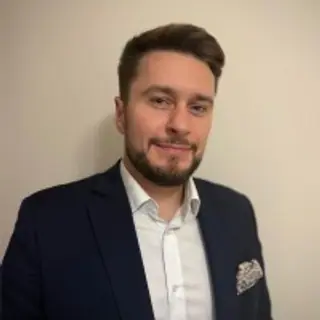
- Mateusz Sobieraj, an entrepreneur, founder of organizations such as AdCookie and DreamGo. At 35 he stepped away from operational work and, as he puts it, went into a kind of retirement, meaning financial independence.
- What he does
- He hosts the podcast Sztuka Zdrowej Wydajności (The Art of Healthy Productivity) and helps leaders and organizations increase effectiveness while looking after the wellbeing of themselves and their teams. He manages assets, takes part in the boards of his companies and works one-on-one with entrepreneurs.
- What we talk about
- What retirement at a young age means and what life after it looks like, the exercises Time and Energy Audit and ikigai, the definition of productivity, habits, deep work and why it often fails, the Eisenhower matrix, planning across several horizons, motivation, overwork culture and healthy work in teams.
- Where to find him
- LinkedIn (Mateusz Sobieraj) and the podcast Sztuka Zdrowej Wydajności.
Best quotes
„A business should serve you, not the other way around.”
„A love of bustling about is a lack of entrepreneurship.”
„There are always more good ideas than there are possibilities to carry them out.”
„Do not try to implement things perfectly, but implement.”
Recommended materials and sources
Guest’s pick
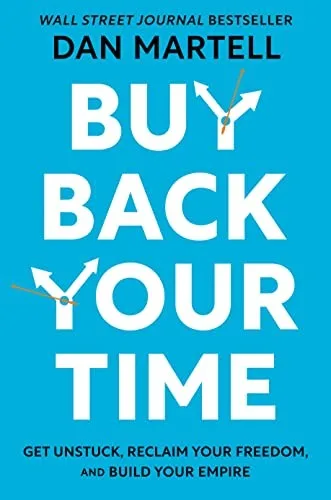
 buybackyourtime.com
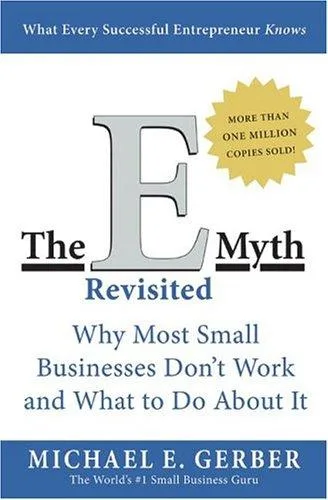
 openlibrary.org
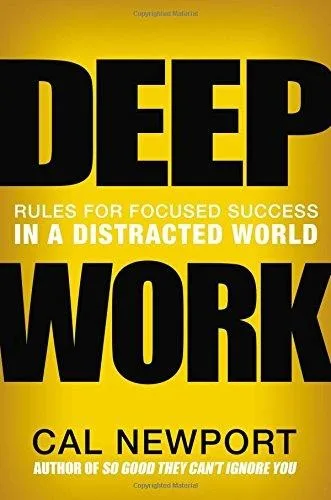

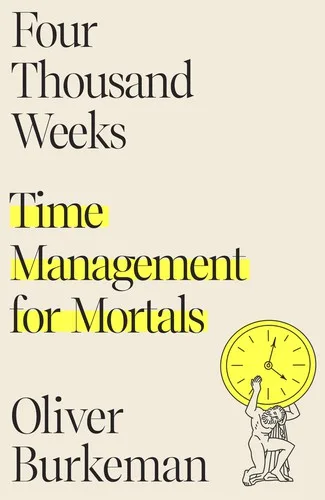
Related conversations
- We Live the Way We Dreamed. Nomads, 4x4 Expeditions and a Business on Wheels - Wojtek and Iwona from Nomads4x4Wojtek and IwonaTheme: The podcast




Transcript
Host: Rafał Moszkowców. Guest: Mateusz Sobieraj.
Introduction
Rafał: Hi everyone. Today in another episode of Globalne Horyzonty our guest is Mateusz Sobieraj, an entrepreneur, founder of organizations such as AdCookie or DreamGo. And recently Mateusz has been in a kind of retirement, which we will certainly talk about today. In that retirement he runs the podcast Sztuka Zdrowej Wydajności. Mateusz also helps leaders and organizations increase effectiveness while looking after the wellbeing of themselves and their teams. Mateusz, welcome to Globalne Horyzonty.
Mateusz: Hi, welcome everyone warmly, thank you for the invitation.
What is retirement at 35 according to Mateusz Sobieraj?
Rafał: The pleasure is all mine. I wanted to start with a quote from my favorite author, Burkeman, which I think will nicely lead us into the conversation. He once wrote something like this: we spend our days digging through tasks to get them out of our heads psychologically, so we live in the future, waiting for the moment when we will finally deal with what has authentic meaning for us. That brings me to the first question. What exactly happened in your life, and how did you dig through all the important tasks, that you decided to retire at the age of 35?
Mateusz: That is a beautiful quote. I will add a quote from Eckhart Tolle, which concerns a similar topic, but more about satisfaction and happiness in life: many of us, maybe you too, tell ourselves: I will be happy if. If my company grows fivefold, if I retire, if I earn X million zloty, if I finally move, if I have more time. Only the question is: what if that does not happen? Do you want to keep waiting? Do you want to make the feeling of being satisfied here and now dependent on something maybe happening in the future? I leave you with the question, because there is no simple answer, but it is worth asking it. And your question, I understand, paraphrasing and simplifying, is: why retire?
Rafał: Somewhat, or: how to do it at such a young age without waiting for the state pension?
Mateusz: I would not count on that. But I would start from the definition, because it depends on what retirement means to us. I believe retirement is of course connected with building financial independence, meaning decoupling the fact that your income depends on how much you yourself work. If you manage to achieve that, it is of course a beautiful moment in life, because you could not work, and your needs and comfort of life are met, but the independence you gain is the clue. It is not about never working again in your life and doing nothing. Believe me, I have seen such stories, I tested it too: ambitious individuals cannot survive longer than a few weeks on a beach without falling into depression or finding a new passion that drives them again. It is not about stopping work altogether, but that once you have that independence, that proverbial retirement, you can do only the work you like, with people you like, in the way you want, for as long and as much as you want to work. That is the mega cool freedom you gain.
Rafał: That sounds great. And tell me, what does your everyday life look like today compared with, for example, an intense period of running a business like AdCookie, because I suppose an agency business is very demanding.
What does Mateusz Sobieraj's week look like after retirement?
Mateusz: Definitely very demanding. I remembered you also asked how to do it, how this independence is built. It seems to me easier than most people think, that it has to be who knows what. But returning to the question of what my day looks like now: I tested all the modes. From working a dozen or so hours and paying for it with my health, when I developed my first company, through getting out of that vicious circle, optimizing my way of working, routines, healthy habits, so as to actually work 6-8 hours but grow the company several times over and co-found three more. From the mode of full workaholism, 11 hours every day, through a relatively normal mode, in the amount of one full-time job and co-running several companies, then the mode of leaving operational activity in those companies entirely and not working almost at all, because you cannot work not at all, even managing assets costs some time: meetings with the boards of the companies, managing the wealth is still some work, but rather two hours a week or a few hours a month. Now I have an ideal mode. I have a new passion: I help other entrepreneurs work productively and grow their companies, but without paying for it with their health, so they do not repeat my mistakes. It is a topic that has interested me for nearly 10 years, so I run a podcast. I divided it like this, and my body sees that this mode suits it best: I have a work week of roughly 5-6 hours a day, mainly with my companies, or on my companies: meetings with the boards, sometimes getting involved to help solve a problem. Then I have a week of leave every month, besides a month's or a month and a half's leave in the year when I explore further destinations. That week I often use for learning new passions. I want to learn to surf, so I sign up for a surfing course and surf every day or every other day for several hours. I want to learn to play golf, so I sign up for a lesson. Later I again have a work week, rather oriented toward work with my entrepreneurs: within individual sessions I help them arrange their way of working so they can work less, healthier and more productively, and not give up their ambitions and goals at all. And the last week is 3-4 days of Think Week, which I use for analyzing bigger portions of material I want to master, and often content is made then: an idea for a podcast episode, a script, a recording. I notice that such a weekly rhythm serves me best. And great, when you have such a privilege that you can reset your calendar to zero and arrange it as you would like. But that does not change the fact that each of us probably has a slightly different rhythm and it is worth trying to discover it, designing the rhythm of work I want to reach, and slowly moving in that direction.
Rafał: Certainly there is no one path to that optimum, because each of us works differently. But what you said sounds like a very active retirement. You can see you went through the path of talking to yourself: how I like to work, which way is the most effective. Most of us, in agency business, in marketing agencies, work non stop, there is not even time to talk with ourselves, because we run with the topics. I too only recently, about a year ago, started to actually wonder: when is it the most effective, when the most successful, when am I the most satisfied? I did something I called the satisfaction curve. I broke down 20 years of my professional activity into basic factors. It took several days of work in a huge document and I started to physically draw what I did, when, how I felt on different levels. I recommend it as a prelude to a conversation about what drives me, how I want to do things: to see at which moments of life I was the most effective and the most satisfied. For me it let me see that certain things I do are totally not my things. I have to escape a bit.
What is the Time and Energy Audit and how do you do it?
Mateusz: That is super, in the sense of where we started the conversation: it is nice to like what you do here and now, but that does not mean you cannot have ambitious goals for the future. I recommend two exercises. The first is the Time and Energy Audit from the book "Buy Back Your Time". I applied it to myself, I apply it with the entrepreneurs I work with, and it works great. I also discuss it on my channel in an episode about how to regain, buy back time. The exercise consists of keeping a journal for at least 10 days and writing down everything you do during the day, at 15 or 30 minute intervals: how long you write posts, how long you sit in meetings, how long you shop. You can limit yourself to professional activities, but I strongly recommend writing down everything. Once you have an activity journal, you mark how much each activity is worth. You take markings like Tripadvisor does for restaurants: one dollar, two dollars, three, four. The point is how much a given activity is worth, how much I would have to pay for someone to perform that activity for me. You have critically important activities, like building a strategy for a client, if we move in agency nomenclature, or designing a sales process, which are probably worth three, four dollars, but you have activities like preparing a report, replying to emails, everyday life activities like shopping, which are probably worth one, at most two dollars. You already see how many things you do that bring no value to your life and company. Next thing: in green you mark what gives you energy and joy, hence Time and Energy Audit, and in red what drains you and rarely brings you joy. Once you have this list, you can nicely filter which things you should get rid of or delegate: all those that are of little worth and red. In second place are those you must do here and now, because they are priced at three or four dollars, but you have them in red, and you know that some replacement must happen in the longer run. Among the more controversial examples, Franek, who also talks about this publicly, hates one-on-one meetings, because they drain his energy terribly. It seems like the essence of a leader's, manager's work. He did not stop doing them because he decided it did not serve him at all, maybe it can be done differently, and it turns out it can. Even such a thing can be gotten rid of if it takes my energy. That is super, to delegate or get rid of, here and now, things you do not like doing day to day and feel drain your energy, but knowing right away what enters your calendar instead. Because what else do we have a problem with? Here Parkinson's law comes in, which says that work expands to fill the time available for its completion.
Rafał: Exactly.
Mateusz: If you get rid of shopping, writing social media posts and three other things, but do not fill it with something else valuable, believe me, time will stretch and all the remaining activities will spread out. The point is that you get rid of something, but in exchange comes more of something you like doing and which brings value to your company.
What is ikigai and how does it help you find work you love?
Mateusz: One more thing. This episode is recorded but not yet published, it will soon be on my channel. When I looked for the answer to the question, because getting to financial independence, the mythical retirement, is great, because it prompts the answer to the question: if I did not have to work tomorrow, what would I do? From tomorrow you wake up and do not have to work. And believe me, an answer in the style of "nothing" or "I would travel" is not a good answer. What would you do if it were not about money, and you wake up and do not have to work? There is a nice framework for that, called ikigai, and it serves to discover what I want to do in life, because I love doing it, I love the process and activity itself, not only the result. Many entrepreneurs hate being entrepreneurs but love the reward at the end. Here it is about liking the process itself too. It is about being good at it, about it being needed by someone and about someone paying for it. When all those criteria are met, you can say you found what you want to do in life, your ikigai: you do what you like, you are good at it, someone needs it and someone is able to pay for it. I like to add "enough", because that is also an important aspect. Of course, if you have income from other sources, it need not be your sole criterion, because maybe you already have retirement covered. But still someone should pay you for it, because that is the best verifier that it is really needed and what you do makes sense for someone and brings value. It is worth pricing it and validating it: I start doing it, I like doing it, I try to sell it to someone, is there interest on the market and will someone really pay me for it.
Rafał: Thanks for sharing something concrete right away. I would add one thing that changed my perception of what I do during the day. I used to make a task list and tick off tasks, more or less effectively, rather less, because something always came in and only the biggest tasks were there. Now I decided to write down everything I do, point by point, even to have a sense of agency. At some point I had the feeling that I spend a lot of time in meetings and theoretically it is work, but that there is no work, or on small things I no longer saw. When you work intensively, you do not see those small things. I started writing it down and it turns out I could fill 2-3 notebook pages with small things I did. That was the basis for me to understand: wow, I have agency, I move so many things. I think if someone sometimes has the feeling that they do not know whether they are doing anything, whether they are moving forward, maybe it is worth starting with that. You can calmly write even that you made yourself a coffee, nobody will check it, but there will be a sense of agency that topics are moving forward. And the Time and Energy Audit is a totally simple concept, but brilliant.
Mateusz: I will add one more thing. I often start with that with entrepreneurs, when I start working, when they tell me what their company looks like, the goal and so on. But I always stress: and how do you want your life to look in 3 years? The Energy Audit serves that a bit. It lets you create a way of working in which you feel good, and not one you force yourself into. A business should serve you, not the other way around, because otherwise the business has you, and you are its employee, and you do not have the business.
Rafał: I think that is most often the case, especially in SMEs, where the founder or first investor is the busiest person in the company.
What is productivity and how does it differ from being busy?
Rafał: Naturally we move to the area of productivity. There are many myths here, on one hand buffoonery, on the other various people saying various things. What is productivity to you, and do most of us misunderstand the notion?
Mateusz: It is a broad notion, grown out of the industrial era, and a large part of people do not like the word, because it is associated with working on an assembly line or tightening a screw. In my view productivity is the size of the generated result per unit of time and resources you put in. Let me expand. If it is as you say, that you worked 10-12 hours during the day, you are wrung out at the end of the day, but you have no sense of what specifically you did to push the company forward, because it was maintenance, operational tasks, you picked up the phone, replied to emails, but did nothing that will push you and the company forward in a big way, then you have the sense of a hard day and of not moving forward. And often you are right: you are maintaining the state you currently have, or you move forward very slowly and do not consider it productive. On the other hand you can make two-three moves, work even 8 hours and with two-three smarter moves generate a much better result. That is productivity for me. I always start workshops on managing the task list and priorities with this. A hard quote, but true: it is worth accepting and realizing that the world does not care about our efforts. Results count. See how often we, especially entrepreneurs, I had the same, beat our chests, like to glorify hard work, boast about how much we sacrifice for our company, how much heart, money, time we put in, but the brutal truth is that the market does not care and nobody will give you a prize for it. That hard work is unfortunately often a necessary tool for those results to exist, but a tool, not a goal in itself. Results count, not how much work you put in to generate them. If it can be done faster, better, healthier, that is productivity: how to achieve better results with less of your energy and time.
Rafał: The first step is the ability to distinguish productivity from being busy. That may seem banal, but I see it is not obvious at all.
Mateusz: Someone once nicely said that a love of bustling about is a lack of entrepreneurship.
Rafał: Beautifully said. It may turn out most of us are not yet entrepreneurs. I think it is mega important to understand what healthy productivity is. I would wonder what the measures of that productivity are, whether we can reconfigure how we operate and define it through goals or KPIs. I am curious how you do it so that people you work with do not, after some time, fall back into that bustling.
Mateusz: There are two aspects and I will try to separate them. The first is KPIs, meaning whether my productivity can be measured. Sure it can, through two dimensions. One, a less direct correlation, but you do see it: how much you work versus how the value of your company grows, its valuation, its revenue. If you invest far fewer units of your time but make smart, strategic moves and your company grows, that is some measure of productivity. And directly, you can measure it through the time devoted to a given task. If making a presentation once took me, let me guess, 16 hours, and I optimized how I work on it: I work on it not in the evening, not at night, not at the weekend, but within deep work, specific divided sessions. If you like I can share the scheme for how I prepare for talks now. Developing such a scheme first of all hugely reduced my stress before public speaking, which you see on a Garmin and all wearable devices: the stress level is lower, HRV better, but the time for the presentation also shortened, for me by over 50 percent. You see direct measures that you simply do these things faster.
How do you put knowledge into practice and build new habits?
Mateusz: The second aspect is how not to return to old, bad habits, and here I would start with how to implement knowledge at all. I remember that when I was thinking about what I would like to do in life, I knew that I am an individual who, before leaving operational work, already knew, because I thought about it a lot and tested it, that it is not about doing nothing, because I would go mad. I already had an idea: I set up a venture building fund, I will build further companies, I had the domain. But I knew myself and said: once you have reached the moment when you can actually free yourself and have nothing in your calendar, give yourself at least half a year of doing nothing, only analyze the individual options of what you want to do. Consider that idea of yours and other options. If you do not change your mind after half a year, it means that is it and it is worth investing further hours in. Two entrepreneurs who had known me for years and watched from the side that I used to work a dozen or so hours, quite strongly neglected all aspects, sleep, diet, family relationships, my own body I probably sacrificed most, saw that transformation and asked me: listen Mateusz, could we make a training out of that? Because I am hitting a wall, I work a dozen or so hours a day, I have lost myself in it, and you got out of it, maybe you could train me out of it. The first thought: why not? I have been digging into it for years. Supposedly I am retired, and I listen to three-hour medical podcasts and then google what the mTOR pathway is. The useful with the pleasant: I can share with someone the knowledge that helped me. The second thought was: damn, I do not believe in trainings. How many times have you been to a great training or read a great book, you have a mass of notes, but Monday hits you in the face and you implement nothing. Let the first one throw a stone who has not done that, I did it many times.
Rafał: It has happened to me more than once too.
Mateusz: A mass of engagement, and zero implementation. I schemed on how to really help someone, and not only leave them with a mass of knowledge they will not implement anyway and the level of frustration will rise. I work so that if I work with someone on reducing stress and pressure, arranging their calendar, their task list, I make a workshop out of it, I show the best ways, techniques, tools. That person implements that knowledge on their own and we meet a few more times, until they learn to use it, consolidate that knowledge in practice. Only when that happens do we move to the next module. There is no way I would do a cycle of trainings and someone not consolidate the previous element, because that makes no sense. If you have such an issue in programming habits in any aspect, whether improving work or health: start with relatively small things that do not scare you. If so far you have not trained at all, do not delude yourself that you will find time to train three times a week for two hours. If so far you did not plan your calendar at all and did not look at it, and you have only meetings there, one big chaos, do not be afraid that you will suddenly make yourself a beautiful time blocking, as Cal Newport shows, of 8 hours a day tight, and it will start working for you. It will not. Choose tools and a level of difficulty for yourself, but implement it. And as long as it does not start working for you in that easier, simplified form, do not go further. Because at the end of the day it is about making a real positive change, feeling its result and only then going further, and not generating a mass of frustration for yourself that somehow others cope, there is so much of this knowledge, I have it served on a plate, but somehow I cannot do anything with it.
Rafał: It has not worked for me many times either. Burkeman, whom I mentioned at the start, said something that really stayed with me. How many times I planned to go to the gym every day or play squash every day, and it fizzled. Once I read something banal: if you want to start doing something, start doing it "dailyish". I thought it was a slip of the tongue, and I started reading what he meant: simply more often than not. So not every day, but go once. If you have such a thought, do it once. Later do it a second time, a third time. And after some time it is your habit. As for methods of building habits, the good ones, because those are the hardest, this works best for me: when I have a thought, I try to do it as fast as I can, the first time, whether it is the gym, padel, anything else. Later I looked for options of when I can do it again. At some point the gym, padel, squash is my habit. After a few weeks, sometimes a few months, it turns out I do it systematically 2, 3, 4 times a week and did not know when it happened. I did not need external motivation, it was internal, that I do not wind myself up hopelessly, because many times earlier I put pressure on myself, then had the feeling that I am hopeless, because I cannot build new habits. Then it is hard to make progress.
Mateusz: Exactly. That is a whole other field, which deserves several episodes, but what you said, the frequency, that you win more often than you lose, matters: you must hold more often than not hold, and slowly it will turn into a habit. It is not about keeping the mythical Seinfeld chain, where you cross off X marks in the calendar and if after 60 days you fail once, everything is trash and nothing makes sense. It is okay, you can lose once, twice, as long as you win more often than lose. I say then: try not to relapse. If you skipped a workout once, do not skip it a second time in a row, because that is already the start of a new habit. Once something could have gone wrong, get back on track as fast as possible. There is a mass of things that can make it easier to keep a habit, from designing the environment to appropriately designing the reward mechanism. What is indeed true is what we touched on with workouts: it is about mastering the habit of starting. I prefer, and this works for me and for people I work with, that someone is able to exercise every day for 25 minutes, but every day, and masters the habit of starting. Even downplay it to five minutes, as long as someone does it and masters the habit. The hardest is to start. How many times did you turbo not feel like going to a workout, but when you finally went, did you ever regret it afterwards? I did not. Afterwards you are always glad. The hardest is to force yourself to leave, to start. Once you master that habit, it is downhill. And if you are an entrepreneur and engaged in a company, maybe do not add another goal in physical activity or caring for yourself. Believe me, it may not help you. If you set yourself that by summer you must lose X, gain Y or run under: for many people it may motivate, but for many it will sink them further, because they will have pangs of conscience that they are not doing it as perfectly as they should, and that is not what it is about. In the long run it is about you maintaining healthy physical activity and a healthy routine over years, not forcing yourself to do something for a quarter.
Can time actually be managed?
Rafał: A bit earlier you mentioned time management. I wanted to talk about a practical approach, because I honestly wonder whether you can manage time at all and what the essence of that concept is.
Mateusz: If we nitpicked definitions, we do not manage time, only ourselves in time, right? It is a mental shortcut. But what you do within given units of time, we can of course manage and that is what we should focus on: what you invest time, energy and attention in. We have time, energy and attention. What you devote attention, time and focus to matters, because where you point that vector, there you will be in two years. That is mega important.
Rafał: I agree. That was a trick question on purpose.
Mateusz: The whole interview in the bin if I did not answer correctly.
Rafał: Right, I would have a big X here, like on X Factor.
Mateusz: We are not airing.
Rafał: I said it on purpose because many years ago I started digging into why things do not work out for me, why I do certain things in such a way. I had the feeling I was doing it badly or something was wrong, because I did not have such effects. Among other things I started reading about time management and tried to implement whatever could be. Various time management concepts, meaning not myself and my mindset, my approach, verifying what is important and what is not, but time that is somewhere around me. I failed on every front and I think most people fail here. I also got a sense of frustration: how is that? I read about 15 books on the topic and it does not work. Something is wrong here.
Mateusz: Because you also have this problem that I sat on this for years, and the problem is that many of those theories and tools you know sound okay academically, but in practice fall apart. Take two examples: deep work and the Eisenhower matrix, tools that probably everyone knows or has read or heard of.
Why does the Eisenhower matrix fail in practice?
Mateusz: Take the Eisenhower matrix. The problem is that when you start implementing it, first you lack the time to categorize, and second people treat this parameter very mistakenly. A quick recap so we are at the same point: the categories of tasks are important, unimportant, urgent, not urgent. Those that are important and urgent, do first, important and not urgent second, unimportant but urgent third or you can delegate them. But the problem with this matrix I see non stop is that we cannot well recognize what is important and what is unimportant. When I go through this with entrepreneurs, we discuss the matrix, then I say: categorize your tasks according to this matrix, suddenly everything is important and urgent. We have to return to how you interpret the matrix. Most often urgent and not urgent we manage to define fairly quickly: urgent means to be done by tomorrow at the latest, not urgent a further horizon. But important and unimportant: is the meeting with this client important? Well, it is, because it is my important client, so I mark it as important. And suddenly it turns out most tasks are marked as important, so as not to forget them, because everything seems essential to you, and that leads nowhere, because the matrix did not let you choose what your priority is. That is why I change the nomenclature and ask entrepreneurs to work not with the categories important and unimportant, but strategically essential and operational, or work on the company and work in the company. I see that this switch brings them much better understanding. Is this task strategic work on a process, on an improvement, on strategy, on me and the company being in a different place, or operational. The next meeting, the next report, the next email, the next one-on-one, status meetings, even a meeting with a client are rather maintenance, an operational task. Working on the company and in the company is explained wonderfully by the book "The E-Myth". When you introduce this nomenclature, suddenly something clicks and it is much easier for people to define which tasks are strategically essential. And then we are at a great point, because now you have to force time for working on those tasks and not skip them. Those are often tasks like: forge new strategic alliances that will bring revenue growth by a factor of X, develop a new process, rethink the company's strategy, make a new way of reporting that will save everyone in the organization hundreds of hours a month. You could not do them for another week, two, a month, a quarter, or never, and supposedly nothing would happen, because you keep the business going, but if you do them here and now, something changes for much better, you move forward, so you must force time for working on those tasks. And it is nice to work on them in deep work sessions, meaning deep work. Again a concept most know, many have read, and in practice falls apart.
Why does deep work often fail?
Mateusz: Why does it fall apart? Three example things, because it falls apart for more reasons, but I observe these three constantly. First, we do not start with deep work. If you do not start with deep work and open the mailbox, messengers, and open all loops about what you have to deal with today, it is turbo hard to switch off and focus on a conceptual task. A capital mistake, you skip deep work then. Second thing, bad selection of tasks for deep work. During deep work you deal with tasks that in fact are not very cognitively demanding, so you burn your best time of the day on working in a block without distractors, but not cognitively demanding: replying to emails in bulk, correcting presentation slides. And the third thing, not gathering reference materials. You think: I will design a strategy or a new bonus policy mechanism, you sit down to the task and it turns out you did not pull the historical reports from the mailbox, that person did not send it, so I have to write to them. You are not prepared, deep work is lost, you go into the mailbox and are lost, because besides what you wanted to find, you found X other things you should reply to.
Rafał: You found important things.
Mateusz: Important things, right? See, books do not talk about that, but life does when you try to implement it. I see it from my example and when I work with entrepreneurs, because I tell them to mark how it went. Those are the implementation sessions: someone implemented those routines, we chose a task for deep work and they write down how it went, whether it was effective, what wrecked that deep work, and we try to optimize so someone can keep it up. In real implementation many problems and potential blockers can appear.
Rafał: Around deep time, I honestly always failed because of lack of preparation. I blocked that time, sat down: okay, now this, but with no materials, no preparation. I went to look for those materials, got distracted 17 times, Instagram notifications, and was lost together with the deep work. I started calling it strategic time: twice a week, but I have an hour of preparing materials before it, and I try to do it so that I do not have to enter email or the CRM, because I agree 100 percent: you enter the CRM, you are lost. A notification from a client, something is happening, or you enter Slack, the end. It is important that it resonates: you have to prepare for this, because many times I heard from various people that deep work does not work, that that dedicated deep time does not work. I already know why and I think you confirm it: you have to do it really effectively, and to do it effectively you have to prepare, because for everything you want to do effectively you have to prepare.
Mateusz: There are even such details. You choose a task for deep work, right? And if you put in a task that sounds too abstract, like "implement marketing automation in the company" or "think over whether to implement AI in our company", you sit down to deep work and you have the task "think over AI in the company". That is so abstract that you have no idea what to get on with. Tasks should be written out so that you know what the first physical action is. For example do a search of firms that can help me implement it. Schedule consultations with three experts. Gather X reports and read on the topic. When you already have that knowledge, design the solution, test the design with someone who knows it. I am improvising, but the point is to write down concrete physical actions to take, because then when you sit down, you know what to do. And when you sit down over the task "implement AI in the company", you really do not know.
Rafał: It is like setting an objective: I would like to become a millionaire. You have no plan, you sit, think, come up with nothing and go back to Slack. We can nicely make a reference to Objectives and Key Results, OKRs, which on one hand are very conceptual, because you can have a quasi-abstract objective, set in time, for example: my company uses marketing automation, and a definition of done, but with that you have key results, meaning which results actually show that we use marketing automation, and each of those results has a list of tasks. The tasks add up to the result, the result to the objective. That again is preparation, the awareness that you cannot simply write deep work in the calendar and say deep work is being done. I think it can change how many people look at this tool. At least I have such expectations.
How can you learn effectively and what is essentialism?
Mateusz: What you said I like very much in teaching myself, and when we developed competency matrices for the development of team members: do not wonder what you have to go through to gain knowledge on a given topic, but what competence you want to acquire and what you want to use it for. Only later will it emerge which material will take you there. If you want to do analysis better: what does good analysis mean? What analyses do you want to do? What will you use them for? How will you know that analysis is good? What criteria does good analysis meet? When you know that, along the way you already know a bit more. Okay, to do it I have to learn to use this tool, read that book, talk to that expert, but the final verifier is that I will use that competence in practice and can contribute some value with it. When you learn for the sake of learning, maybe it is pleasant, but sometimes not directed so that it gives you an impact on a real result. That also teaches essentialism. I had a huge problem with that: I love learning, but it meant I started learning six things at once. When I realized that, I very consciously plan my education path: I try not to work on more than two threads at once. One, because I got too bored, and two I nicely interleave, when one bores me, the other comes in. But that is it. Only when I finish those threads and master the knowledge at a level I want to use do I allow myself to jump to further topic areas.
Rafał: Recently I had an interesting conversation with people who used artificial intelligence tools, and those people's conclusion was that it is probably bad, it does not work. We had a deeper conversation that led us to the point that you do not know what a good outcome is, that you did not devote the time to get to know what a good result is. You did not survey the market and the people who use it, what result they have, and because of that you have a result of average quality that does not even satisfy you, because you do not quite know how good it should be. You have to find out what you want to get and at what quality.
Why is it so hard to give things up?
Mateusz: As a friend of mine used to say: if you do not know what you want, you will surely get where you do not want. It is hard to choose a path to somewhere when you do not quite know what you want to achieve, and you cannot reject the things around you that will distract. It is an exercise that may inspire you. Write down the things you would like more of in your life, in your calendar: more exercise, more time with family, more time for reading, for writing. Second step: quantify. What does more time with family mean? How many hours? When? More time for exercise: how many hours? For writing: when, how long will it take me? Once you have it, you see roughly how much there is. The next exercise: what of what you do now can you give up and will you give up to do those things. That is hard, because you must give things up. Giving up is the hardest. I can make it so, in quotation marks, that I stretch the day a bit and in 6 hours of work you fit what normally fits in 9-10, but that is not the solution, because if you keep adding forever, the same problem will be there forever. The first art to master is the art of giving up what is nice in favor of what is best and what is most important.
Rafał: That is very hard, because we have evolutionarily built-in loss aversion, fear of loss: we are afraid to leave something, drop it, because something comes from it or in our head it is attractive, if we leave it, it will be a catastrophe. Each of us goes through it. I recommend everyone do something like this, because we will not manage to do everything.
Mateusz: There are two nice laws here, defined by Daniel Kahneman, from the field of behavioral economics. The first is the planning fallacy: we underestimate how much time we need for a given project and task. It appears from how much time I need to write a post, to how much time I need to implement a product, how much time and money I need to renovate an apartment.
Rafał: Here every programmer says: no, of course not, I have everything well calculated.
Mateusz: That is the first problem we succumb to, and the second is what you said, loss aversion: we avoid loss much more than the desire to gain something motivates us, so we do not like losing, we start adding, and we do not calculate how long it will take us, and that is how we fill the calendar. I like to say that there are always more good ideas than there are possibilities to carry them out. If you do not come to terms with that and do not select, reject, refuse good ideas to make room for the great ones, there will always be a problem.
How should you plan your calendar across several time horizons?
Rafał: That leads us to practical planning and managing your own calendar. What should an effective planning structure look like, in your opinion? Let us imagine people who plan, but sometimes little comes of those plans.
Mateusz: Nice that you said "planning structure" and not "ideal calendar", because there is none. From my practice it turns out that planning across several time horizons works well. The first problem is that very often we do not plan ahead: monthly, quarterly, let alone annually. What does it hurt you to plan already in January, when in the company you have, say, a company Christmas Eve or a strategic meeting, to plan the strategy for the next year. You can already foresee now that it will take an opening workshop, group work, later a workshop where we discuss the strategy, and a closing workshop where we make an action plan. You can already put that in now. All meetings of the management staff you can put in here and now, your holiday, birthdays. In the annual perspective I ask leaders to plan also one so-called once in a lifetime experience, meaning one thing for themselves that they would really like to do. Sometimes it is combined with a holiday, sometimes not. Someone did a pilot's course, someone another advanced wreck diving course, someone a trip to an SEO conference in Asia they always wanted to go to, and along the way a week in Asia. Now I have a case of planning to run an ultramarathon in the desert. It is to be a thing that will excite you just by waiting for it, and after it you will be turbo proud and feel that you work so hard for something. That is why I insist it be your thing, and not for example a holiday with family. If it can be combined, nice, but if not, it is to be your thing that gives you mega fun. In the quarterly perspective you go down to a slightly greater level of detail: critical meetings with clients, conferences, events I take part in. Monthly is more a rhythm of work: two days a month I devote to strategy, of four weekends I always spend one with family offline and have those weekends planned some months ahead. One weekend a month with family, and it already changes a lot. In the weekly scale you can work out a model rhythm according to which you would like to function: here workouts, here I fit all meetings, here deep works. And in the daily scale...
Rafał: Sorry. I wonder how the balance between structure and flexibility looks here, because we can plan a lot, but much happens independently of us.
Mateusz: I will answer what happens when the schedule falls apart, because it does. Fortunately people smarter than us thought it through, for example Cal Newport. In the week you have a weekly work rhythm. You can call this exercise Perfect Week: a model rhythm that would serve you. How I do it in practice: I do not yet put it on my calendar, I set up a new calendar that I call the model calendar or Perfect Week. When you overlay your personal calendar versus the model one, you have two calendars. The model one has main blocks: here workout, here I accumulate meetings, here deep work, here operational work. When you work on your calendar and have a highlighted tracing underneath, you know when to put in meetings, and you understand a bit better that you cannot put a meeting on Thursday at 10, because you will wreck your deep work. It is a model rhythm that need not yet be perfectly kept, but that you want to reach, and every week you highlight that calendar and look where it falls apart. You can work on the model calendar or on your personal one so it approaches the model one as fast as possible. And during the day you can enter from a general level: you have your two most important activities planned, only deep work planned, only three key blocks, like time for reflection or journaling, time for deep work and an hour with family, and the rest happens. Or very tight time boxing. When you do it in the tight variant, does something happen along the way, does something wreck that day in the middle of the day? Of course. Either something appears and you have to redesign the schedule, or you yourself decide. Sometimes when I develop a calendar with someone and they start entering that tighter layer, they start to have an inner unease that it looks a bit neurotic: will I not be a robot. I say then: after all you are in charge. If you want to wreck that calendar, you are to wreck it, and you do not protect it from someone wrecking it. My case from this week: I had things planned, but I went to pick up my son from preschool, we went to a football lesson and after it I was to go home and do some more things. But the weather was so nice, it was so great, so I said: hey, let us go to the beach. I spent 4 hours on the beach. I decide what I give up, what I will not do, what I will move to the next day. People are afraid it will kill spontaneity. No. It is the guardian that other people's priorities do not become your priorities. You are in charge and have the freedom to change the calendar. At the same time when you have those blocks consciously arranged, you see that you should not let go of deep work and let meetings in there, because again you will not deal with that strategic topic. It is harder to give up when something is already there, and easier not to let in another meeting or opening email, since you saw that in that time you were to think over and work on that thing. You then have to decide something concrete, and not just let someone into an empty spot in the calendar. I recommend programming concrete routines and habits to the degree that it serves you, does not become neurotic, but is healthy and good for you, you feel quite fine in it. Then such a structure is really nice.
How do you stay motivated and keep promises to yourself?
Rafał: I wonder how to develop that internal motivation to stick to this, to consistent planning, to keeping your own commitments, to being a guardian of your calendar, because I guess it is much easier to say: someone came and wrecked it. A client called, here a child has to be picked up. Often important things, but also often excuses. Do you have an idea how to develop that intrinsic motivation?
Mateusz: Motivation is a hard thing, because it is a often overused, overhyped word. It is there, now it is not. Different things motivate us, whether we talk about neurotransmitters or about goals. It is a big topic. But what can you do? First realize that it is not others, but you who allow that calendar to be wrecked. You decide whether you allow someone to or not. It is a bit of extreme ownership: it is not someone, their need, but you decided whether their need is more important than yours. Do not shift it onto others, it is your decision, your time. You will not get it back. That is the first thing worth realizing. Second: do it so that you feel good about it internally, meaning feel that it leads me where I want to go. I want to have that much time, I want to work on strategic things, I see it gives a result, so I want to maintain it. A bit of that rationality and self-awareness of what will happen if I again let someone else dictate the workflow of my work and not myself. Also think how bad you feel when you do not keep a promise to yourself. It is not a nice feeling. That is why I would make to myself and others only those promises you really want to keep. And if not, let go of that pious wish that now you will design this turbo tight and stick to it. Take a level of difficulty that serves you and is keepable. For example a task list: instead of planning 8 hours tightly, instead of writing out 14 tasks for a given day, because it seems to you that if everything goes perfectly, you will fit them all. It will certainly not go perfectly, spoiler again. Start even with Ivy Lee's method, who spoke of six tasks a day. I say: start with three. Close those three tasks that you very consciously decide are the most essential, looking at everything you could deal with. Do only those, and later give emails and meetings plenty of space, because you have to dig out of them, I am okay with that, but build yourself the habit of doing three consciously designated tasks, the most important in your view. If that goes well, we can raise the level of difficulty. If not, leave it at that level for now and learn to use this system.
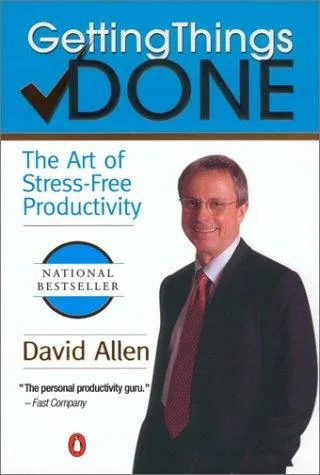
Rafał: Nicely said not to deceive yourself, because very often it is like that, I can say from my practice, you read a wise book on the earlier mentioned time management or Getting Things Done and suddenly you start implementing it entirely, everything as it comes. Later it is impossible. You mentioned the Eisenhower matrix, I smiled, because above my desk in my office hangs an Eisenhower board that I last touched in 2022, and I decided I could not work with it, and today I understood why, because you explained it to me. One has to approach it realistically, because it seems to me that a lot can be done and much more depends on us than we often think.
Is there a culture of overwork in Poland?
Rafał: I wanted to talk about what in Poland is called hustle culture and workaholism. I am honestly curious what you think about it. Is there in Poland actually a culture glorifying overwork, work for the sake of work?
Mateusz: I think fortunately it is changing. We talked earlier that nobody will give you a prize except for results. I judge it by the fact that I talk with many entrepreneurs, I am in entrepreneurs' organizations, I go to camps for entrepreneurs, I work with many entrepreneurs and fortunately I hear it is changing. Entrepreneurs who come to me to work on healthy productivity split into two groups. One are those who were where I was: they work a dozen or so hours and felt that their body clearly feels it, gives them symptoms, and they know that is not the way. But there are more and more people who want to act preventively. Two examples. One startup founder who got a huge funding round and knows the next few years will be a rollercoaster, it will not be a gentle mode of 4 hours a day and lying on the grass, and came straight to me for me to prepare him to get through it reasonably healthily, in good shape, so that his body is ready. A mega conscious approach. The second founder has a technology company growing at 2-3 times a year for the last 3 years, a counter-market trend, looking at software houses now, and he is very aware that he wants to devote the next 2-3 years of his life largely to the company. And that is super too, when someone tells me it is not about balance and working 6 hours a day. If that is sincere, we can get there. But if not and you are only deceiving yourself, tell me. It is great that someone tells me: I want to work 10 hours a day, or at moments 12, but tell me what I have to do so as not to wreck myself. And I say: again mega. In advance we can arrange it to greatly mitigate the negative effects that person may be exposed to in such an intense mode, and work so it is intense but still healthy. You know, it is changing, fortunately.
Rafał: You partly answered my second question. I do not feel it is changing spectacularly, but that awareness has appeared that it is not quite healthy, that work is not for the sake of work but for effects. It is a banality, but many people still do not see it. Do you have an idea how companies, organizations, we founders can support a healthier approach to work without losing, in quotation marks, effectiveness?
Mateusz: In the sense among teams?
Rafał: Yes, because it spreads. It is not that only founders work crazy hours, very often it spreads to the whole company, where people work 12, 15, 16 hours to cope with topics, and sometimes simply work more for various reasons.
How can teams work healthily and respect time off?
Mateusz: I will give three examples from life. First, when someone approaches me to train their team, I never agree if the leader, founder or CEO does not take part in the process. If he does not go through that transformation and does not understand that you can work healthily and productively, that health is your ally, a strong healthy body and smart work are your ally in achieving effects, little will change in the whole organizational culture, so it has to go from the top. Second, I designed programs for implementing healthy habits in a company and it can be very cross-cutting. It is not about fruit Thursdays or a meeting with a psychologist who will tell you that stress is bad, avoid it. Nice, but how? What do I really do every day to have less of that stress? Designing an academy, where there is a dietitian, where I give some of the lectures, where someone will deal with the aspect of real stress, but also preparing the work environment so it is healthier. You can have a day without meetings, you can not bother people on Slack so often. You can implement a whole range of internal functioning mechanisms to make it healthier. The controversial topic of overtime: I think the discussion should not be about how to reward it, but how to avoid it. You can pull through for a while, but in the long run you will burn out. When I see someone sometimes, I myself once had it, which is why I started training teams on it too: someone who works very long, does not even complain, I think: super loyal employee and engaged, but he will go the path I did, meaning in half a year you will lose him, in a year, if you allow it. And the third thing: one company approached me, a super conscious approach. We are thinking about how to transform the whole company in this direction so that productivity rises, but health also improves. I do not know what will come of it, but I think about it very holistically: the work environment, even choosing supplementation, because it is seasonal work, with a dietitian, preceded by tests, to mitigate that stress. Taking care of conditions, there are many business trips there, of sleeping well during those trips, a whole mass of things through the pattern of working on certain topics, habits, protocols, supplementation. I really believe this can be addressed, only in a concrete way, and not by saying that stress is harmful and let us stress less. That has not helped anyone yet.
Rafał: And let us do meditation classes, that does not quite help anyone. I would add, because I dealt with this topic myself for a long time and tried to reorganize my companies so people would not burn out. What you said: we have someone who works super after hours, you can see they are available on Slack, you can see timestamps. I had such people and also once thought: damn, a bomb. And then it turns out that person is no longer with us, simply had to rest and no longer puts anything into the company. I had several such changes, a few good years ago. I came to the conclusion that you have to, again a banality, but let it be that today I am here for the banalities: respect for leave. I used to take leave the way some still do today: leave was in fact, say, in Italy, but so what, if I sat under a palm tree and was on a call or sorting something out, it was a fake emergency. Many years ago I introduced that leave is absolute switching off. I am not here, as if I were in hospital. It also helped me organize the company better, because I had to build a delegation matrix, better processes.
Mateusz: I was just about to say, it is not an easy topic, but if that is your goal, you can do many things to implement it in yourself and the whole company. As you say: prepare appropriately, introduce a leave procedure. A month earlier, or even a quarter earlier, inform all contractors, a month earlier remind, two weeks earlier remind that if they have something, they should let you know, because from tomorrow he is unavailable. Often the problem in smaller companies is lack of competence backup. When something happens, only one person is for that thing and they are on leave, so you all have a problem. So arrange that backup earlier. If you cannot hire someone, you can find an external expert who is there just in case and backs up that thing. There are many things you can do, sometimes okay, it is impossible, but there are many things you can do to increase the chance.
Rafał: There is no other solution. I was trying to say also that because I started doing this, after some time the people who work with me started doing it too. Very many times I saw they do not do it: supposedly they are on leave, but they are not away. To this day I have an operating model that when I see someone is on leave, I can myself mute them on Mattermost or Slack and write: you are on leave. If you are on leave, you are not at work. The same with the weekend: when it is the weekend, it is the weekend. I learned hard, very hard, it hit me many times, that an overworked employee is not a good employee, that an overworked, tired, frustrated boss is not a good boss. That a wasted leader already on Monday at noon is not a good leader on Wednesday afternoon either. Those are small things anyone can introduce, you have to stop for a second and think. That is why I like the work you do so much, that you work with leaders, that you talk about it loudly in your podcast, because these are really very important things. There is no point in burning out, and to avoid it you have to work smart.
Mateusz: Those are critical skills that unfortunately almost nowhere are we taught, how to combine ambitious goals, caring for our own health and how to work productively. We often think we are such heroes and can take more, more, more on the chin until the body says it is too much. There is a whole range of warning lights you can switch on early enough, or things you can implement so that point does not come or comes with the smallest possible probability.
Rafał: I do not usurp the right to say that I caught myself at the right moment and foresaw everything. I overlooked too.
Mateusz: My body told me: you will not go on like this.
Rafał: To this day I catch myself on stupid things I do. It is constant work, it is not that you implement something and that is it. I joke it is like SEO: constant optimization. You have to keep optimizing, wondering what you do, and not always for maximum productivity, but for effectiveness, for it to have an effect. It never ends, because you change, the environment changes, the industry, clients, everything changes.
Which three things to implement now and which mistakes to avoid?
Rafał: At the end I wanted to do a summary, practical tips. Three things everyone should implement right now to improve their effectiveness and life balance. Most people are overworked, so what can such a person do to start?
Mateusz: Three things, quickly, and believe me, it is worth it. Sleep between 7 and 9 hours. Physical activity, at least 25 minutes a day, at a heart rate of around 120, but if you can only walk, that is nice too, 25 minutes a day. And do at least one or two deep works a week.
Rafał: Good advice. And three mistakes to absolutely avoid? So someone looks over their work and thinks: okay, maybe I actually do this.
Mateusz: Do not try to implement things perfectly, but implement. Better than perfect. And do not wait too long with implementation: believe me, often you do not need seven courses and five books to get on with something. You need to get on with it, and only later, if necessary, supplement knowledge once you have at least a basic level. A mistake you may fall into, which we already talked about: you control the things that flow to you. Over many things you have no influence and control, but over a large part you do, so take responsibility for it. And the third thing, maybe this: trust the process. Results, goals are important, because they often define your path to get there, but finally it is the path and the execution that count. In a company you can have a beautiful strategy, but if you have poor execution, you get nothing from the strategy. The same in life and physicality: you can write out a beautiful training plan, macro-calorie plan, but if execution is weak, you will get nowhere. If you focus on the process and on what I can do better, faster, smarter to get to the direction I set, even without a time horizon, as fast as possible but not faster: I have no time horizon for when I must lose weight, gain weight or earn X million. I discover the path as fast as I can. Focus on the path, because if you do the right things long enough, the result will come. And if you have a beautiful goal but do not do the right things or do not persist long enough, you will not achieve the result anyway.
End of the conversation
Rafał: Ladies and gentlemen, our guest was Mateusz Sobieraj. Thank you very much for this conversation. It was a really fantastic conversation, I do not know whether it is not one of the best, because you are definitely a person very positively into what you do. Once again thank you very much. All the best.
Mateusz: Thank you very much.
Listen and watch
The same conversation in your favourite app.
The full edited transcript as a Markdown file, with the guest’s details and quotes.
Back to top