

Who is Hubert Resmer?
- Who he is
- Hubert Resmer, an experienced compliance specialist in the financial and investment sector, whose practice covers global financial markets. He worked at institutions such as Allianz Global Investors and State Street, as a compliance officer and compliance architect, in Frankfurt and New York.
- What he does
- He has worked in compliance for almost ten years, currently as a consultant on the software side for managing investment funds. He also offers mediation, negotiation, arbitration and consultations in matters important to business.
- What we talk about
- What compliance is in the investment sector and how it differs from risk management, what the work looks like when an investment policy is breached, the role of the compliance architect, differences between the USA and Europe, the impact of technology and AI, ESG and greenwashing, and how to start a career in compliance.
- Where to find him
- LinkedIn (Hubert Resmer).
Best quotes
„Compliance in that sense is only a tool.”
„It is a very thankless role.”
„The question is how much you want it to hurt before you reach that conclusion.”
„I did nothing but reconcile the various, often conflicting interests of many parties.”
Recommended materials and sources
Guest’s pick
 imdb.com

Mentioned in the episode

Related conversations



Transcript
Host: Rafał Moszkowców. Guest: Hubert Resmer.
Introduction
Rafał: Hi everyone. Welcome warmly to another episode of the Globalne Horyzonty podcast. Today I have the great pleasure of hosting an expert in compliance in the financial and investment sector. My guest is Hubert Resmer, an experienced specialist whose knowledge and practice in compliance extends to global financial markets. Hubert worked at prestigious institutions such as Allianz Global Investors and State Street, where he served as a compliance officer and compliance architect, designing systems ensuring security and compliance with regulations in the world of finance and investment. In today's episode we will delve into the fascinating, though for many mysterious, world of compliance in the investment sector. We will talk about how ensuring compliance with regulations affects investment strategies and asset management. Hubert will share with us his rich experiences from the front line of global finance, where every day he faces challenges connected with comprehensive regulations, new technologies and changing investor expectations. I am absolutely convinced today's episode will give you not only fascinating information, but also that you will draw a lot of advice for the future from it. Hubert, welcome to Globalne Horyzonty. Nice to see you, nice to hear you.
Hubert: Good day to you, sir, good day, ladies and gentlemen. I always wanted to say that, so I have it ticked off. But seriously, hi, thank you very much for the invitation.
Rafał: I felt addressed as "sir", I got a promotion, I like it. I am really glad you are here, not only because you are a cool guest, but because I always wanted to talk about compliance and related topics, because for me personally it is a very big mystery. I have no knowledge in this area, and you are an expert. You worked not only in Poland but above all abroad, so I think that global horizons context fully applies to you too. I thought we would start with that, meaning an introduction to the basics of compliance. My first question: what exactly is compliance in the financial and investment sector, in your view?
What is compliance in the financial and investment sector?
Hubert: Before I answer, I will hopefully bring you some ease, because it is not only for you a mysterious matter. If you do not work on it, it is not a topic that circulates daily in the media or in conversations between friends. It is quite a specific activity. Compliance, translated, means conformity. The term is quite broad. Compliance activity consists in ensuring compliance. Only now the question arises: with what? In my case it was ensuring investment compliance, meaning ensuring that investments in a fund comply with law and with agreements. Moving to more everyday ground: there is an investment fund, which of course wants to invest so as to bring its client, the investors, profit. But it cannot do so freely, it is placed within certain frames. Those frames come from two sources. First, from the law, and second, from individual agreements with investors, who may also have their preferences for how they would like their money invested. The compliance officer in this case is a link between the investor and the investment fund. Or, it may not sound elegant, a bit of a foreign body in the investment fund. Being an employee of the investment fund, he guards the client's interests and ensures that the fund, having been entrusted with money by the client, follows in its investments what it may invest in. We are a bit of a guardian of investments in that sense.
How does compliance differ from risk management?
Rafał: That already explains a lot more. It brings me to a question: what is the difference between compliance and risk management?
Hubert: Those are matters that can indeed be connected with each other, but there are also quite a few differences. First, compliance focuses more on specific situations that happen. If we manage risk, of course there are plenty of tools that can be used, there are also processes. But risk management is in a sense abstract: we try to somewhat predict the future. We try to approach the risks that affect the organization as comprehensively as possible. There are quite a few of those risks, so we have to foresee them all, introduce procedures in case such a risk materializes, or minimize that risk. Here we are talking about the abstract front. Compliance, on the other hand, is concrete in the sense that if the fund manager, the portfolio manager, wants to invest in something, the question is really binary: can he or can he not? We are talking about a specific event, a specific purchase or sale, we do not have a situation in which we do not know what is happening. The compliance officer always has some specific case in front of him that he considers. There is little abstract thinking there and more simply specific cases to consider: okay, fund A invested in security B and now it causes a potential breach. I have to examine that specific case.
What does compliance do when it detects an investment policy breach?
Rafał: When you examine it, say you detect a breach or non-compliance, what can you do about it? What does it look like?
Hubert: Moving to the process around a potential breach of investment policy: at the beginning you have to make sure that what I see is true. We are of course talking about working in an IT system. All of this is transferred onto the ground of the system and the system supports our work. At the moment I see a potential breach, a flag I have to deal with, the first question is whether the data I am looking at is correct, whether no data is missing. If I am sure that okay, this case looks probable, I go deeper into the sphere of facts and causes: why was it not there yesterday and today it is, what changed in the meantime. Here knowledge from finance is useful: could the events that took place yesterday on the fund or on global markets have caused such a change. Then we have two solutions. Either what I see is false, for technical reasons, colloquially something did not work, and then I fix the matter, whether technical, or data, or the wording of the restriction that was potentially breached. That is a technical matter and it should be fixed. But in a situation where I really have evidence that such a breach took place, we enter the details of the work. There are two kinds of such breaches: passive and active. The difference is whether the breach was caused by the activity of the portfolio manager, whether he bought, sold, decided on something not in line with the investment policy, or whether external factors played a part: for example a rating agency decided to lower a rating, or a price rose enough to cross some threshold. Regardless of whether the portfolio manager caused such a breach or not, he is informed about it so that he can take appropriate action aimed at restoring investment compliance.
Why does compliance matter in an investment fund?
Rafał: That answers my additional question: why is compliance so important in the context of managing investment funds? Because it ensures the security of investments.
Hubert: Of course. As we say in compliance, it is a very thankless role. You touched a sensitive string of every compliance officer, because the perception of compliance has changed over the years and depends on the organization. I have the impression that a mature organization sees in compliance an opportunity and support. I would compare it to a doctor. When a doctor tells you that you cannot drink coffee or eat spicy food, you can look at that information as an attempt to limit your freedom, or as a fact meant to help you, to lead to a better quality of your life, because if you drink that coffee you will feel bad. Ignoring compliance or lack of cooperation with compliance is in my opinion a possible tactic, but a short-sighted one, because the world around us, the world of finance, investment, technology, is so dynamic, so complex, that you cannot use only your own nose or your own conviction. You have to refer to supporting functions, and at the moment you see in compliance your ally, someone who helps you navigate, I think it is more reasonable than sticking only to your own opinion.
Rafał: For me it is obvious that there is an expert in certain areas and he is needed to help us understand the whole, because we have a certain perception, experience and intuition or a certain range of data and if we are guided only by that, it is easy to make mistakes. And as regards finance, that compliance is absolutely necessary. You said how perception has changed. I wrote down to ask you, I do not know if you have this knowledge, so if not, just say so: how did the perception of compliance in financial institutions change after the crisis of 2008? If there was compliance before 2008, it must have worked so-so. Either nobody listened to those people, and I wonder whether now the weight of people like you is much bigger than then. What do you think?
How did perceptions of compliance change after the 2008 crisis?
Hubert: I wanted to go back to the previous matter, but I will combine them in this answer. From what you said, that it is worth using an external view, relying on specialists, I have the impression that we are talking about what can help you develop, what can support you. In compliance, however, there is above all the hard element. Certain things you simply cannot do. You cannot invest in things that are forbidden for you. You cannot exceed limits. You have to act in a certain way, so we have an element of compulsion. We are not coaches or psychologists who are to help you do something better, invest better, but we are a kind of guardians, a human element linking the business activity of the investment fund with certain limits which sometimes come, as I mentioned, from clients, but sometimes from financial regulators. And the financial regulator's rules are rigid. You have to stick to them. That is the difficult matter in the compliance officer's work, because at the moment there is some compulsion, tension immediately appears on a human level. The work is a lot of managing emotions and very conflicting interests. On certain things you cannot reach agreement with us, they simply have to be put into practice. As for 2008, you sensed rightly: if I am not mistaken, I was finishing middle school then, so I do not remember what compliance looked like. It existed, that element functioned, only the question arises how it functioned. As you said, if it existed, nobody listened. It can be so to this day. We have on paper an organization with a nicely developed structure, a head of the compliance team, compliance analysts. It all sounds good and looks good, only the question is what we do with it. It is a bit like buying yourself a sports watch. It is a good first step, only the question is what you do with the information that it shows you that you are stressed and should go for a walk, or that it is time to sleep. Compliance in that sense is only a tool. The question is how the information flowing from the compliance team is treated. I have very good experience in this matter. I must admit that where I worked we were treated as equals, as partners, our voice was heard. It is not something that was given to us from heaven. We worked for that reputation as trusted advisers and sometimes portfolio managers, without having to, before executing some trade, a purchase or sale, came to us with the question: I prefer to ask you now than have to explain later. We earned that trust and I think the crisis of 2008, but also smaller crises at the level of individual organizations that do not reach the media, show that, again referring to the doctor, it is easy to ignore a doctor as long as nothing hurts, and when it hurts, a person remembers the recommendations more. I think you have to get burned a bit to start taking compliance seriously.
Rafał: I will refer to my own backyard. You may not have a specialist for expanding your brand to other search engines, other markets. You can do it yourself or ignore what I say, and in half a year we will meet anyway.
Hubert: Exactly. The question is how much you want it to hurt before you reach that conclusion.
Rafał: It is like how much you want to lose, or how much you do not want sleepless nights. I have the impression that in my industry it is also changing a bit, and in yours a lot seems to have changed in this respect. At least I hope so. With me the weight of the expert and experience is slowly growing, of the fact that we say: do not do it like this. You said you are a person who says: do not go in that direction, not that way, not allowed here, you have to stick to it, here is a double solid line, do not cross it. I also have a bit of such a role: on one hand my role is creative, I have to say there are such possibilities, we will do this, and on the other hand, absolutely not in that direction, that is a shortcut, you cannot do that, it will fail. A bit similar.
What does a compliance architect do at an investment fund?
Rafał: I wanted to move to the compliance officer in practice, meaning talk about what this work looks like. What are the roles and responsibilities of a compliance architect? How does system design affect investment security? Can you specify that?
Hubert: Let us look at how compliance is spread over time. I would divide it into two phases, a very simple division. Going from the back: the daily functioning of the fund, so-called business as usual, meaning we have managed to create, set up and launch everything and now we invest, operate, with the goal of generating profit and no breaches of investment policy. In that part I also worked as an analyst who checked the investment results of that fund. In larger organizations, from what I know, it is usually divided: there is a dedicated team to check investment results, there is a dedicated team that rewrites the regulations and client agreements into IT language, meaning, as we say, codes the rules in the system, and a separate element was the role of compliance architect: someone who brings about the launch and appropriate setup of such a fund in the system. The compliance architect stands between the idea, the concept of a fund, and its daily functioning. In that role I assessed the possibility of setting up such a fund. In a situation where a client would like to create a fund registered in, let us pick a random, exotic country, Barbados, the question is: do we know what rules apply in Barbados? Are we able to create that set of rules? Will we have data to check this kind of information? Is the system able to calculate all the limits and restrictions the client will impose on such a fund? It was on one hand work on specific funds, translating from English, setting them up, launching, creating. And on the other hand that more systemic matter you mentioned, meaning looking over it, because of course I joined the firm at a moment when it had already worked very well for many years, so few things had to be created from scratch, and if they had to be, certainly not the whole compliance system, because compliance had been active for X years. It was more ongoing control of the currency of that system, improving it. To put it in some numbers, because we are floating a bit in the clouds: we are talking about an IT system that had to handle several dozen different data deliveries from different providers at different times in order to later compile that data and process every day hundreds of thousands of transactions, because we ensured compliance not for hundreds, but for thousands of funds. Of course there were smaller and larger funds, but let us think about the scale: a large firm has hundreds, sometimes thousands of funds. Each of them invests in dozens or hundreds of securities. Each security has dozens of types of information assigned to it: where it comes from, what type of security it is, who the issuer is, how much it costs and so on. When we have that whole universe, we come to the compliance element: each fund had to adhere to from several dozen to sometimes several hundred types of investment limits. The simplest example: sanctions, do not buy Russian securities, only 10 percent of your value can be invested in Europe, and when you buy bonds, only with such and such a rating. Let us multiply all of that by each other and we get an absolutely huge dose of data, information that, I will say it once more, must be checked every day. High tempo, huge volume, so the system had to be able to take it on, first technically, and second procedurally: who must be informed about what, what in case of a breach caused by the portfolio manager, what in case of a breach he did not cause, how much time to give him to react, and who to go to with such information. A huge universe, and as I talk about it now, I myself do not quite believe I worked on it, because it seems absolutely impossible to control, and yet we controlled it, with quite good effect. I have to pat myself on the shoulder, because it is a complex, dynamic world and, let us not deceive ourselves, of big money and big responsibility: nobody likes to lose, and a client who comes to professionals does not like to lose twice over. The stakes were high both in the economic and the intellectual sense.
What are the biggest challenges in a compliance officer’s work?
Rafał: It sounds like a really big burden, being in such a process of being responsible for it. I understand there is a structure, as you mentioned, and not one person is responsible for everything, but I suppose it is relatively hard. I have a question: the most common challenges specialists in compliance in the investment sector must face, besides volume? We multiplied in our heads, it is tens of millions of records daily. Let us imagine there is no such thing as compliance planning, compliance analysis, it is easy to fall into a rabbit hole and start investing, doing things that are non-compliant, and that sooner or later some organization called the SEC will catch and there will be a problem. What would you say about the most common challenges besides volume?
Hubert: Volume is such an obvious challenge for me now after these years that I would not even have thought of it. I will say perversely that the biggest challenge is the human element. Setting up the system is hard, making sure we are up to date with all regulations is important, timely data deliveries are essential and sometimes problematic. But at the end of the process there are people to whom you sometimes have to say that this investment decision was not necessarily in line with what the client wished, it does not necessarily meet the criteria of what the regulator allows. These technical matters, knowledge, IT, any job will bring that kind of challenge, perhaps not in such volume. And the challenge I see as unique is the element of confrontation, of divergent views, because it is not the case that the portfolio manager decided he will no longer follow the rules and will now buy whatever he wishes. He tried to follow the rules, he has a system meant to help him in that, and despite that a situation arose in which he bought something he should not have. I would point to that element as the hardest. At the beginning it was the hardest for me. To this day I remember how my hands shook when I called a portfolio manager for the first time. And then it became the most pleasant for me, because once I had learned it, got used to my role and this element of the work, every person is a different story. Each had to be approached a bit differently, communicated to differently, solutions proposed in different ways.
Whose interests does a compliance officer protect in a fund?
Rafał: I was thinking, as you said, that you and people in positions similar to yours stand potentially guard over our money. If I invest via a fund, a broker, I have a third pillar and systematically put in money so it is invested in an appropriate way and brings me the expected return, I try to look from the practical side of an average Kowalski, that you are needed so that someone does not go the wrong path like Madoff in the States, so that suddenly billions of dollars do not evaporate, because it turns out they are invested in things subject to such big fluctuations or so dangerous, or in simply illegal securities. Do I understand it correctly?
Hubert: I cannot agree, because you said we potentially stand guard over your interest. No, we simply stand guard over your interest. That is a fact. Bringing it down to more everyday terms: if you are a client of an investment fund, if you decided to entrust it with your funds, then yes, you need compliance officers, you need the compliance function, because you as a client have neither the possibility nor probably the desire to control how the fund operates day to day. You come to a professional, I have latched on to doctors again, like to a doctor, with trust that he knows what he is doing, that he has experience and will take good care of you, whether in the physical version at a doctor, or the economic, financial one at an investment fund. And I will say more: investment funds are very diverse. At the moment you say, I have some free funds, I do not want to keep them in a bank or in a sock, I would like to earn on them, I would like to invest them, the choice of funds is enormous. If you are an enthusiast of new technologies, there are funds that focus only on that. If you want to avoid risk and prefer to invest in bonds of a stable, rich government, there are funds that do only that. The compliance officer is there so that a situation does not occur in which you give me your money, I say: listen, I know this sector, I will multiply your money, and in fact I take it and do something else with it, something we did not agree on. Bringing it down to one sentence: that is the function of the compliance officer in terms of investment compliance, so that the client is sure that what he wants his money invested in is really what it is invested in.
Rafał: That is a beautiful explanation. I think now everyone, including me, really understood, because we needed context: first you told about the mechanism, and later that role was named, so you nicely answered my question about how compliance can support, and not only limit, the investment process. If you want, you can add something.
Hubert: Of course I want to, because I immediately got emotionally triggered when you connected compliance with a limitation. Compliance is the kind of limitation like, I am looking at the socket now, plastic inserts are a limitation for children so they do not poke fingers in there. Compliance is to ensure the safety of financial trading, the safety of funds, and in a sense it leads to the fact that you cannot buy something, cannot do something, but only because it is not my whim or my team colleagues', but because the client does not wish it or the regulator in a given country does not wish it.
How does compliance differ between the USA and Europe?
Rafał: Let us talk about your work in different jurisdictions, because you have European, American and Polish experience. Not that Poland is not in Europe, that sounded bad.
Hubert: It smells of secession.
Rafał: It sounded subversive, I did not intend it. I do not know if it is a well-asked question, you can set me straight. A comparison of the approach to investment compliance in the States and in Europe. It seems to me that in the States there is not too much of this compliance or they do not worry about it so much, there is much more freedom, much less regulation, much more can be done, the funds are much more aggressive in investing, make riskier decisions, and in Europe they are burdened with more regulation, a lower rate of return, but a more orderly process, more conservative investing. Can you compare that and am I right?
Hubert: The answer would require a separate podcast episode.
Rafał: And in two minutes?
Hubert: What you said does not surprise me. That is indeed how the difference between the States and Europe is perceived. It fits into a general trend I observe on LinkedIn that Europe is overregulated, in meme form it is only plastic caps. I do not agree with that. Without wanting to make an academic lecture of it: of course different regulations apply in the States and different in Europe, let that be a starting point. But it is not the case that in the States those regulations are practically empty and allow everything. Those rules apply on both continents. I will say more, the American regulator, the SEC, I have the impression is a regulator that acts quite actively, is visible, fulfils its role. The second matter: what law we have is A, but B is who enforces that law. You can have very elaborate regulations but unenforced or often winked at, and then even elaborate regulations are of no use. On the regulatory matter I would not go into comparisons. As for the approach and doing business, I must and want to agree that the approach is first of all different. For me as a European by birth, upbringing and habit, I had the impression that in the States the whole way of doing business, not only compliance, is a bit looser, a bit less formalized. That also translates into the compliance department. But it absolutely does not mean we winked at anything or allowed some actions out of camaraderie. It is more about the emotional attitude of portfolio managers toward compliance than their real reaction to potential breaches, because nobody wants to cause those breaches. If they exist, there was always cooperation toward returning to the state of compliance as fast as possible. That does not change depending on the jurisdiction or continent. I myself wondered for a long time after returning, since it was so very different there, what it consisted in, and if I were to write a list, I do not know if I am ready, because it is a matter that can be felt, but not quite tangible, not quite possible to specify.
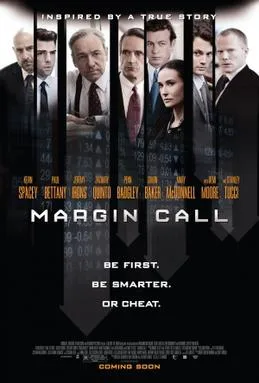
What does the film “Margin Call” show about the culture of finance?
Rafał: As you spoke about the States and that approach, I do not know if you saw the film "The Big Short", I assume so. From it I learned what the SEC is and how funny that organization was then, at least that is how it was presented in the film. I do not want to think badly about the organization or its members, God forbid. But it looked like in Europe they look at those papers and see what those derivatives and pyramids are, and in the States it was hurray and denial that the market will not keep winding itself up in circles, and that the needed conformity of investment plans with their execution and with risk management was considered ridiculous. It is only a film, fiction, but in my head was: okay, that is how it looks in America. Later, at the same time, there was the Madoff affair, of his fund that drained gigantic money. It is hard to imagine a risk management process there or the work of a compliance team.
Hubert: I wanted to say two things. First, let us remember it is a Hollywood film, it was meant above all to be good to watch. As for films, there is another I recommend. It has a very ugly name in Polish, "Chciwość". In the original it is called "Margin Call" and I prefer to use that name. It is a film, as I saw in one review, of talking people in suits. I watch it sitting on the edge of my chair, in tension, because in my assessment, if we are talking about the approach to business, the atmosphere, it renders the realities superbly. Even the doors in the office buildings creak the same as in the film. Absolute care for detail. It is stripped of comedic, ecstatic elements, because "The Big Short" is an interesting, energetic film in itself.
Rafał: There is no Skiba Carol in "Margin Call", I understand.
Hubert: There is not, but there are other outstanding actors, so I recommend "Margin Call" if someone is interested in how this business looks from the relational and atmospheric side. I can stamp it: I worked in Manhattan and I confirm that it is like that there. That is the first thing. The second, it came back to me, because you said that in the case of those scandals there is no talk of compliance existing. I will return to the watch comparison. One thing is whether you have a watch on your wrist, and the other is what you do with its readings. Compliance could certainly have existed, that it exists is one matter, but the second matter is how it is treated.
Rafał: That is what I meant, I expressed myself badly. It existed, but it was ignored and it came out that way. I was not inside, I do not know it, I only felt the effects.
How is artificial intelligence changing investment compliance?
Rafał: I am thinking about technologies, innovations that change many industries, but certainly also change compliance in investment. The simplest question there can be: how do new technologies change the face of compliance in the investment sector, especially in the context of artificial intelligence?
Hubert: Bingo! We have it!
Rafał: It is finally here!
Hubert: Once the podcast has mentioned AI, we can close, nothing better will happen. I would say this. First, technology in general makes compliance activity possible. Without technology there is absolutely no talk of compliance activity. Why? Sitting in Frankfurt I received information from all over the world, from exchanges all over the world, from clients all over the world. Sitting in New York I received information from Asia, from Europe. First of all that transmission of information. Second, volume. As we already mentioned and as you were counting in your head, thousands times hundreds times thousands times dozens, you simply, colloquially, cannot handle it without a computer. Anecdotally, a situation came back to me when once it seemed the system had refused us obedience. We threw out: too bad, we will do it on paper. But thinking about it, on paper even a very intellectually and manually capable person would calculate maybe all the limits for one fund in a week. And we needed to calculate limits every day for hundreds of funds, for hundreds of rules. Returning to the answer: I am waiting for the development of technology. I absolutely do not think AI is coming for my job, that is another bingo point ticked. Is AI coming for jobs or not? I think not. On the contrary, before AI appeared, we were already using automation, robotization of the process, because both from the employee's perspective and the firm's, you do not want to do those manual, repetitive, daily tasks. If it can be automated, handed to a robot, artificial intelligence, an algorithm, let us do it. We do not educate ourselves, develop, have some knowledge in order to dig ditches, so to speak. We want to do the things that bring value, that are also interesting, exciting for us, that stimulate intellectually. I assure you that the expectations of the technology sector, firms and compliance officers themselves converge here.
Rafał: That explains a lot, that automation had already been used earlier, I thought so too, because it is hard to imagine the hectares of forest that would have to be cut down for paper to be made and for printers to keep up printing, and then for someone to keep up reading. The world accelerated thanks to computerization, and later thanks to artificial intelligence. I wonder in the context of whether AI is coming for jobs or not. Obviously you do not have the answer to that, nor do I. We would have to sit here a long time, because we are still at an early stage of development of various models. It is hard for me to even determine a two-three year horizon of what may happen, and a ten year horizon is totally beyond my modest ability to imagine. Honestly I cannot imagine the world in 10 years and I am curious how it will look. I observe it from the perspective of technology, marketing and how my work changes. With me, meaning in internet search engines, the use of artificial intelligence in analytics, analysis, implementation is 95 percent higher year on year and a lot of less involved jobs and people in those positions are no longer needed by us. We need other skillsets, so it changes so fast. I am not saying your role will be threatened, but that it will have to evolve very fast. A last sentence: what bothers me in my industry now is that once I had to change fast, catch up, keep informing myself non stop, and now that non stop has turned into my having to constantly absorb a mass of new information to try to keep up with how for example search engines change. I have the feeling I will reach a moment when I will no longer be physically able to do it to stay up to date, and an increasing part of my work AI will take over. I do not know whether these are fears, just a perception.
Hubert: Two comments. First, take into account that if you are not able to keep up, other people will not be able to keep up either. That will lead, at least in my opinion, to some change of the system, because if the world runs away from us faster than our perception can register it, the scenario I see is the escape of artificial intelligence and people as its subjects. But at some point I think we will reach a moment in which we will tell ourselves: you cannot run so fast any more, because we simply cannot keep up with those changes. That change will be so far-reaching that it will cause a certain change in our behavior. That is one matter, and the second, I have a problem with the second matters, because they escape me when I dwell on the first.
Rafał: We can return when you remember.
Hubert: I remembered, regarding AI coming for jobs. A slightly silly example: in a situation where in a car factory there were no robots at all and everything was done by people, I assume there was a person responsible for example for tightening wheels every day, all day. The job was stable, but the question is whether we as people really want to do that, if it can be automated, if robots can be used for it. Maybe I am too ambitious in my approach to the topic, but let us do the creative things, let us do the things that are interesting, that make you want to get out of bed every day. Let us use those tools, because we keep talking about tools, so that we live better. That is a general appeal.
Rafał: A general appeal. I would enter a deeper polemic with you here, but for next time, because I simply have fears, not only for myself, because that does not keep me awake, but for the redistribution of income consisting in cutting costs and maintaining high margins. That is a separate matter we could puzzle over at an economic level.
Can blockchain be used in investment compliance?
Rafał: In the technology and innovation area the last question, returning to compliance: blockchain and its potential use in investment compliance. Do you have a view or visibility on the use of blockchain?
Hubert: I am not very technical on this matter, so my understanding of blockchain is limited to the fact that it is a decentralized system used by Bitcoin. End of my knowledge on the subject. I have an observation that as for Bitcoin itself or technologies using blockchain, the traditional financial industry, the traditional investment fund industry, approached it and I think still approaches it quite distrustfully. From what I know, the largest firms in the world of finance have already recognized the importance of Bitcoin or even included it in their investment strategies. But definitely greater enthusiasm at the beginning was among private users than among investment funds. As for blockchain in the sense of decentralization and its impact on compliance, I do not see an application of it in the current system, because the element compliance rests on strongly is a certain decision-making body. Since compliance is the conformity of investments with law and with the client agreement, we must have, and we have, in every country one regulator who has an opinion on a given directive, a given investment. The same with the client: in a situation where I cannot reach agreement with the portfolio manager, each has their data, a different interpretation of it, we have one decision-making body, in this case the client, who will say: I agree with A or B, please do it this way or that. If I understand blockchain correctly, and the abandonment in this case of a central body, a center of a given system, then for now I do not see a possibility of applying that approach, because that one, specific, superior body is needed for the smooth functioning of financial systems in different countries.
How does ESG affect compliance, and what is greenwashing?
Rafał: Let us leave that. I have a few more minutes, so two quick areas. One I have been leaning into for some time is ESG, Environmental, Social, Governance. I honestly wonder which ESG regulations affect investment compliance at all and whether it is taken into account. Your honest opinion and knowledge.
Hubert: Both opinion and knowledge. Yes, it is absolutely taken into account. Not going into political and ideological matters, whether it is worth it, too much, too little of those regulations, I will focus on market practice, which shows that the topic is, colloquially, hot. A lot of discussion about it. Working in it, I see that ESG elements are being integrated. They started being integrated years ago and still are. Sometimes information breaks through to public awareness that someone has given up ESG. But even if someone gave up, a recognizable firm or some other body, ESG does not disappear. Absolutely does not disappear. The interest is there. Maybe that hype train has slowed down a bit, because at the moment ESG appeared, it had to inflame hearts and minds in greater numbers, because it was a new, interesting thing. Now we have gotten a bit used to the topic, the same as with AI: at the beginning daily reports, and now once a week, at least in my information bubble. Whoever announces the death of ESG does so prematurely. Let us remember there are two views: on one hand regulations and what the regulator, the law requires, and the second matter is investor preferences. Ever younger people will invest, are starting to invest, people who have, oh, another bingo, if Gen Z appears in this podcast, then we really have everything.
Rafał: Here I will surprise you, because it was not on the list.
Hubert: But I said it. I took care of the obligatory element of every internet statement. That is how it will be: ever younger people who have other priorities, who will decide in a different way what is worth investing in and what is not, will enter the market. I can imagine a situation in which regulations slow down or even take a step back, but people will want to invest in what in their view makes sense, in what is not short-term. I am working on that topic now very strongly, so maybe I am not objective. First, I see big client interest, even from America all the time, maybe out of spite toward the current president, I do not know, but the interest is there. And the second matter, setting aside disputes about whether there are too many regulations or too few: I believe long-term investing, not oriented solely at short-term profit, but thinking about the future in a broad sense, is simply a good trend.
Rafał: In the context of ESG you have probably met greenwashing. I think it is an absolute plague from my perspective and I wonder whether compliance has a role in preventing abuse, in catching greenwashing, or rather not.
Hubert: I cannot say I have met greenwashing, because I do not want visits from the appropriate services tomorrow morning. More seriously: I have met the term, I know what it is, and let us introduce it for listeners who have not. Greenwashing is the practice of claiming that practices are ecological which in reality are not. I see this whole ESG trend, or rather the regulation of that trend, as aimed at making greenwashing impossible. We introduce all those regulations, standards and measurable data so that at the moment I say I am ecological and you say you are ecological, we talk about the same thing, use the same language. Without those regulations, without surrounding it with a standard, a situation may arise in which you say you are ecological because you switch off the light when you leave a room, and I say I am ecological because I live on a farm and produce my own food. Those are different levels, after all. The point is, by arranging it in a structure, to make sure that using the same words we talk about the same elements. And is there a role for compliance? Yes, absolutely. For compliance a restriction, an investment limit resulting from ESG, whether from the investor's will or the regulator's will, is treated the same. If ESG causes, for example, the simplest example, that we do not invest in companies that mine coal, whether the investor wished so or the European Union did, in my daily work there is no big difference.
Rafał: Good, you answered my next two questions along the way. In the context of greenwashing, to make it resonate, the point is that a lot of firms, I will not name them, because I do not have data with me, colloquially have websites and apps painted green: we now use only ecological paints for dyeing our clothes. A certain brand from China, a gigantic global e-commerce, tells such wonders, and it is a fraction of a percent of products on the site. Or that we support recycling, and supporting recycling at a large firm from Sweden consists in supporting not even half a percent, or the conditions and collection are unecological. I say it is wiping one's face with important matters, manipulating investors. Because later I have, say, half a million zloty in your portfolio, for me that is big money, I want to invest it and I am interested in investing in firms that implement solutions good for the planet. If greenwashing occurs by those firms and compliance does not catch it, you can invest my money in firms that cheat. That is how I understand it.
Hubert: You understand it well and that is exactly what ESG regulations are for and that is exactly what compliance is for, so it does not come to that. From practice I will tell you that you need not worry. Not going into details, because it would be unbearable, these are not easy regulations to read and understand. But there are practices, elements, that make greenwashing ever harder. If a declaration of being ecological in the sense of the ESG directives appears, then really meeting those criteria is not so easy at all. I will give one example: there is a mechanism that means that even if all your actions are very ecological, but on top you do something from the list of prohibited actions, then you cannot say you are ecological. Which is absolutely logical and good that it exists, because it is a bit like me saying that I care about ecology, care about society and care about good management of my firm, because I have electricity from photovoltaic panels, fabrics from a local farm, I give employees 40 days of leave. Great, but I employ children for slave labor.
Rafał: I was waiting for that.
Hubert: In that situation you have no right to call yourself meeting the ESG criteria. Of course my example is exaggerated, but exactly such mechanisms are being introduced and they guard the fact that if you support recycling, then say at least 40, 60 or 70 percent. Some known and sensible percentage must be met for you to be able to declare something.
Rafał: Let us end this area with that. You calmed me down a bit.
Hubert: You can sleep peacefully.
How do you start a career in compliance?
Rafał: Great, you see, when you talk with smart people, a person sleeps well and does not stress. At the end I wanted to extract advice from you and ask what is next in your life, what you plan. Practical tips for people who would like to end, sorry, start a career in compliance or investment compliance. Are you able, in a condensed form, to guide: what studies to finish, what steps to take? I hope we managed to show in this recording that it is fascinating, important and not so complicated that you cannot understand at least the basics.
Hubert: Nitpicking at words, and every compliance officer must nitpick, that is our role: for those who would like to end a career in compliance, do not end it, my dears, do not end it. And for those who would like to start, the easiest way to start is by simply starting. What do I mean by that somewhat empty sentence? In my compliance work I met people who come from very, very different fields, life paths, education, character. Compliance is such a broad element that I happened to study law, but sometimes as a joke I say it hinders rather than helps me, because sometimes such creative ideas are thrown out that in lawyerly terms it does not add up, but to someone it does. Certainly that education helped me, because it taught me to think in a structured way. But absolutely one need not be a lawyer to be a compliance officer. There are people with financial education, with diverse ones, we will not list them here. It would be good to have some element that would be useful, even for example technical education. Because becoming a compliance officer is one thing, but then the question is what you want to do with it. Do you want to be more of a magician of systems? Do you want to deal more with efficient, technical action? Or is someone more passionate about being a substantive expert on regulations so much that practically you do not need to talk to a lawyer from a given country, because you know it all yourself? Or perhaps more the human element: solving difficult, conflict situations and soothing emotions? Even being a compliance officer, you can find your own niche. I encourage you. I think it is fascinating. I have done it from different sides, in different teams and in different firms for almost ten years and I have not gotten bored yet, so I think there is a place for everyone there. Unfortunately I must disappoint you and everyone who wants to find out how to start, because I also looked at the beginning for a compendium of knowledge, I looked for books. I tell myself: okay, let that book have 5 thousand pages, but I want simply the concrete, the ABC of a compliance officer, or at least some chapter in a book on investments. Almost 10 years ago I did not come across such a compendium. Gathering that information took me some time and still does. It is rather scattered elements: some financial knowledge, some legal, some psychological, some technical. And all of that only over time creates a good compliance officer. Generally I recommend it, because, as we say, there are no boring days. Every day a person wakes up and thinks: okay, what will fall apart today. That also, honestly, helped me very much in life, because I understood that even if a staff of people works regularly to make everything go well, it will not always go well, you cannot foresee everything, plan everything, control everything. Of course the goal of compliance is to be as proactive as possible, not to wait until something happens and put out a fire, but, keeping to the comparison, to throw out the flammable materials in the bud. I think I calmed down very much in life, because I worked every day in such an environment that little moves me any more.
What are Hubert Resmer’s professional plans?
Rafał: What are your professional plans? What is happening with you and what will you explore?
Hubert: At the moment I still hold on to compliance, working as a consultant, but now more on the software side in a firm that supplies software for managing investment funds. I use my business experience, but also technical. Along the way I thought about what to do differently, what else this could be used for. And I noticed that actually I did nothing but reconcile the various, often conflicting interests of many parties. Because in a disputed situation the business, meaning the portfolio manager, wants one thing, the client may want another, the regulator yet another, the question is how it is operationally feasible and how it is profitable for the firm. Work in compliance is work in a constant disputed situation. I noticed that I learned to manage it well and to resolve such situations well, both on the technically structured plane of data and on the human plane. Together with a colleague we started offering our services in resolving conflicts in matters important to business. We want to stick to the business side. We work in several modes: mediation, negotiation, arbitration, but also open, free consultations. In case it sounds like an interesting alternative or a needed step for someone, more information can be found on my LinkedIn. I keep using that experience from compliance and, summing up, I can say once more colloquially that I recommend this kind of work to people who like varied challenges, who like to do something that matters, because we established that there is some impact on the safety of both people and financial trading. And it is simply an interesting job that develops you.
End of the conversation and recommendations
Rafał: Definitely. Today I finally found out what it is and what compliance is about and how it really affects me, so thank you very much for this conversation. Your new initiative and LinkedIn we will link in the description. You mentioned that it is hard to find one book, an ABC of a compliance manager, but is there something that inspires you? Books, a podcast, where we can deepen knowledge not only on compliance, but on finance and investment in general. It is a separate topic, but a similar one. Do you have something like that you could recommend to us?
Hubert: I have to refer to a quote I heard at university. If I remember correctly, it went: a doctor who does not develop as a person can still be a good doctor, but a lawyer who does not develop as a person cannot be a good lawyer.
Rafał: That will be the title of this episode.
Hubert: With that pompous quote I wanted to answer your question, because if a career in compliance sounds interesting, then you absolutely must not close yourself to one source or one area of competence. I do not want to recommend one source, because honestly nothing comes to mind now. I like listening to podcasts, I really like reading books, watching valuable videos on YouTube. I walk around gathering those crumbs of information and later combine them in myself. And if I were to start again, where would I start? First with a solid dose of financial knowledge. That is the most important, because not knowing how financial markets work, what types of securities there are, how the stock exchange works and so on, it is hard to understand what you are looking at, since we are to guard the correctness of investments.
Rafał: In that case I would recommend, for someone interested in economics and finance: in the Polish internet there are a few podcasts. For me in a very nice form, conducive to thinking and staying current, is the podcast "Ekonomicznie". It is hosted by Jarosław Kuźniar with a Rafał, I do not remember the surname, and it is weekly. You can start with that, and later sky is the limit, because there is a lot of information in the investment and financial context. Hubert, once again thank you very much. I think everyone who listened to our conversation will look completely differently at the role of the compliance manager and will be calmer about their funds in investment funds. Thank you very much.
Hubert: I hope so. Thank you very much. See you.
Listen and watch
The same conversation in your favourite app.
The full edited transcript as a Markdown file, with the guest’s details and quotes.
Back to top