

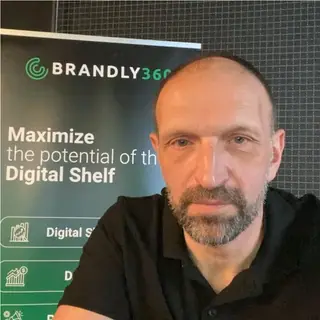
Who is Paweł Strykowski?
- Who he is
- Paweł Strykowski, founder of WhitePress, a global content marketing platform for sponsored publications and link building, of which he was until recently CEO. He founded the company in 2013 and sold it in several stages (a partial exit in the first phase, with the full acquisition by RTB about three years before the recording).
- What he does
- After leaving WhitePress he is developing the job portal Aplikuj.pl, visited by over a million people a month, and remains in an advisory role at WhitePress. Earlier he ran photography websites and other internet projects.
- What we talk about
- Life after an exit, the path from the failure of buying links to the idea for WhitePress, the SEO industry and its community, courage and competitor analysis, the subsidiary expansion model in several countries, choosing markets, failures in Brazil and with franchises, and the point that sometimes it is worth simply making life easier for people.
- Where to find him
- WhitePress and Aplikuj.pl.
Best quotes
„We are children who want to have our own toys.”
„Sometimes you have to make things more convenient for people.”
„For us, opening a new language or a new country can be done in one day.”
„If you do not do it yourself, do not make a good contract or do not properly scope it, nobody will do it for you.”
Recommended materials and sources




Related conversations


Transcript
Host: Rafał Moszkowców. Guest: Paweł Strykowski.
Introduction
Rafał: Hi, welcome everyone warmly. Today my guest is Paweł Strykowski, founder and until recently CEO of the global content marketing platform WhitePress, which brought in 111 million zloty in revenue for 2023. That is what I dug up. I hope the data on the internet is not wrong. Welcome, Paweł, on this beautiful Friday winter-autumn morning.
Paweł: Hi, I am terribly glad to be here. It is very interesting that you defined me by those 111 million, but it is such a small sum, so fine. We will see what comes of this conversation, because numbers are not the most important thing for me.
Rafał: I wanted to steer our audience toward the fact that WhitePress achieved a great success, at least I think so, and revenue grew fast. I absolutely did not want to define you by an amount.
Paweł: I am joking, you know. You know me well enough to know that every second sentence I try to laugh either at myself or at someone, but I do it equally. I try to keep my distance.
What is life like for Paweł Strykowski after selling WhitePress?
Rafał: You are fair, good. Paweł, what is life like after an exit?
Paweł: My exit was in instalments like at a good bank, because there are three stages, and now it is the third. The first stage was giving up most of the shares in the company to a group from Gdańsk, some 7 years ago. It was a partial exit that gave me security. A very nice thing, because you feel that even if everything collapses, you have somewhere to live and something to eat for the rest of your life. It was not that I could ride around in good cars, but it was good. The main, biggest exit was 3 years ago, when RTB took over 100 percent of the company. That gave me substantial financial security and a greater appetite for risk in business. And now there is the practical exit, because I left the company apart from a small advisory role and I am free. I feel it is a big change and that changes are nice. How it is to live, I cannot say much yet, because only 4 weeks have passed.
Rafał: Are you resting or working?
Paweł: I work twice as much as before, so it should be so. I went into another company that I theoretically have run for some 20 years. A sole proprietorship, 20 people, turnover tens of times smaller, for which I never had time. Now that I have the time, I discover loads of room for improvement. I am a perfectionist in a way and as long as I see something can be done, I always do it.
What is the Aplikuj.pl job portal and its plan for the year?
Rafał: What does that company do?
Paweł: It is a job board platform called Aplikuj.pl. You can add job ads, and the ad is promoted and shown to candidates. Over a million people visit us a month. If we earned in proportion to the biggest ones, I would be much richer than selling WhitePress at the best valuation. What we have to make up is monetization, marketing and brand. The best portals reach 3.5 million visits a month.
Rafał: Since you are only now getting into it seriously, three million in a year?
Paweł: You know how it is in SEO: the more you hurry, the more risk you take. If I had one and a half million in a year, I will be happy, all the more since I am doing a big conversion of traffic from guide-style content to more caloric content. I see that guide content is being devalued in current times for obvious reasons, so a year ago I decided to develop what my content is unique in: information about ads, specific listings, employer profiles. One and a half million is my plan for a year.
Rafał: I am writing it down, we will check in Senuto how you did.
Paweł: Fine, in Senuto it will be 1.2 million, because we still buy some traffic. Man does not live by organic alone.
Did Paweł Strykowski plan a global WhitePress from the start?
Rafał: I wanted to return to WhitePress. You founded it in 2013. Did you and your partner plan foreign expansion from the start?
Paweł: Honestly, not at all. I am full of admiration for people who found companies and from the first second think they will be international. It simply did not fit in my head at first. My goal in 2013 was to make a company I do not put money into. When after two months we stopped putting money into the company, I was mega happy. We had a turnover of 20 thousand and one employee then. For the first 5 years we were very calm in our plans. It is strange, because everyone talks about hunger, and we had no ambition. My greatest pleasure is not thinking about how big a company we will make, but what cool things we do, what the process is, what the product is, how fast we respond to human needs, how we can surprise the industry. That creation is my joy, not some number. A week ago in an interview a question came up about what turnover we had in 2024, and I had no idea. I was wrong in my first guess by fifteen million.
Rafał: I recently talked with Michał Suski, a co-founder of Surfer. I asked about money, because in Poland it is a taboo topic, and he said probably a lot, but he does not really know. The CFO says it is green, but he focuses on having the best possible service, because then the cash adds up. You are similar.
Paweł: I come from a very small business. I had a company for a long time in which for the first 5 years we did not earn. I have a huge aversion to situations in which I put money into a business or have problems with VAT, social security or payroll. It is in my DNA that a company should earn or be financially safe. There are different startup models, some like investors and burning money, but I did not want to run a startup on a startup. When there is a financial cushion, you can afford a bit of madness and grow faster at the expense of profitability. My joy starts where I have resources in which my ideas are carried out. I do not just come up with things, I can create. That is entirely enough for me.
Rafał: I wondered why I run my company and concluded that I value independence and the freedom to implement things from my head.
Paweł: Rafał, let us be honest, we are children who want to have our own toys. We can slog, we can earn less, but those toys must be ours and we must have the freedom to arrange those blocks.
Why does Paweł Strykowski pay salaries before VAT and ZUS?
Rafał: I recently read your LinkedIn post that if you cannot afford it, do not buy. You wrote about paying on time: if you have to choose between VAT, social security and salary, you choose salary, then social security, VAT last, and take the consequences. That resonates strongly with me.
Paweł: I do not like it when someone says something nice about me, so I will not elaborate. I would not survive a situation in which someone said I consciously did something unfair. Of course I did something unfair in life, but certainly not at work, not deliberately. Sometimes a person deceives himself, cuts corners, hurries, does not think it through, one must avoid that, but cannot entirely. I cannot imagine a moral dilemma in which I say: I will be bad because it pays. It is the same with salaries. I always imagine that people on the team have it harder financially. I had periods in life when I did not get to a client because I ran out of money for petrol, while an employee got paid. I must protect them, at least financially, because it is the one thing I have clearly and legibly: I must give them money.
Rafał: For me that is the foundation of leadership: I am responsible.
Paweł: Rafał, we have to have a fight, we have to change the subject. There is no drama, and you have to throw something in.
How did the Penguin failure lead to the idea for WhitePress?
Rafał: I looked for your posts in the Web Archive, from the optimization forum, and a talk for SEOStation from 2010 or 2011, where you described what WhitePress did. Did you know right away that you would sell links?
Paweł: Great question. Around 2012 I had a sizeable failure. I ran photo websites that earned quite well, but I took a shortcut: I bought link packages, 10 thousand per package, which, as SEOs say, "ate" and gave high positions. The Google Penguin update came and everything collapsed. I remember a holiday trip where for 4 days I sat up all night preparing the so-called disavows. After three or four months visibility returned to a third of the former level. I thought: I will get 30 good links. Because of the location focus of my sites I went for city portals. I bought 30 links, about 100 zloty each, so cheap, and they gave a huge boost. The problem was that they cost a lot of time: with every publisher I had to talk, negotiate, make contracts, orders, faxes.
Rafał: Seriously, you sent orders by fax?
Paweł: It happened. Publishers have their own pace. It lasted until March and I decided that since I made it work, there is demand. I have it in my DNA from my parents that when I see demand and a gap, you have to do something. That is how the idea for WhitePress came about, though at first I wanted to be a saint. We came up with what we called guest articles: a base of articles that someone downloads for pennies and is obliged to give only a link to the source. We launched it with my partner, and launched sponsored articles on the side. After two weeks it turned out our saintly, white hat idea did not catch on at all, and the other one did. We quickly made several pivots that led to what the service looks like now. We wanted to sell links, but more qualitatively, and it came out as always: business is business.
What did the SEO industry give Paweł Strykowski and WhitePress?
Rafał: You once said the SEO industry gave you a lot. Do you still think so?
Paweł: Of course. Every zloty I earned in the last 10 years came from this industry. And that is only the material dimension. At first I was sceptical, the industry turned out very hard, especially when I knew nothing about SEO. The first feedback was not motivating, it was sharp. Fortunately I had been earlier on a photo website where it was worse, so I was hardened. With every year I discover that it is an industry where a lot of good happens. The most integrated, with the most partying, not always in the worst sense. There are loads of charity actions, when someone needs help many people are willing, there are very deep conversations. Ask someone 3 questions and people have no limits. I think it comes from living in threats like at war, a person has not much to lose, so goes all in.
Rafał: I agree, the industry is relatively small, so you live a bit in trenches. But in Poland it can be aggressive: if someone does not know something or makes a faux pas, they may be run over. When Russia's invasion of Ukraine started, loads of people from SEO Race simply supported the action, without asking.
Paweł: WhitePress definitely grew out of that community. We had super timing and I think that without WhitePress, the industry in Poland would look a bit different. Of course we have competition, which arose at various times, and one always copies a bit from others. I am more pleased with that than with the financial result: that sometimes you hear of services "like WhitePress".
Does competitor analysis help or hold back business courage?
Rafał: Did you model yourselves on someone abroad?
Paweł: We had competition, but I had no idea about it. I did such market research that I did not even know there was competition in Poland. I learned from a phone call from it, a not very friendly one, that it had got ahead of us by half a year. It turned out the other way round. I am not an advocate of not analyzing the market. I was lucky that my cursory analysis was enough and I was not discouraged by a more thorough one. But we copied nothing, absolutely nothing.
Rafał: That shows business courage. We often stop ourselves before starting a project by going too deep into competitor analysis. In every space there is room for innovation.
Paweł: There are two schools. There is the startup school, more mature, where funds invest and a thorough market analysis is welcome. And there is the school of Janusz-style business, to which I too sometimes belong: you do something partly from courage, partly from stupidity, but it works. I am for courage that does not stop sensible decisions, but against courage that means going full throttle. I get many proposals let us do a business together or let us invest, and maybe 1 in 10-15, after my 15-minute analysis, turns out to be unique.
Rafał: I meant that many brave people duplicate a business and tell a story that they do it better, while objectively it is the same or worse. But many big companies in the world arose because someone saw a space occupied by big players and had an idea for innovation.
Paweł: I did not put in a hundred million, only 12 thousand. You do not need funds, you have to get going. I am probably brought up so that you have to act, maybe not perfectly. It is also important not to fear criticism. I often prefer not to listen to what clients or the forum say, because I may hear things that are extremely uncomfortable. But every opening up to it brought me good things. That is my inner struggle. Sometimes someone leaves work and then the voice of courage opens in them: Paweł, I want to tell you what annoyed me in your company. When I have a bad day, I say: I will ask you in a week or two, and I try to come back.
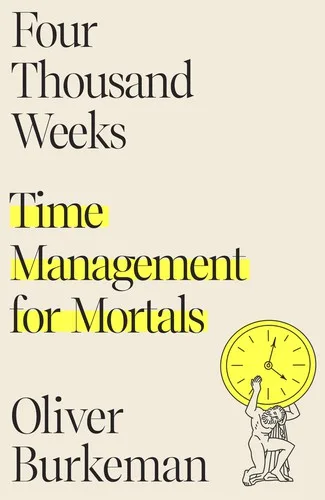
Rafał: I recently read a book by Oliver Burkeman. He wrote there that we never have a guarantee of success, and the only certain thing is that excessive caution is a recipe for suffering. It resonates with me, because for many years I held back from doing things. My first business I started at 27. We have limited time, let us do things wisely, but let us do them.
Paweł: That is a super recipe for a whole life, not only for business.
Why does Paweł Strykowski have no gurus or life heroes?
Rafał: I had my adventures in bigger organizations, looking for my space. My first job in Britain was a care home. In the background I learned HTML. I had a domain accounting office, I sold leads to accountants. I remember when it worked for the first time: wow, you can earn like this. And I just knew how to write a headline "accounting office London".
Paweł: You got an idea, now it seems simple, but it is not. It sometimes makes my blood boil when I think what I did or did not do. With friends we founded a company in the early days of the internet and decided we would buy good domains, because they would surely pay back. Then you had to write applications and it cost quite a lot of money, so we had a limit of five. Domains like tyres or windows were taken, but the rest was free. We bought two: matma.pl, because matematyka was taken, and filozofia.pl. We keep filozofia to this day. If I had sold them 10 or 20 years ago, I might not have founded WhitePress at all, because probably each could have been offloaded for a million zloty.
Rafał: Who is your favorite philosopher?
Paweł: I do not have life heroes, gurus or influencers I admire. I like some sentence or a book, but I have no cult of persons.
Rafał: That is healthy, in opposition to the fact that today people create gurus who influence their decisions, where they go on holiday or what they buy.
Paweł: Look at what we are doing today. You invited me because supposedly I have something to say, and before every such invitation I think what I can give people. I do not think I am a person someone wants to learn from.
Rafał: Damian Sałkowski once said he is not there to give advice, but to say what he learned and what conclusions he drew, maybe it will be useful. Likewise you read fiction to gain another perspective.
Paweł: I do not read scientific books, I cannot read more than 5 pages. We have a similar approach: I will not say modesty, but humility or a kind of total objectivity. We tell things and enjoy the moment.
Rafał: There is a saying that life is having fun on the ruins.
Paweł: I did not know it. It fits the SEO industry: everyone at least once a quarter has a project that lies in ruins.
Why did WhitePress enter markets through subsidiaries?
Rafał: Your expansion model seemed to me non-standard: you did not scale with Polish employees from Poland, but have subsidiaries in different countries. Where did that idea come from?
Paweł: We have a product that we buy and sell, it is a marketplace. Products like Senuto or Brand24 sell a service, and a service is easier to perform from one place. We are a marketplace and the question of purchasing services in a given country appears, mainly for tax reasons. There is withholding tax: without a residency certificate, which is practically unobtainable for small publishers, we would have to pay additional tax, which would cut the margin by much more than 20 percent. So we decided we probably had to set up those companies.
Paweł: The second reason is Tomek Domański, the main hero of going abroad. He came from a company that had already done it and said: we set up companies in countries, hire people, make offices, do it as if it were Poland. It suited me, because in Poland in 2013 nobody knew me in SEO, I started from zero. I thought entering Romania was an identical situation, but with the advantage that we already had a product. If after two months I was profitable in Poland, why not in Romania? It turned out a bit harder, but we chose that model.
Paweł: That model is now changing the other way. After seven years it turns out it is easier and more convenient to build teams here, hiring natives. There are countries where the tax form lets you handle purchases for many other countries, like Slovakia. It is cheapest and most efficient to have all teams together: education, feedback, cooperation with the back office go better in a large team. That is why with new countries we no longer set up companies, we do it from Poland. In the long run that is less human and less locally conditioned, but more efficient.
Rafał: In how many countries do you have companies?
Paweł: Initially four: Romania, the Czech Republic, Slovakia, Hungary, countries where we felt close, and which turned out extremely different. We decided to try several, because one would not be proof of rightness or wrongness. Then the Netherlands, and besides that companies in the UK, the States, Brazil, Turkey and maybe somewhere else. Setting up companies can be a road through hell, especially bank accounts.
Rafał: Each of those countries has different competition, different marketplaces, linguistic and cultural conditions. You have to know how to get into it.
Paweł: There are services in which you do not have to enter any relationship, they can be mega cheap, 100 percent SaaS. But when there is strategy, conversation, education around it, everything surprises us. Even if we repeated the entry with another service, we would be surprised by many things. You have to reduce the technical distance to zero: everything local, currency, language, taxes. And then have a buffer that it is twice as hard, because it is simply different.
How did WhitePress choose its foreign markets?
Rafał: Countries have different sentiment toward Polish products. In Romania Poland is perceived well, in Hungary reportedly made in Poland means more than made in EU, and in France there is scepticism. Did you have a pre-analysis system?
Paweł: We already had an investor who motivated us to go abroad, and in the most complicated recruitment of my life I managed to choose Tomek. Tomek had experience in four countries. We made one of the biggest spreadsheets of my life: about 30 indicators, from simple ones, like competition and market size (with sub-indicators: number of domains, number of SEO companies), to wild ones, like sentiment toward Poland or how fast and for how much you can reach the capital of the country. The spreadsheet covered all European countries. We turned each result into a number from 1 to 100, aggregated them into 6 or 7 areas and chose weights. Exactly those 4 countries we wanted from the start came out. To this day I do not know whether we did not manipulate ourselves, though it was not conscious.
Rafał: I value intuition, and if data backed a decision based on intuition, that is great.
Paweł: We had two countries in reserve: the UK and the Netherlands. We went there a year later, when we had proved scalability, and it turned out it was much harder there. The UK today serves all English-language markets and is our biggest market, but it is good we started with the easier ones, because we learned a lot. Choosing easy markets at the beginning, when your head says it is convenient and close, is not bad. If I ran up to speed, from Bielsko-Biała I would reach the Czech Republic on foot.
Why did WhitePress fail in Brazil and with franchises?
Rafał: Did any market not work out for you?
Paweł: Not completely to zero, but Brazil did not work out fully. It turned out abstract, hard to understand, contacts are harder, there are big political, currency and tax problems. We had a habit of sending computer equipment to employees from Poland, because it was cheaper, and in Brazil it was impossible, because the taxation was huge. It is mega cheap there, a poor country in the per-unit sense. Similar in Turkey, but there we have very good relations, Turks like us, we share a lot in striving for goals and entrepreneurship, and the team was very effective, so Turkey scales. Brazil does not, so at the turn of the year we reduced the team there.
Paweł: The second failure, somewhat symbolic: at some point we introduced a franchise model, to enter more markets faster, because we cannot scale a management team to open ten markets at once. We tried two franchises. The first, in Ukraine, went well until the war broke out. The second, in Bulgaria, is a partner who treated the topic casually and that market is lost, we have a symbolic turnover there. The conclusion: if you do not do it yourself, do not make a good contract or do not properly scope it, nobody will do it for you.
Rafał: There is always risk there.
Paweł: Maybe the contract should have been structured differently, the partner sought more carefully, pressed harder. I have nothing against franchising or affiliate programs, on which loads of nice startups rose, but with such a complicated business model as ours it did not work.
How does WhitePress handle transactions between countries?
Rafał: From the user's perspective WhitePress seems simple.
Paweł: That is the greatest compliment. If for clients the handling is simple, it means we did a good job. Imagine a client of a French company buying a publication in Hungary through our Slovak company, on a Hungarian portal owned by a Romanian. In the background is the issuing of four invoices, four tax systems, different VAT rules, two or three currencies, changes of tax year, everything in different languages. On top of that the transaction is stretched over time, someone orders today, receives tomorrow, the text in three days, and along the way complaints, returns from the copywriter, misunderstanding of the offer. If for the user it is click, click, click, it is wonderful. When entering that system my only merit was that there were no compromises on the procedures and processes the system has to handle. That absence of compromise meant we had assumed all cases. And then you lay on the human layer: someone has to understand it, settle taxes, contact the accounting office, because the branch does it autonomously.
Rafał: That is why even buying publications in countries where I have no contact, say Hungary or France, I prefer to pay you extra so you do all those operations inside, and I get one invoice from which I deduct VAT.
What still connects Paweł Strykowski to WhitePress after leaving?
Paweł: That touches on a nice, universal startup thing: sometimes you do not need to solve a big algorithmic problem, there need not be AI inside or incredible technologies. Sometimes you have to make things more convenient for people. WhitePress actually gives little technologically, despite loads of features in an arms race. The point is it saves time.
Rafał: For me it is the main, if not the only reason. I can quickly delegate carrying out a PR and link plan even to an intern, who knows what to click.
Paweł: Our margins range from 10-20 to 40 percent, and a publication costs on average 100 euro, so it pays, because someone would have to lose an hour or four on it, and this takes a minute. The greatest value of any company is technology complicated enough that nobody wants to get into it. If at first it is hard, you should be glad, because it is the boundary that separates you from competition. We jumped that twice. The second time, despite huge hate, we released version 2.0: for a year we did nothing else, only rewrote everything from scratch. Thanks to that we are truly international. For us, opening a new language or a new country can be done in one day: it is a matter of translations and checking legal conditions. In theory, because in practice it is half a year: banks, accounts, people, teams. But technically yes.
Rafał: Does anything still connect you to WhitePress?
Paweł: Yes, it is my child. I have said goodbye in life to 4-5 of my business children, with WhitePress it is hardest. The sentiment is probably mutual. When I come in, people are glad to see me, they do not turn their heads, do not hide sandwiches. Three weeks have passed, but they still recognize me, it is very nice. Once a month we have a product team meeting, because my one competence that was hard to replace is the holistic ability to connect market demand, the industry, and what can be programmed. I promised myself that if two meetings in a row are not productive, I will opt out, which is not bad, because the team may simply have become very independent. We also have some things in common, we provide some services to each other, and I copy certain things from WhitePress. Fortunately I am in such a different industry that it harms nobody. It is the nicest development one can imagine.
Rafał: And that will be the title of the podcast: the nicest development one can imagine.
End of the conversation
Rafał: Thank you very much for the conversation. I am glad we could talk also beyond business itself, because that is sometimes missing, to get to know the person behind the achievements. I wish you success in developing Aplikuj. I wrote down one and a half million, we meet in a year, I will send the invitation.
Paweł: I thank you very much too. When I think of the partners I met over the last 10 years, you are at the very top of pleasant cooperation and that is a recommendation from me. I avoid conversations, but our relationship meant I did not refuse. Nice questions, nice quotes, see you.
Rafał: Thank you. All the best. Bye.
Listen and watch
The same conversation in your favourite app.
The full edited transcript as a Markdown file, with the guest’s details and quotes.
Back to top